At a glance
- Best for
- Island life, swimming and Indigenous culture
- Gateway
- Panama City, then road and boat
- Time needed
- One to three nights
- Best season
- January to April for calmer seas
- Getting around
- Guna boats only
- Language
- Guna and Spanish
Why go to Guna Yala
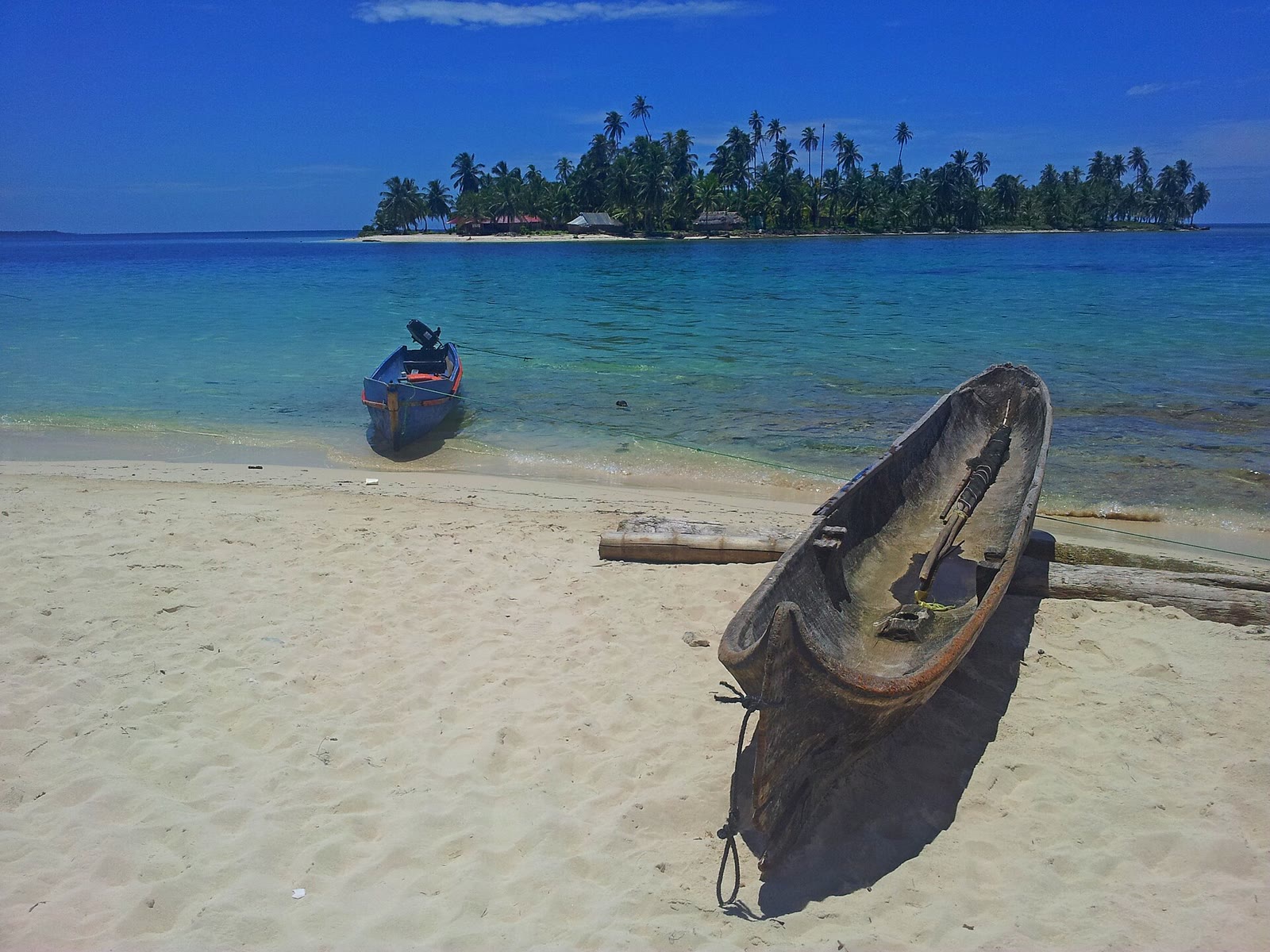
Guna Yala is not a resort area. It is an autonomous Indigenous territory, a comarca, where the Guna General Congress decides who can build, fish and run tourism, and outside investors cannot buy land. That is why the islands still look as they do. Visitors stay in Guna-run camps, eat what the community cooks and travel in Guna boats. In return you get clear turquoise water, starlit nights without traffic and a glimpse of one of the most resilient Indigenous cultures in the Americas.
Guna culture
Many Guna women still wear traditional dress: beaded leg and arm wraps called wini and blouses with **molas**, intricate panels of layered, cut and stitched fabric. Molas are the best souvenir in Panama, and buying directly from the women who sew them supports families. Communities are led by sailas, traditional chiefs, and gather in congress houses on the larger islands. Some islands are very crowded and modern, others very traditional.
Ask before photographing people, and expect that some communities charge a small fee or ask you not to take photos at all. Dress modestly away from the beach.
The islands, explained
- **Carti** is the main mainland port and the area where most visitors start. Nearby islands such as Carti Sugdub are densely populated community islands.
- **The Cayos Holandeses** and **Cayos Limones** are further out, with reefs, sandbars and sailing anchorages.
- **Isla Perro (Assudub)** has a sunken boat you can snorkel from the shore.
- **Isla Aguja, Isla Diablo and Isla Chichime** are popular overnight islands with basic cabins and camps.
- Further east, islands like **Achutupu** and **Playon Chico** are closer to traditional village life and reached by small plane or long boat trips.
What a stay is like
Accommodation ranges from hammocks and tents to simple cane huts, a few with private bathrooms. Meals are usually included: fish, rice, plantain and sometimes lobster or crab in season. Electricity may be solar or limited to evenings, freshwater is precious and phone signal is patchy. Days involve swimming, snorkelling, a boat trip to a sandbar called a piscina natural, and doing very little.
Many travellers book a package that bundles the road transfer from Panama City, the boat, the stay and meals. Another popular option is a multi-day **sailing trip** through the islands, including the route between Panama and Cartagena in Colombia. Choose operators carefully and check safety equipment and reviews from recent travellers.
Getting there
Shared four-wheel drive vehicles leave Panama City very early and drive the winding road through the mountains to the Guna checkpoint, where you show your passport and pay the comarca entry fee, then continue to the port. From there, a Guna boat takes you to your island. The road is steep and twisty, so take motion sickness tablets if you need them. Small planes also serve some eastern islands.
What to pack
Bring cash for fees, crafts and drinks, as there are no card machines or cash points, plus reef-safe sunscreen, insect repellent, a dry bag for boat rides, a torch, a reusable water bottle and your passport.
When to go
The dry season, roughly January to April, has the most sunshine, though strong trade winds can make boat crossings rough. May to December brings more rain and calmer seas on many days.
Staying safe
Boat rides can be wet and bumpy: insist on life jackets. Swim away from boat channels and watch for currents around sandbars. Governments advise caution in the far east of the comarca near the Colombian border, so check current travel advice.
Questions about Guna Yala
Can I visit Guna Yala as a day trip from Panama City?
It is possible but tiring, with several hours on the road each way. One or two nights is far more rewarding.
Do I need to book in advance?
Yes. Book your island stay and transport together before you go, as transfers leave early and island camps have limited space.
Is Guna Yala comfortable for nervous travellers?
It is safe in the main visitor areas but very basic. If you need air conditioning, hot water and reliable power, a single night may be enough.
Can I pay by card in Guna Yala?
Rarely. Bring enough US dollars in small notes for the entry fee, crafts, drinks and tips.
Facts checked . Fees, schedules and entry rules change, so always confirm the latest with the official source.