At a glance
- Best for
- Festivals, surf, quiet beaches and rural culture
- Gateway
- Panama City, then road via Chitré
- Time needed
- Three to five nights
- Best season
- Mid December to April for dry weather
- Getting around
- Buses between towns, taxis and tours
- Language
- Spanish, little English outside resorts
Why go to the Azuero Peninsula
Azuero, which takes in the provinces of Herrera and Los Santos, is the Panama many Panamanians picture when they think of home. Towns gather around whitewashed churches, families raise cattle and grow sugar cane, and almost every month brings a patron saint fiesta with dancing, parades and fireworks. Tourism is low key, so it suits travellers who want beaches without crowds and a real taste of rural life.
The towns, explained
- **Chitré** is the main town and transport hub, with markets, the Cathedral of San Juan Bautista and nearby craft villages.
- **La Villa de Los Santos** is where Panama's first cry for independence from Spain was made in 1821, remembered in its museum and the colonial church.
- **Las Tablas** is famous for the biggest and most competitive Carnival in the country, and for the pollera, the national dress.
- **Pedasí** is a small, pretty town near the coast and the main base for beaches, Isla Iguana and fishing trips.
- **Playa Venao** is a curved surf bay with hostels, yoga and beach bars.
- **Cambutal** and **Tonosí** in the far south are quieter and wilder, with surf breaks and turtle beaches.
- **Parita** and **La Arena** are known for colonial architecture and pottery workshops.
Things to do
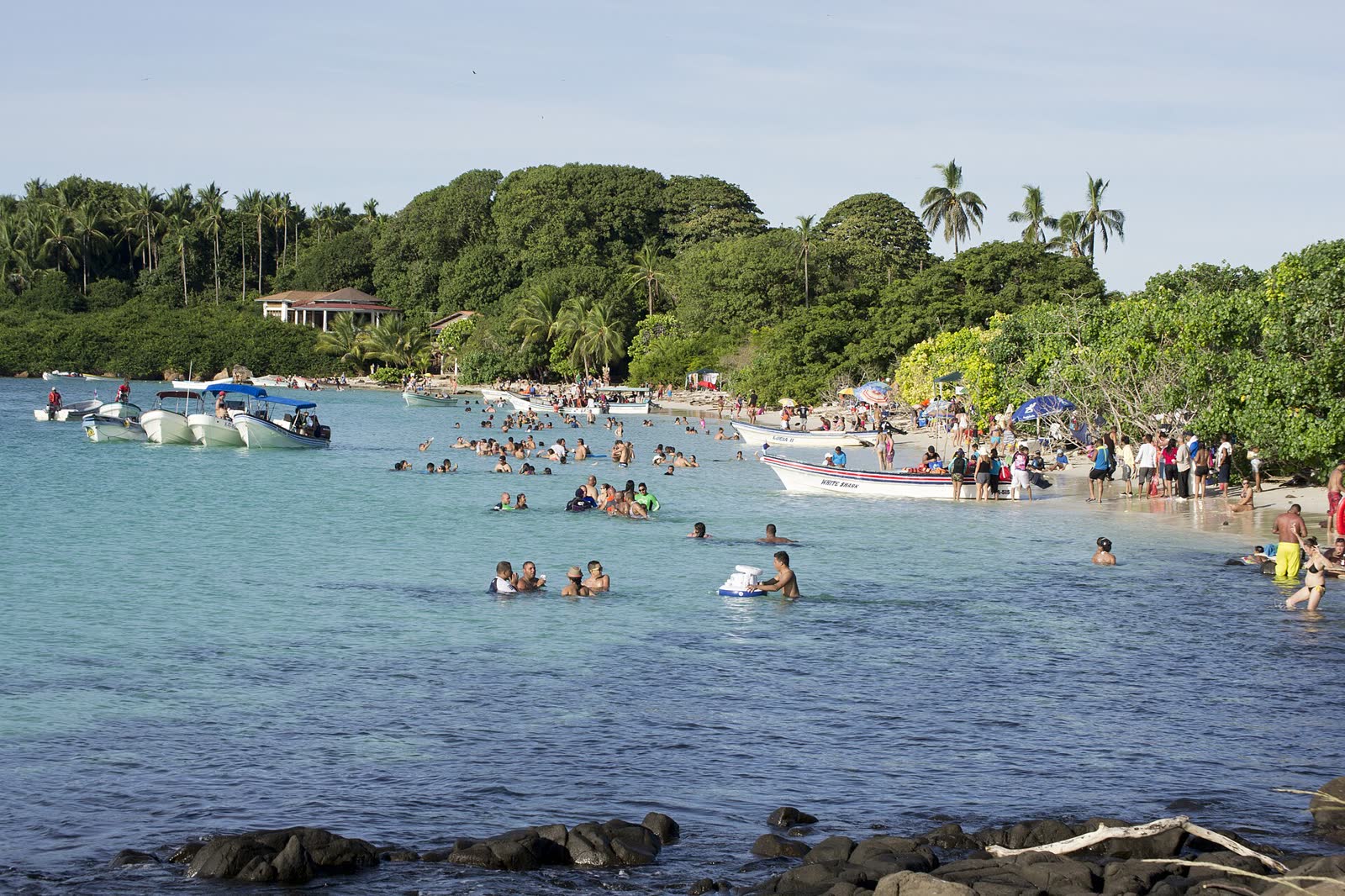
Take a boat from Playa El Arenal near Pedasí to **Isla Iguana Wildlife Refuge**, a protected island with white sand, coral and seabirds. Between about July and October, humpback whales pass close to the coast and boat trips go out to watch them. At **Isla de Cañas**, a community-run project protects the olive ridley turtles that nest in large numbers, and night visits with local guides are possible in season.
Surfers head to **Playa Venao** for beginner-friendly waves and to Cambutal for more power. For culture, visit craft workshops making masks, pottery and the hand-stitched polleras, and see the **Diablicos Sucios**, devil dancers who appear at Corpus Christi celebrations in La Villa and nearby towns.
Festivals
- **Carnival in Las Tablas**, in the days before Ash Wednesday, pits two rival streets, Calle Arriba and Calle Abajo, against each other with queens, floats and water trucks called culecos.
- **Corpus Christi** in La Villa de Los Santos brings the masked devil dancers.
- **The Festival de la Mejorana** in Guararé, usually in September, celebrates folk music and dance.
- **The Festival del Manito** in Ocú honours rural traditions of the Herrera interior.
Book accommodation well ahead for Carnival, when towns fill completely.
Food
Try tamales, fresh corn tortillas, chorizo santeño from La Villa, seco herrerano, the sugar cane spirit distilled in Pesé, and fresh seafood on the coast.
Getting there and around
Buses run from Albrook terminal in Panama City to Chitré and Las Tablas in around four hours, with local buses on to Pedasí and the beaches. Tours and shuttles also connect Pedasí with the capital. Services thin out in the far south, so allow plenty of time.
Staying safe
Azuero is one of the calmest parts of Panama. The main risks are rip currents on open beaches, sun and heat, and heavy drinking and crowding at Carnival. Swim only where locals do, and keep valuables secure during festivals.
Questions about the Azuero Peninsula
When is Carnival in Las Tablas?
It runs over the four days before Ash Wednesday, usually in February or early March. Check the date for your year and book a room months ahead.
Is Pedasí good for beginners to surf?
Yes. Playa Venao, a short drive away, has sandy-bottom waves and surf schools that teach beginners.
When can I see turtles on Isla de Cañas?
Olive ridley turtles nest mainly in the rainy season, roughly from about August to November, with community guides arranging night visits.
How many days should I spend on the Azuero Peninsula?
Three to five nights works well: a night in Chitré or Las Tablas for culture and festivals, then a few days around Pedasí and Playa Venao for Isla Iguana, the beaches and surf. Add extra time in the rainy season, when roads and boat trips can be slower.
Facts checked . Fees, schedules and entry rules change, so always confirm the latest with the official source.