At a glance
- Best for
- Photography, relaxing, hiking and mountain views
- Nearest airports
- Tangier Ibn Battouta (TNG) and Fes Saiss (FEZ)
- Time needed
- Two days
- Best season
- April to June and September to October
- Language
- Moroccan Arabic and Spanish, with some French
- Getting around
- On foot, with grand taxis for hikes nearby
Why visit Chefchaouen
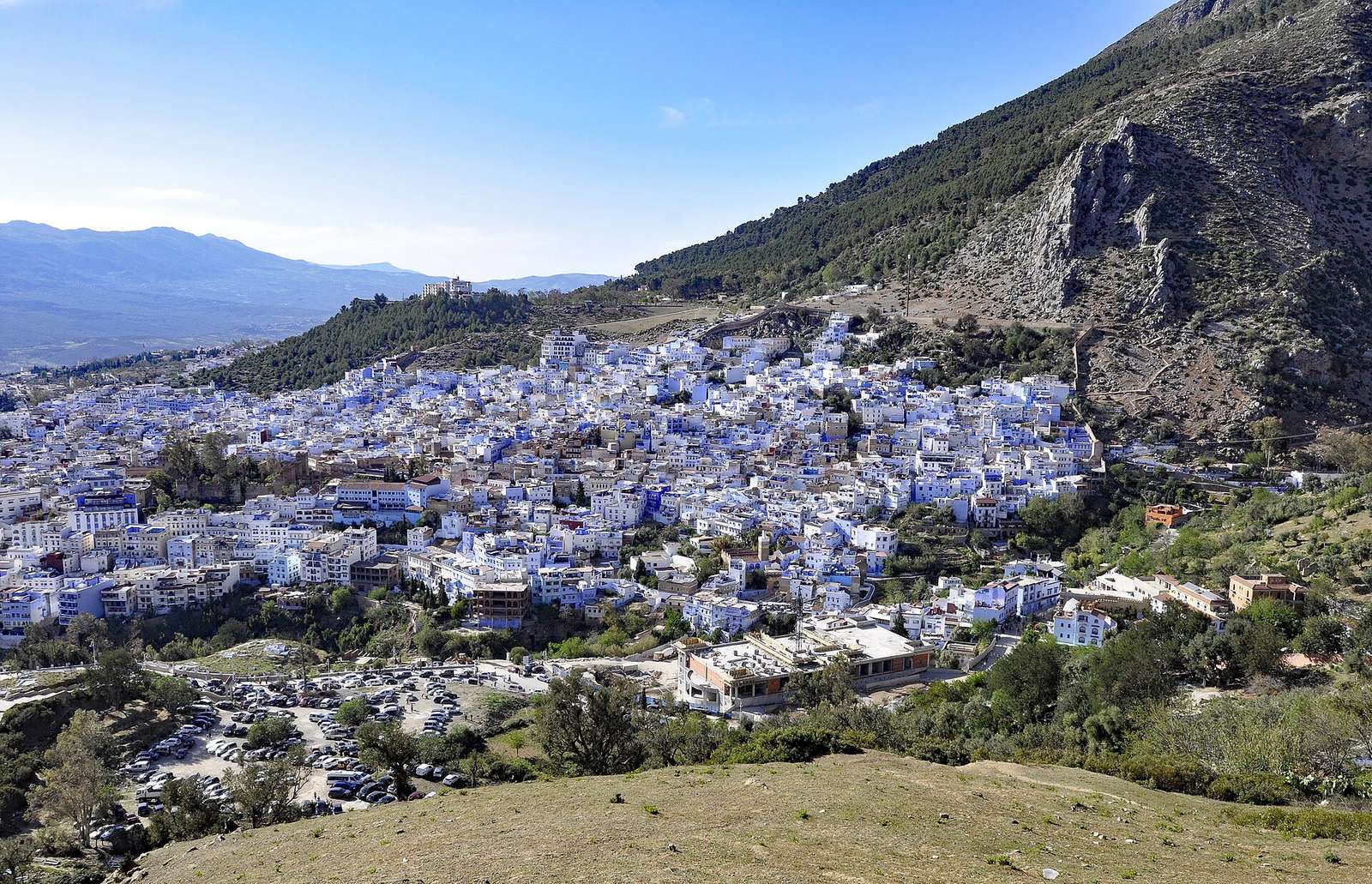
Founded in 1471 as a fortress, Chefchaouen later welcomed Muslim and Jewish refugees from Andalusia, and its whitewashed houses and tiled roofs still feel more Andalusian than Saharan. The blue paint is the town's signature, and the reasons given for it vary: some say it began with the Jewish community, others that it keeps mosquitoes away or simply pleases visitors. Whatever the story, the effect is magical, especially early in the morning before the day trippers arrive.
The medina is small enough to explore without a map and the hassle is far lighter than in the big cities, which makes it a favourite with first-time and solo travellers.
What to see and do
Start at Plaza Uta el Hammam, the main square, with cafés facing the red-walled Kasbah and the octagonal minaret of the Grand Mosque. The Kasbah has a small garden, an ethnographic museum and a tower with a view across the rooftops. From the square, wander uphill through the blue lanes towards Ras el Maa, the spring where locals still wash clothes, then climb for about half an hour to the Spanish Mosque on the hillside for sunset over the whole town.
Shops sell woven blankets, wool jellabas, goat cheese from the mountains and handmade soaps. Prices are generally calmer than in Marrakech, but polite bargaining is still expected.
Hiking and nature
Chefchaouen sits on the edge of Talassemtane National Park, a landscape of limestone peaks, fir forests and gorges. The most popular outing is to Akchour, about forty minutes away by grand taxi, where a river trail leads to waterfalls and the natural rock arch known as God's Bridge. Wear proper shoes, as the paths cross streams and rocks. Longer guided treks continue deeper into the park.
Where to stay
Guesthouses and small riads inside the medina put you among the blue lanes, while hotels on the hillside above town offer views and easier car access. Book ahead for spring weekends and Moroccan holidays, when the town fills with domestic visitors.
Food
Try dishes from the mountains: fresh goat cheese, bissara soup, tagines with local olives and grilled meats. Cafés around the main square are good for mint tea and people watching, and the small restaurants up the lanes are often cheaper and more personal.
Getting there
There is no train. Buses run from Fes, Tangier and Tetouan, and grand taxis and private transfers are faster. Expect about four hours from Fes and around two and a half to three from Tangier. Arriving in daylight makes it easier to find your guesthouse.
A note on cannabis
The surrounding Rif region has a long history of cannabis farming, and you may be offered hashish. Recreational use is illegal in Morocco and penalties can be severe, so decline politely and move on.
Practical tips
The lanes are steep and stepped, so pack light or ask your guesthouse for help with luggage. Evenings in the mountains are cool, even in summer, so bring a warm layer. Residents live in these lanes, so keep voices down, never climb onto doorsteps for photos and ask before photographing people. Spring weekends and holidays draw big crowds, so arrive midweek if you can. Cash machines exist but can run dry at busy times, so bring some cash from Fes or Tangier.
Questions about Chefchaouen
How many days do I need in Chefchaouen?
Two nights is ideal: one day for the town and the Spanish Mosque, and one for a hike to Akchour.
Why is Chefchaouen blue?
Nobody agrees on a single reason. Common explanations include the town's Jewish heritage, keeping insects away and simply pleasing visitors. Residents repaint the walls regularly.
Is Chefchaouen safe for solo travellers?
It is one of the most relaxed towns in Morocco. Use normal precautions, and politely decline any offers of hashish.
How do I get from Fes to Chefchaouen?
By bus, grand taxi or private transfer, taking about four hours through the Rif foothills. There is no railway.
Facts checked . Fees, schedules and entry rules change, so always confirm the latest with the official source.