At a glance
- Best for
- History, monasteries and nomad life
- From Ulaanbaatar
- Around six to seven hours by road
- Time needed
- Three to five days
- Best season
- June to September
- Stay
- Ger camps and family gers
- UNESCO
- Orkhon Valley Cultural Landscape
Why visit the Orkhon valley
The Orkhon Valley Cultural Landscape is a UNESCO World Heritage Site that preserves more than two thousand years of nomad history, from Turkic inscriptions to the ruins of the imperial capital. It is also a living landscape, with families moving their gers and herds along the river through the seasons. Few places show so clearly how Mongolia's past and present belong together.
Kharkhorin and Erdene Zuu
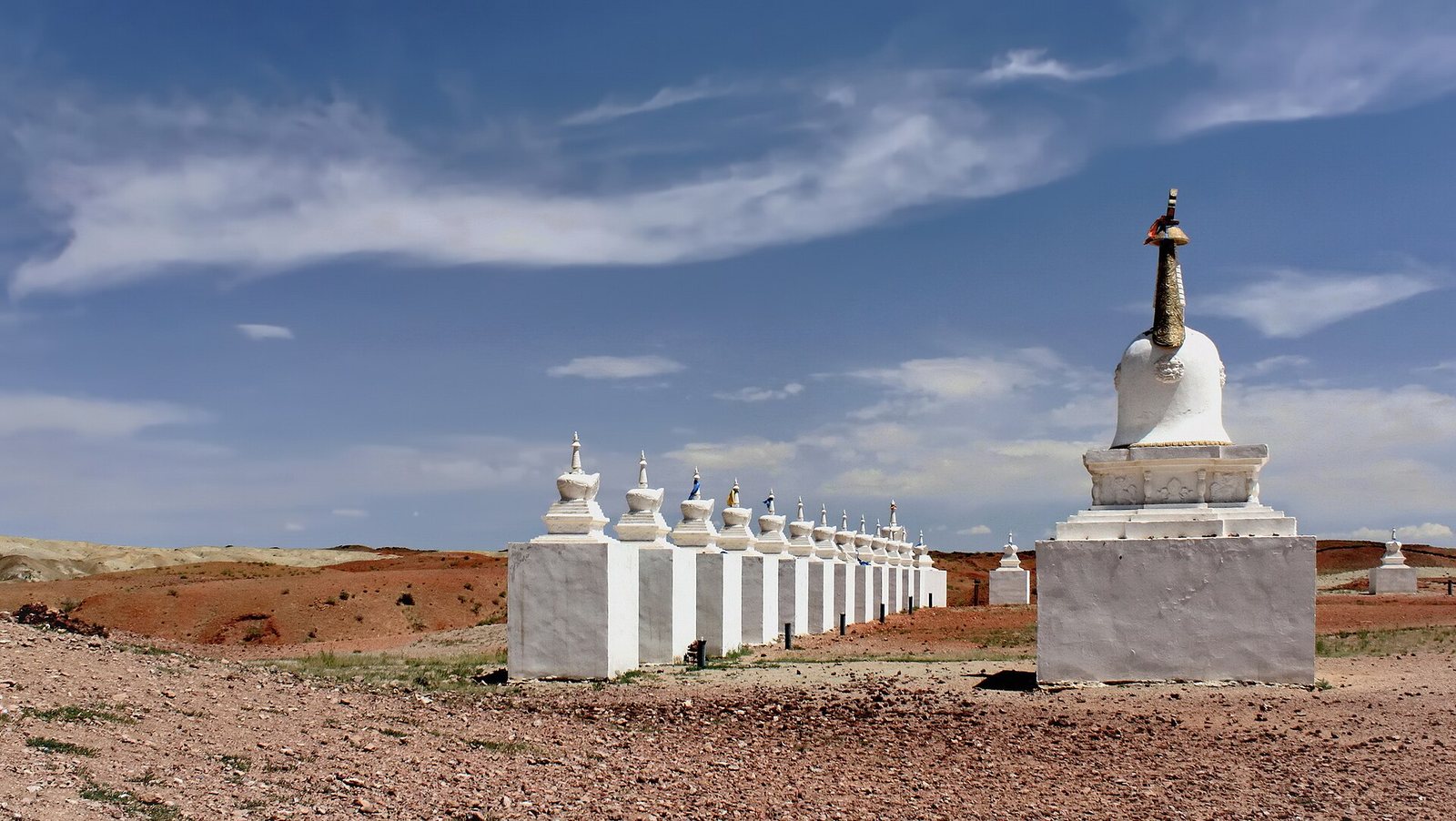
Little remains of Karakorum itself, but its stones were used to build **Erdene Zuu Monastery** in the sixteenth century, Mongolia's oldest surviving Buddhist monastery. Its long white wall, crowned by 108 stupas, encloses temples with painted interiors and active monks. The **Kharkhorum Museum** nearby displays finds from the old capital and a model of how it once looked. Look out for the stone **turtle** that once marked the city's edge, and climb to the **Monument to the Great Empires** for a view over the valley.
Waterfalls, monasteries and hot springs
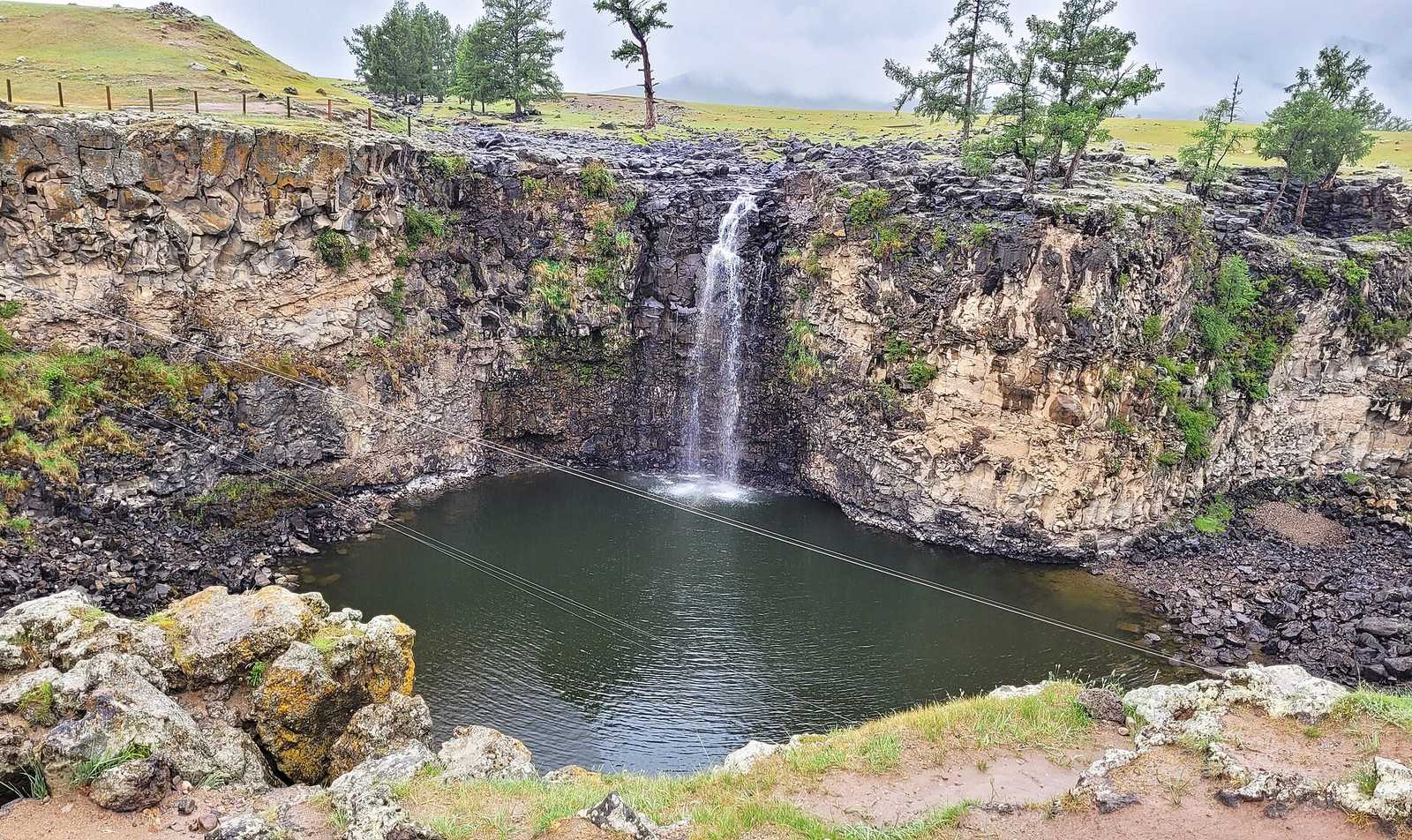
Upstream, the **Orkhon Waterfall** plunges into a basalt gorge, at its most impressive after summer rains. On a forested peak nearby, the tiny **Tuvkhun Monastery** marks where the saint and sculptor Zanabazar meditated; it is reached by a steep walk or on horseback. To the north west, the **Tsenkher Hot Springs** feed pools at several ger camps, a welcome soak after dusty roads.
On the way from the capital
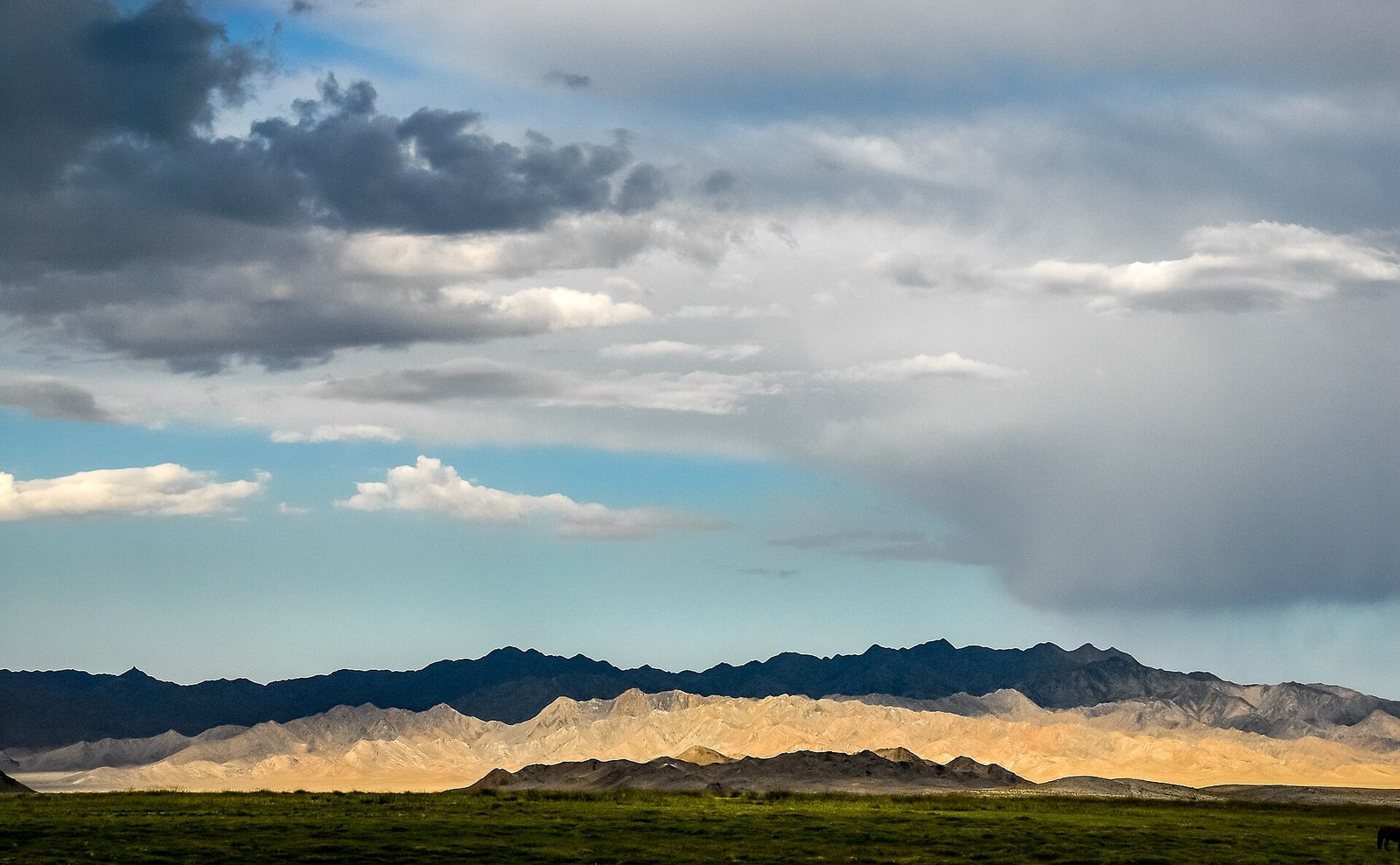
The drive from Ulaanbaatar often includes **Hustai National Park**, where reintroduced takhi wild horses graze, and **Khogno Khan**, where granite mountains meet the sand dunes of Elsen Tasarkhai, sometimes called the Mini Gobi. Camel rides on these dunes are an easy taste of the desert if you are not going further south.
Further west: Arkhangai
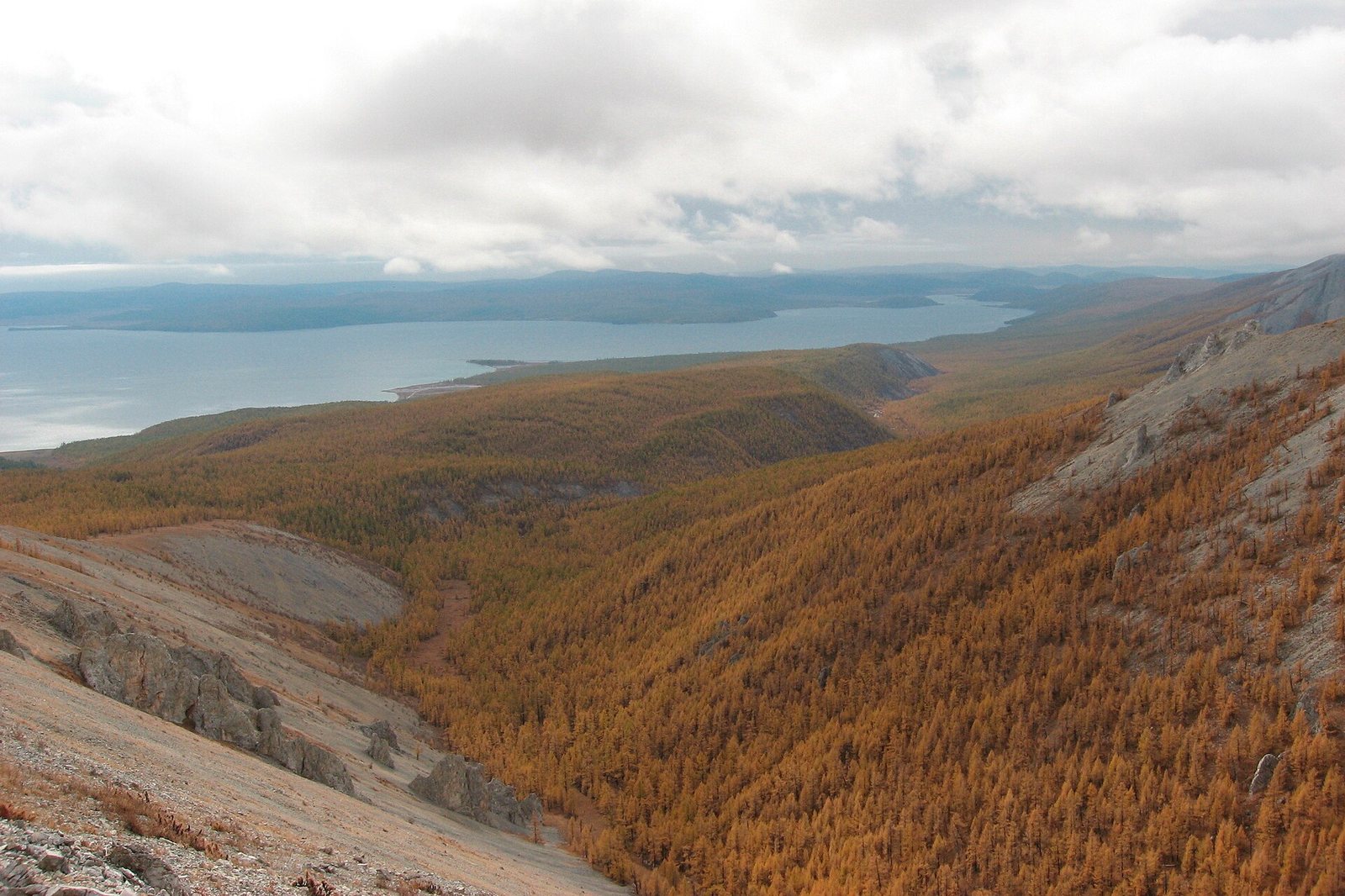
If you have more time, continue to Tsetserleg, a pleasant provincial town with a temple museum, and on to **Khorgo Terkhiin Tsagaan Nuur National Park**, where a freshwater lake lies beside an extinct volcano you can climb.
Where to stay
Kharkhorin has a handful of ger camps and simple hotels on the edge of town. Camps along the river and near the waterfall offer horse riding and a quieter feel. A night with a herding family, arranged through a tour company, is often the highlight of a trip: you may help milk mares, try airag fermented mare's milk and watch the herds come home at dusk.
Getting there and around
A paved road runs from Ulaanbaatar to Kharkhorin, but beyond it many routes are dirt tracks. Most visitors come with a driver guide in a Russian van or four wheel drive, often on a loop that continues south to the Gobi desert. Public buses run to Kharkhorin from the capital if you are travelling independently.
Practical tips
Carry cash in tugrik, as cards are not reliable outside Kharkhorin. Bring layers for cold nights and rain gear for summer storms. Dress modestly in monasteries, walk clockwise around temples and ask before photographing monks. Shape your loop with the free trip planner.
A sample three day loop
On day one, drive from the capital with stops at Hustai to see takhi horses at dusk, or at Khogno Khan for a dune ride. On day two, explore Erdene Zuu and the Kharkhorum Museum in the morning, then continue up the valley to a camp near the waterfall. On day three, walk to the falls, ride or hike to Tuvkhun, and finish with a soak at Tsenkher. From here you can return to Ulaanbaatar or head south toward the Gobi, which adds several more days.
Questions about the Orkhon valley
Is there anything left of Karakorum?
Very little stands today. You see its stones in the walls of Erdene Zuu, a stone turtle, foundations and the finds in the Kharkhorum Museum.
How do I get to the Orkhon Waterfall?
It is reached on dirt tracks from Kharkhorin, usually with a driver guide, and the trip often includes a night at a nearby ger camp.
Can I combine the Orkhon valley with the Gobi?
Yes. A classic loop runs from Ulaanbaatar to the Orkhon valley, then south through the Ongi monastery ruins to the Gobi, over around ten to fourteen days.
Facts checked . Fees, schedules and entry rules change, so always confirm the latest with the official source.