At a glance
- Best for
- Dunes, dinosaurs, camels and big skies
- Airport
- Dalanzadgad (DLZ), domestic flights
- Time needed
- Four to seven days
- Best season
- May to September
- Stay
- Ger camps and eco lodges
- Getting around
- Driver guide in a four wheel drive
Why visit the Gobi
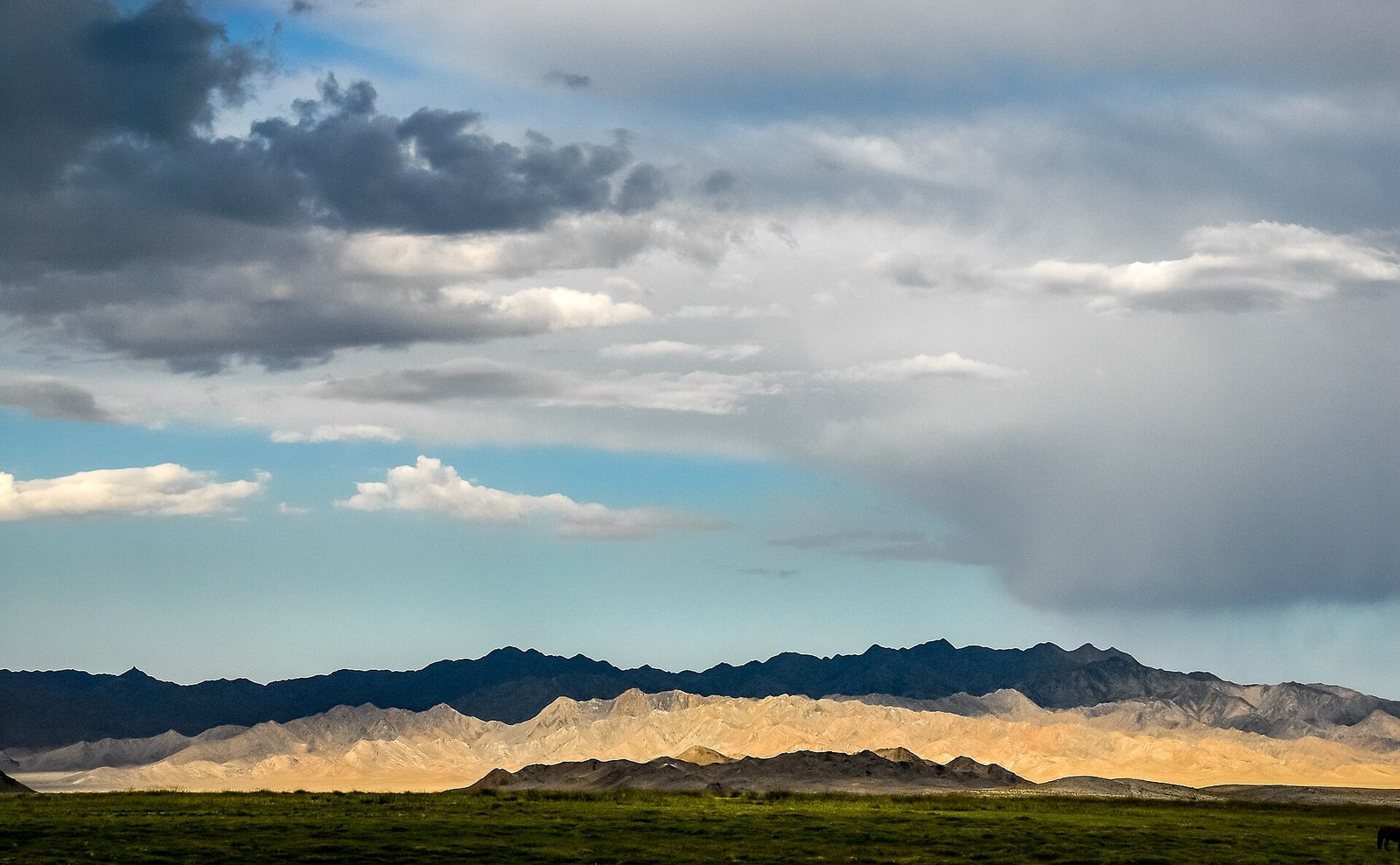
For many travellers the Gobi is the reason to come to Mongolia. The scale is overwhelming, the light is extraordinary and the silence is total. Days are spent crossing open plains with a driver guide, stopping at dunes, cliffs and canyons, and nights are spent in ger camps under a sky full of stars.
Khongoryn Els: the singing dunes
The country's largest dunes stretch for around a hundred kilometres along the foot of the Gobi Altai mountains, rising high above a green strip of oasis. Climb to the crest at sunset for an unforgettable view, and listen for the low hum the sand makes as it slides, which gives them their name. Herding families nearby offer **camel rides** on Bactrian camels.
The Flaming Cliffs of Bayanzag
In the 1920s, the American explorer Roy Chapman Andrews found the first scientifically recognised dinosaur eggs here. Today the red sandstone cliffs glow at sunset and you can walk along the rim and down into the gullies. Fossils are protected, so look but never take.
Yolyn Am
In **Gurvan Saikhan National Park**, the narrow Yolyn Am gorge, or Vulture Valley, often holds ice well into early summer. Walk or ride into the canyon and look out for lammergeiers, ibex and pikas. The small museum at the park entrance displays fossils and stuffed wildlife.
On the way south
The route from Ulaanbaatar passes through Dundgobi province. **Baga Gazriin Chuluu** is a granite massif with a ruined monastery, and **Tsagaan Suvarga** is a wall of eroded white and pink cliffs that looks like a lost city. On a loop from the Orkhon valley, the riverside ruins of **Ongi Monastery** make a good stop. Travellers with more time can push on to the remote red canyons of **Khermen Tsav**.
Where to stay
Ger camps cluster near each main sight, ranging from simple camps with shared toilets to comfortable eco lodges such as Three Camel Lodge. Staying with a camel herding family, arranged through your tour company, gives a real insight into desert life. Dalanzadgad, the provincial capital, has hotels, shops and ATMs.
Getting there
Most visitors travel overland with a licensed tour company and a driver guide, as distances are huge and many tracks are unmarked. Flying from Ulaanbaatar to Dalanzadgad saves two long days of driving, and many tours combine a flight in with a drive out. Overland, allow several days just to reach the dunes.
When to go
May to September is the main season. Summer days can be very hot, while nights are cool. Spring brings strong winds and dust storms. Winter is bitterly cold, though the March **Thousand Camel Festival** draws hardy visitors.
Practical tips
Carry plenty of water, sun protection and a scarf for dust. Bring cash from Ulaanbaatar or Dalanzadgad. Make sure your driver has a reliable vehicle, spare tyres and a phone or satellite device. Respect fossil protection rules and pack out all litter. Plan your desert days with the free trip planner.
A sample Gobi loop
A typical overland trip spends the first night at Baga Gazriin Chuluu, the second near Tsagaan Suvarga, the third at Yolyn Am, then two nights near Khongoryn Els to enjoy the dunes without rushing. The Flaming Cliffs follow on the way north, often with a stop at Ongi before heading to the Orkhon valley or back to the capital. If you fly to Dalanzadgad, you can see Yolyn Am, the dunes and Bayanzag in three or four days.
Questions about the Gobi desert
Can I travel the Gobi without a tour?
It is possible but hard. Distances are huge, tracks are unmarked and help is far away, so most travellers use a licensed tour company or a trusted driver guide.
How many days do I need for the Gobi?
Allow at least five days on an overland loop from Ulaanbaatar, or three to four if you fly to Dalanzadgad.
Is the Gobi very hot?
Summer days can be hot, but nights are cool, and the desert is cold in spring and autumn. Pack layers whatever the season.
Can I see dinosaur fossils in the Gobi?
You can see the famous sites and small museum displays. Fossils are protected by law, so never remove anything you find.
Facts checked . Fees, schedules and entry rules change, so always confirm the latest with the official source.