At a glance
- Best for
- Advanced wreck diving, nuclear history
- Time needed
- A week long organised trip
- Getting there
- Only by organised expedition or charter, usually by liveaboard boat
- When to visit
- Trips are rare and depend on operators; the calmer months are usually favoured
- Status
- UNESCO World Heritage Site since 2010
- Good to know
- Not open for independent visits; no tourist facilities on the atoll
A history that shaped the world
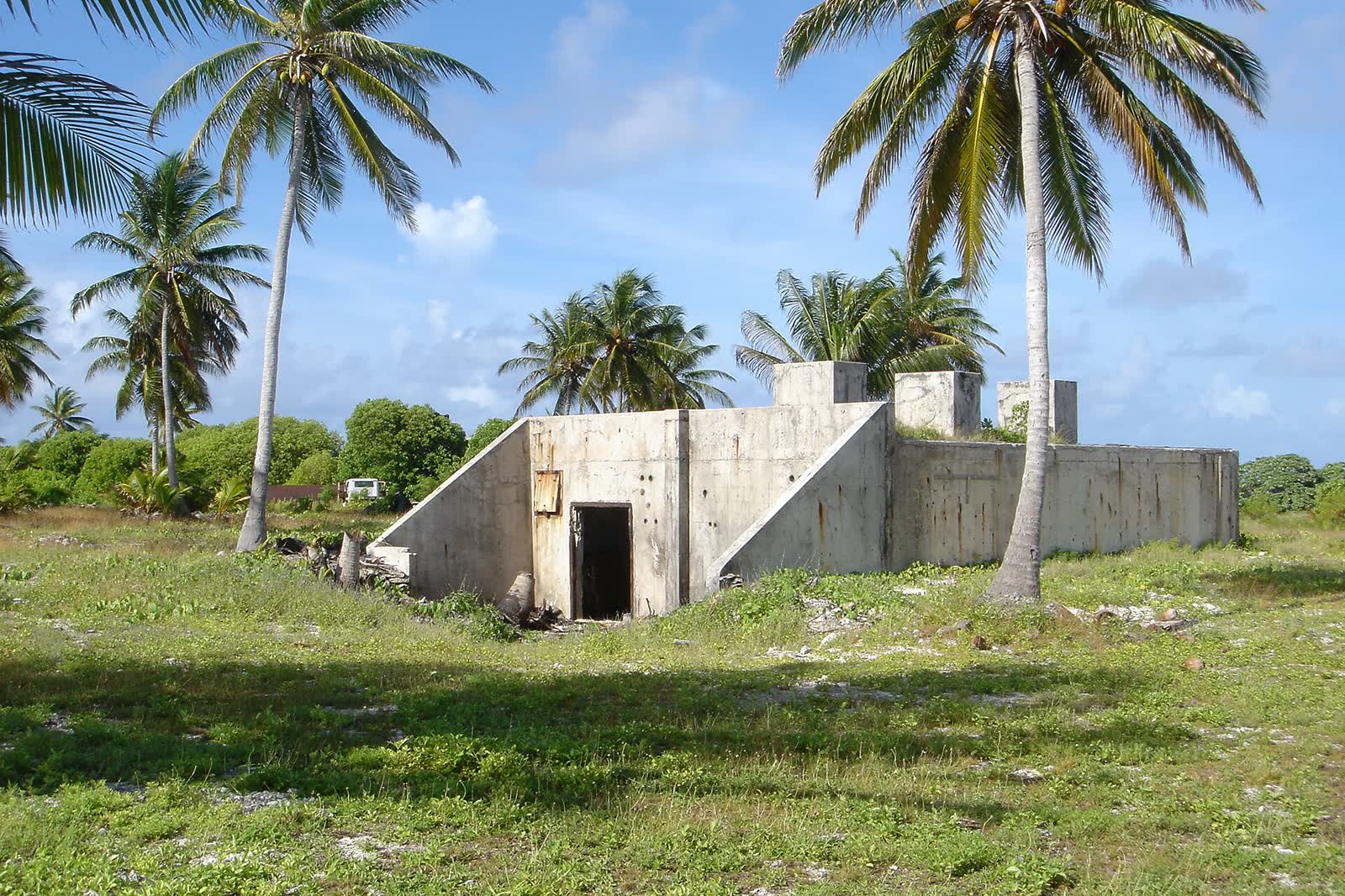
In 1946 the people of Bikini were asked to leave their atoll "for the good of mankind" so the United States could test atomic bombs. They were moved first to Rongerik, then Kwajalein and finally **Kili Island**, where many of their descendants still live, along with communities in Majuro and the United States. Over the following twelve years, the US detonated twenty-three nuclear devices at Bikini. The most powerful, **Castle Bravo** in 1954, was far larger than expected and spread fallout over inhabited atolls including Rongelap and Utrik, with lasting effects on health and lives. An attempt to resettle Bikini in the 1970s was abandoned after residents were found to have absorbed high levels of radiation.
This history is not abstract. It is remembered every year on **Nuclear Victims Remembrance Day** on 1 March, and it shapes Marshallese politics and identity today. Visit the Alele Museum in Majuro before or after any trip to understand it from the Marshallese side.
UNESCO World Heritage
In 2010 Bikini Atoll was inscribed as a **UNESCO World Heritage Site**, recognised for its role in the dawn of the nuclear age and the Cold War. The listing covers the sunken fleet and the craters as well as the atoll itself.
The wrecks
During **Operation Crossroads** in 1946, more than ninety ships were anchored in the lagoon as targets, and many sank. Among the most famous dives:
- **USS Saratoga**, an aircraft carrier lying upright in deep water, with aircraft still in its hangar and bombs on its decks.
- **Nagato**, the Japanese battleship from which the attack on Pearl Harbor was commanded, lying upside down.
- **Prinz Eugen** is not here, as it drifted to Kwajalein, but submarines such as **USS Apogon** and **USS Pilotfish**, and destroyers including **USS Lamson** and **USS Anderson**, are.
These are deep, technical dives that call for advanced certification, experience with decompression and often trimix or nitrox. The **Bravo crater**, a vast hole in the reef, can also be seen.
How to visit
There is no hotel, airport service or tourist facility on Bikini for casual visitors. The atoll is administered by the **Kili/Bikini/Ejit local government**, and access requires its permission. Diving at Bikini has run in different forms over the years, from a land based operation that later closed to occasional **liveaboard expeditions**. Trips are rare, small and booked far ahead. Check the Bikini Atoll local government's official website for current access and any approved operators, and treat any offer you cannot verify with caution.
Is it safe?
Scientific surveys have found radiation on the atoll's land, especially in locally grown food, remains a concern for permanent residents, and the atoll is not resettled. Short visits for diving, swimming and walking are generally considered low risk, but you should not eat local coconuts, crabs or fruit. Follow the guidance of the local government and your expedition leader, and read up before you go.
What to expect
A Bikini trip is remote in every sense. Expect long sea passages or charter flights, basic or no shore facilities, no phone signal, and dive days focused on deep wrecks. Medical help is far away, so conservative dive profiles matter. It suits experienced divers and history lovers who accept that plans may change with weather and permits.
Meeting the Bikinian community
The people of Bikini are not on the atoll but very much alive and present in the country. Many live on Kili Island, in Ejit on Majuro and in the United States. Learning their story, from the original relocation to the long fight for compensation, is the most meaningful part of any Bikini journey.
Questions about Bikini Atoll
Can you visit Bikini Atoll?
Only on rare organised trips approved by the Kili/Bikini/Ejit local government, usually liveaboard dive expeditions. There are no independent tourist services on the atoll.
Is Bikini Atoll still radioactive?
Residual radiation remains, mainly a concern for people living on the atoll and eating local food. Short visits are generally considered low risk, but do not eat anything grown on the atoll.
What experience do I need to dive Bikini?
The main wrecks are deep and technical, so you need advanced certification, decompression experience and usually nitrox or trimix training. Operators set their own requirements.
Where do the people of Bikini live now?
Mainly on Kili Island, at Ejit in Majuro and in the United States, especially Hawaii and the mainland.
Facts checked . Fees, schedules and entry rules change, so always confirm the latest with the official source.