At a glance
- Best for
- Fortress history, walking, museums and food
- Main airport
- Luxembourg Airport (LUX), about twenty minutes by free tram or bus
- Time needed
- Two to three days
- Best season
- May to September, plus late November to December for Christmas markets
- Getting around
- Walking, free trams, buses, lifts and a funicular
- Good base for
- Day trips to every region of the country
Why go
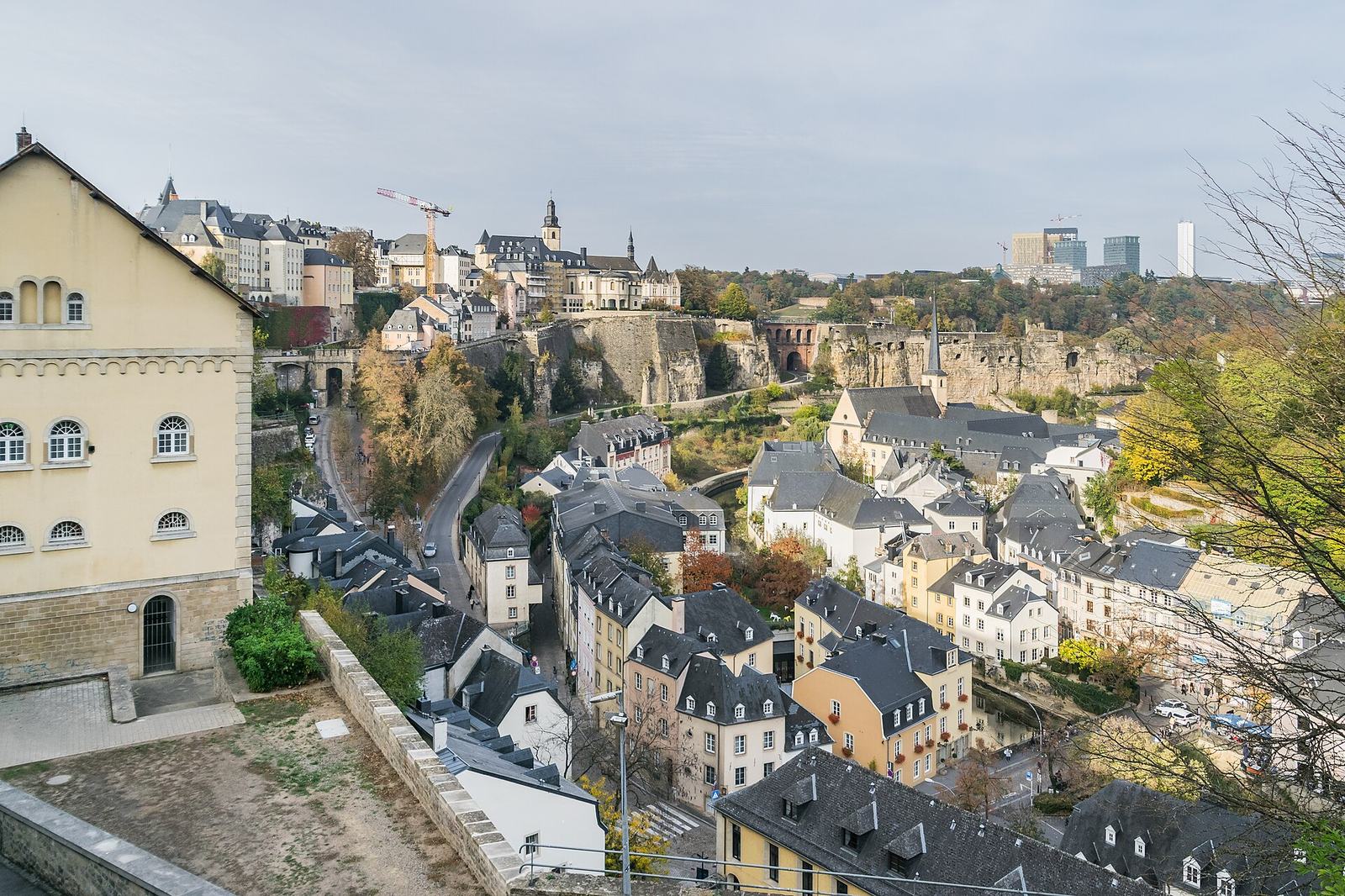
Few capitals pack so much drama into such a small space. The Ville Haute, the old upper town, sits on a rocky plateau ringed by walls and deep green valleys. Below it lie the Grund, Clausen and Pfaffenthal, riverside quarters of stone houses, bridges and gardens. Across the valley, the Kirchberg plateau holds European institutions, glass towers, the Philharmonie and Mudam, the contemporary art museum.
The city's nickname, the Gibraltar of the North, comes from its fortress. Over centuries, Burgundians, Spanish, French, Austrians and Prussians strengthened it, carving miles of tunnels called casemates into the rock. Most of the fortress was dismantled after 1867, but enough survives to walk through.
Top things to do
- **Bock Casemates:** walk the rock tunnels and gun ports above the Alzette. Open seasonally, so check dates before you go.
- **Chemin de la Corniche:** the rampart promenade with the city's classic view over the Grund.
- **Grand Ducal Palace:** the town residence of the Grand Duke, with guided tours in summer.
- **Notre-Dame Cathedral:** the national cathedral and royal crypt.
- **Lëtzebuerg City Museum and the national museum:** two excellent, central introductions to the country.
- **Pfaffenthal lift and funicular:** free rides between the old town, the valley and Kirchberg.
- **Mudam and Fort Thüngen:** modern art and fortress history side by side in Kirchberg.
- **Luxembourg American Cemetery:** a short bus ride east, where General Patton is buried.
Neighbourhoods
**Ville Haute** is the historic centre, with Place d'Armes, Place Guillaume and the main shopping streets. **Grund** and **Clausen** are the atmospheric valley quarters, best for evening drinks and riverside walks. **Gare**, around the central station, is practical and well connected but busier and grittier at night. **Kirchberg** is modern and quiet after office hours. **Limpertsberg** and **Belair** are leafy residential areas close to the centre.
Getting around
Walking is the best way to see the old town, though the city is hilly. Lifts and the Pfaffenthal funicular save climbs. The tram runs from the Cloche d'Or district and the central station through the city centre to Kirchberg and the airport, and buses cover everything else. All second class public transport is free.
Where to stay
The Ville Haute puts you closest to the sights and restaurants. Gare is the practical choice for trains and day trips. Kirchberg suits business travellers and those who want quick tram access to the airport. Hotels fill up on weekdays with business visitors, so weekend stays are often easier to find.
Food and drink
Try Luxembourgish classics such as judd mat gaardebounen (smoked pork collar with broad beans), bouneschlupp (green bean soup) and gromperekichelcher (crispy potato fritters, a market favourite). The city also has a strong international food scene, from Portuguese cafés to fine French dining. Pair meals with Moselle Riesling or crémant.
Practical tips
Many shops close on Sundays, though cafés and museums stay open. Restaurants often stop serving lunch around two in the afternoon. English is widely spoken, but a Moien for hello is always welcome.
A sample day
Start with coffee on Place d'Armes, then walk to the Grand Ducal Palace and the cathedral. Follow the Corniche to the Bock Casemates, then drop into the Grund for lunch by the river. In the afternoon, take the Pfaffenthal lift and the funicular up to Kirchberg for Mudam and Fort Thüngen, and return by tram for an evening drink in Clausen.
Questions about Luxembourg City
How many days do I need in Luxembourg City?
Two days covers the old town, the casemates, the Grund and a museum or two. A third day lets you add Kirchberg and a slow evening in Clausen.
Is Luxembourg City walkable?
Yes, but it is hilly. Use the free lifts, the funicular and buses to avoid steep climbs between the old town and the valleys.
How do I get from the airport to the city centre?
Take the free tram or a free bus from the airport into the city. The ride to the centre takes about twenty minutes.
Is the area around the central station safe?
It is generally fine, but it is the busiest and least polished part of town. Keep an eye on bags and stick to well-lit streets late at night.
Facts checked . Fees, schedules and entry rules change, so always confirm the latest with the official source.