At a glance
- Best for
- Romance, architecture, art and lagoon islands
- Airport
- Venice Marco Polo (VCE), by water bus or road bus to the city
- Time needed
- Two to three days
- Best season
- March to May and September to November
- Getting around
- Walking and vaporetto water buses
- Good base for
- Murano, Burano, Torcello, Padua and Verona
Why go
For a thousand years Venice was a sea republic trading with the whole Mediterranean, and its wealth shows in every Gothic window and gold mosaic. Today it is a living city of around fifty thousand residents in the historic centre, fragile and under pressure from tourism, which is why visiting thoughtfully matters here more than anywhere.
Top things to do
- **St Mark's Basilica and Square.** Gold mosaics, Byzantine domes and the bell tower with views over the lagoon. Book a timed basilica slot and cover shoulders and knees.
- **Doge's Palace.** The seat of the republic, with the Bridge of Sighs and the prisons. The secret itineraries tour shows hidden rooms.
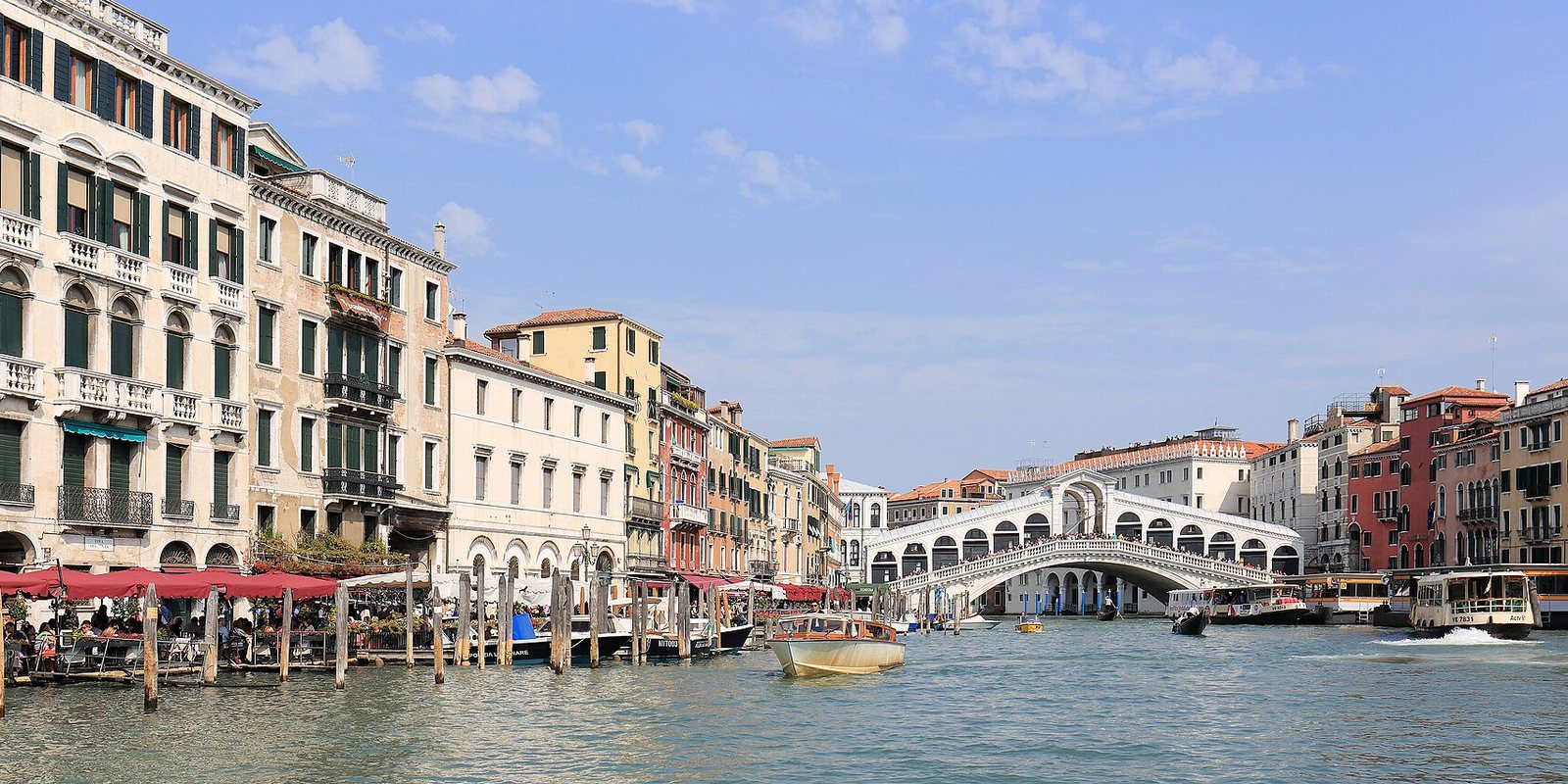
- **The Grand Canal.** Ride vaporetto line 1 from the station to St Mark's for the cheapest tour of palaces in the world.
- **Rialto Market.** Fish and produce stalls in the morning, then a cicchetti crawl through the bars around it.
- **Gallerie dell'Accademia and the Peggy Guggenheim Collection.** Venetian masters in one, twentieth century art in a canal side palazzo in the other.
- **Murano, Burano and Torcello.** Glassmaking, bright painted houses and lace, and a quiet island with the lagoon's oldest church.
- **Cannaregio and Castello.** The most residential districts, with the Jewish Ghetto, the Fondamenta della Misericordia and the Arsenale.
What to eat
Cicchetti, small bar snacks such as baccalà mantecato on polenta, sarde in saor and tramezzini sandwiches, with an ombra of wine or a spritz. Try risotto al nero di seppia, bigoli in salsa and fegato alla veneziana. Avoid restaurants with touts and picture menus near St Mark's.
Where to stay
**San Marco and San Polo** are central but busy. **Cannaregio** is local and lively by the canals at night. **Dorsoduro** is artsy and calm. **Castello** feels like a village. Staying in **Mestre** on the mainland is cheaper but misses the evening magic. Venice charges a city tourist tax per night at your stay.
Getting around
Walk, and expect bridges with steps everywhere, which matters with heavy luggage or a pram. Vaporetto water buses run the canals and lagoon; buy a one to seven day pass if you will ride often. Traghetti gondola ferries cross the Grand Canal at a few points. Water taxis are fast but expensive.
The day visitor fee
Venice charges an access fee to day visitors on set peak days, mainly in spring and summer, with booking through the official city portal. Overnight guests are exempt but still register. Check the current calendar and rules on the official site before you go.
Good to know
Acqua alta flooding can affect low areas in autumn and winter, though the MOSE barrier now protects the city from most high tides. Swimming in the canals and sitting on monuments are banned. Large tour groups are capped in size.
A sample two day plan
On day one, reach St Mark's Square early, visit the basilica on a booked slot and the Doge's Palace, then wander north through quiet lanes to the Rialto for lunch. In the afternoon, ride vaporetto line 1 along the Grand Canal and spend the evening on a cicchetti crawl in Cannaregio. On day two, take a morning boat to Murano and Burano, and if you have time, on to Torcello. Back in the city, visit the Accademia or the Peggy Guggenheim in Dorsoduro and watch the sunset from the Zattere waterfront.
Questions about Venice
Do I have to pay to enter Venice?
Day visitors on set peak dates must pay an access fee booked online, while overnight guests are exempt. Check the dates and exemptions on the official city portal.
How many days do I need in Venice?
Two days and one or two nights are ideal, so you see the city early and late when day visitors have gone.
Is a gondola ride worth it?
It is a once in a lifetime treat for many people. Official fares are set by the city, so agree the price and length before you step in.
How do I get from the airport to Venice?
Take the Alilaguna water bus straight to the city, or a road bus to Piazzale Roma and then walk or ride a vaporetto.
Facts checked . Fees, schedules and entry rules change, so always confirm the latest with the official source.