At a glance
- Best for
- Old town walks, desert trips and traditional houses
- Airport
- Shahid Sadooghi Airport (AZD)
- Time needed
- Two to three days
- Best season
- March to April and October to November
- Nearby
- Chak Chak, Meybod, Kharanaq and the desert
- Getting around
- Walking in the old town, taxis beyond
Why visit Yazd
For many travellers Yazd is the highlight of Iran. It is calm, compact and beautiful, and staying in a restored courtyard house in the old town is one of the best experiences in the country. The pace is slower than in Isfahan or Shiraz, and the desert is right on the edge of town.
The old town
The historic city of Yazd became a UNESCO World Heritage site in 2017. Walk without a plan through the Fahadan quarter and you will find carved wooden doors with separate knockers for men and women, small domed cisterns called ab anbar and narrow lanes that stay cool in summer. The windcatchers, or badgir, are tall towers that pull breezes down into the houses below. Climb to a rooftop café at sunset for the classic view.
The Jameh Mosque and Amir Chakhmaq
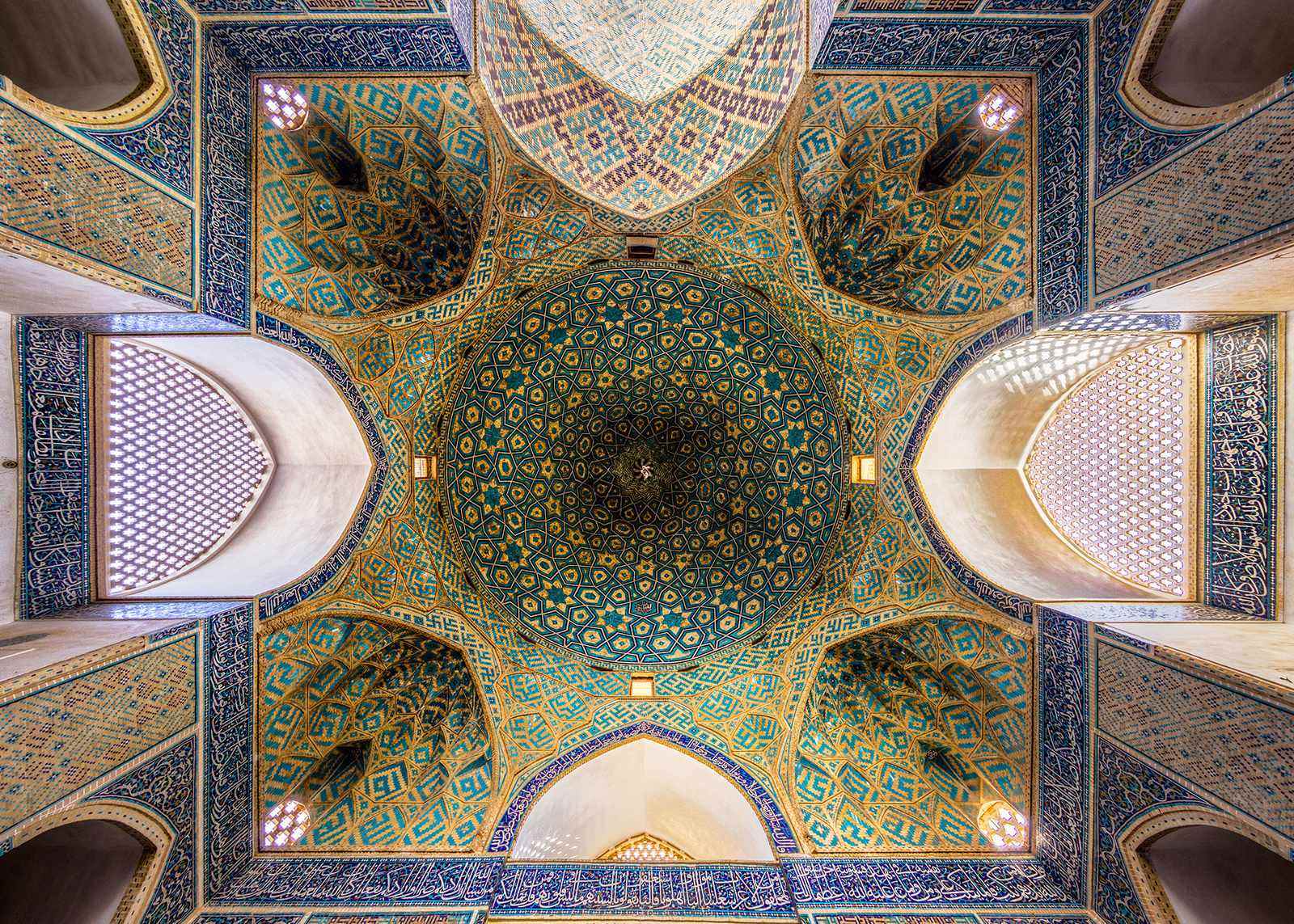
The Jameh Mosque has the tallest entrance portal in Iran, flanked by two slim minarets and covered in blue tile. It is especially lovely at night. Amir Chakhmaq Complex, with its three tiers of arched niches, faces a square that fills with families in the evening and is the stage for mourning ceremonies in the month of Muharram.
Zoroastrian Yazd
Zoroastrianism was the faith of the ancient Persian empires, and Yazd has Iran's largest community of followers. The Atash Behram fire temple keeps a flame said to have burned since around AD 470, visible through a glass window. On the edge of town, the Towers of Silence are two hills where the dead were once laid out for birds, a practice that ended in the twentieth century. Climb them at sunset for wide views. The pilgrimage site of Chak Chak, a cliff shrine about an hour away, is a moving half day trip.
Gardens and water
Dowlatabad Garden has one of the tallest windcatchers in Iran over a pavilion and long pools, part of the UNESCO Persian Garden listing. The Water Museum explains the qanat system, underground channels that brought water from the mountains for thousands of years and are themselves UNESCO listed.
Sweets and food
Yazd is famous across Iran for sweets: baklava, ghotab pastries and cotton soft pashmak. Haj Khalifeh Ali Rahbar is the best known sweet shop. Local dishes include shuli, a herb and beet soup, and camel stews in some places. Most courtyard hotels have good restaurants.
Desert trips
Tours from Yazd go to Meybod, with its pigeon tower and ice house, the abandoned mud village of Kharanaq and the dunes and salt flats further out. A night at a desert caravanserai or camp is unforgettable under clear skies. Book through registered operators or your hotel.
Practical tips
Summer temperatures regularly pass forty degrees Celsius: sightsee at dawn and after sunset. Winter nights are cold. Stay inside or close to the old town if you can, as it is the whole point of being here.
Getting there and moving on
Yazd sits roughly midway between Isfahan and Shiraz, and comfortable long distance buses connect it to both in around four to six hours. Trains run from Tehran and other cities, and the small airport has domestic flights. Many travellers break the journey from Isfahan with a stop in Nain, which has an old mosque and a tradition of fine carpets and camel wool cloaks, or in Meybod. Heading east, the oasis village of Garmeh and the Lut desert lie further out, best reached with a registered operator.
Etiquette in the old town
The old town is a living neighbourhood, not a museum. Keep your voice down in residential lanes, ask before photographing people, and dress modestly. During Muharram, when processions and mourning ceremonies fill the squares, visitors are welcome to watch respectfully but should avoid wearing bright colours.
Questions about Yazd
How many days do I need in Yazd?
Two days covers the old town, the Jameh Mosque, the fire temple and the Towers of Silence. Add a day for Chak Chak, Meybod or a desert trip.
Where should I stay in Yazd?
In a restored courtyard house in or near the old town. These traditional hotels are the best way to experience the city, and many have rooftop terraces.
Is Yazd too hot in summer?
From June to August it is very hot by day. It is possible if you rest in the afternoon, but spring and autumn are far more comfortable.
Facts checked . Fees, schedules and entry rules change, so always confirm the latest with the official source.