At a glance
- Best for
- Gardens, poetry, history and Persepolis
- Airport
- Shiraz International Airport (SYZ)
- Time needed
- Three days including Persepolis
- Best season
- March to May and October to November
- Nearby
- Persepolis, Naqsh-e Rostam and Pasargadae
- Getting around
- Taxis, walking and hired drivers for day trips
Why visit Shiraz
Shiraz feels softer than Tehran. It is greener, slower and proud of its poets, and its people have a reputation for warmth and humour. Most travellers on the classic route finish or start here, and the city easily fills three days once you add the ancient sites to the north.
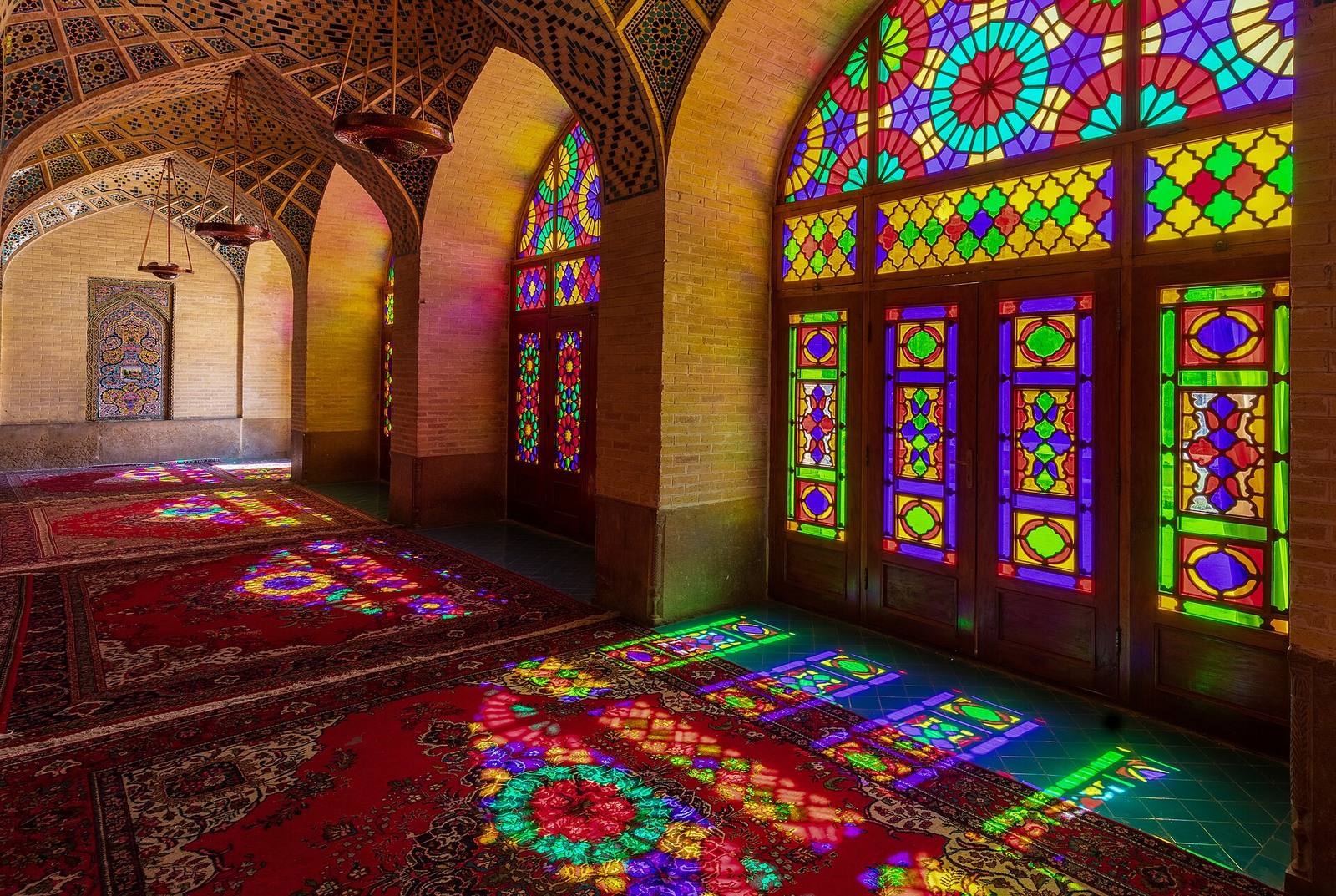
Nasir al-Mulk Mosque
Known everywhere as the pink mosque, Nasir al-Mulk was built in the 1880s and is famous for its stained glass windows. On sunny mornings, especially in autumn and winter, light pours through the glass onto Persian carpets and turns the prayer hall into a kaleidoscope. Arrive soon after opening to see the light at its best and avoid the crowds.
The poets
Hafez, the fourteenth century poet, is loved across Iran, and many homes keep a copy of his collected poems to consult like an oracle. His tomb sits in a garden where Iranians come to recite verses, especially in the evening. The tomb of Saadi, another great poet, is quieter, with a garden and a small underground pool. Visiting both shows you something essential about Iranian culture.
Gardens and old Shiraz
Eram Garden, a UNESCO listed Persian garden, has cypress avenues, pools and a Qajar pavilion. Narenjestan Qavam is a smaller garden house with mirror work and orange trees. In the old centre, the Vakil Bazaar, Vakil Mosque and Vakil Bath were built by Karim Khan Zand in the eighteenth century, and his brick citadel, the Arg of Karim Khan, stands nearby. The Shah Cheragh shrine, with its dazzling mirrored interior, is the city's most important religious site: non-Muslims are usually welcome with a guide provided at the entrance, but dress rules are strict and security checks are thorough. The shrine was the target of deadly attacks in 2022 and 2023.
Persepolis and Naqsh-e Rostam
Persepolis, about an hour north east, was begun by Darius the Great around 518 BC and burned by Alexander in 330 BC. Its staircases carved with processions of tribute bearers from across the empire, its great columns and its royal tombs cut into the hill are among the finest ancient remains in the world. Go early, carry water and a hat, and allow at least three hours.
A few kilometres away, Naqsh-e Rostam has four royal tombs cut high into a cliff, with Sasanian rock reliefs below. Further north, Pasargadae has the simple stone tomb of Cyrus the Great. Most visitors hire a driver for the day, arranged through their hotel, to see all three.
Food
Shiraz has its own dishes: kalam polo, rice with cabbage and herbs, and Shirazi salad of cucumber, tomato and onion with sour grape juice. Faloodeh, a frozen dessert of thin rice noodles in rose water syrup, is the famous sweet. The bazaar area has old teahouses in restored caravanserais.
Practical tips
Spring, when the orange blossom is out, is the most beautiful time, and Nowruz in late March brings huge domestic crowds, so book early then. Summer is very hot. Most sights are walkable from central hotels, and taxis are easy. Remember that sanctions mean cards do not work: carry enough cash for entry tickets and the Persepolis trip.
Questions about Shiraz
How do I get to Persepolis from Shiraz?
Most visitors hire a driver for the day through their hotel, combining Persepolis, Naqsh-e Rostam and sometimes Pasargadae. The drive to Persepolis takes about an hour.
When is the best time to see the pink mosque?
Soon after opening on a sunny morning. The light through the stained glass is strongest early, and the angle is best in the cooler months.
How many days do I need in Shiraz?
Three days is ideal: two for the city's gardens, tombs and bazaar, and one for Persepolis and Naqsh-e Rostam.
Can non-Muslims visit Shah Cheragh?
Usually yes, with a guide provided at the entrance and strict dress rules, including a chador for women. Access can change, so ask on the day and follow instructions.
Facts checked . Fees, schedules and entry rules change, so always confirm the latest with the official source.