At a glance
- Best for
- Whale watching, Mývatn, waterfalls and aurora
- Airport
- Akureyri (AEY), about forty five minutes from Reykjavík by air
- Time needed
- Three to five days
- Best season
- June to August, and winter for snow and aurora
- Getting around
- Domestic flights, tours and self drive
- Good base for
- Mývatn, Húsavík, Goðafoss and the Diamond Circle
Why go
The north feels like a different Iceland: deep fjords, steaming lava fields, birch woods and some of the best whale watching in Europe. Akureyri itself has a botanical garden, a ski slope, cafés and a lively summer arts scene, and its traffic lights glow with red hearts. It is a great choice for a second region on a week or ten day trip.
Akureyri
Climb the steps to **Akureyrarkirkja**, the church above the town centre, and stroll the pedestrian street **Hafnarstræti**. The **Akureyri Botanical Garden** is a surprise this close to the Arctic Circle. **Akureyri swimming pool** has water slides and hot tubs, and **Forest Lagoon** is a geothermal spa set among trees above the fjord. In winter, **Hlíðarfjall** is Iceland's leading ski area.
The Diamond Circle
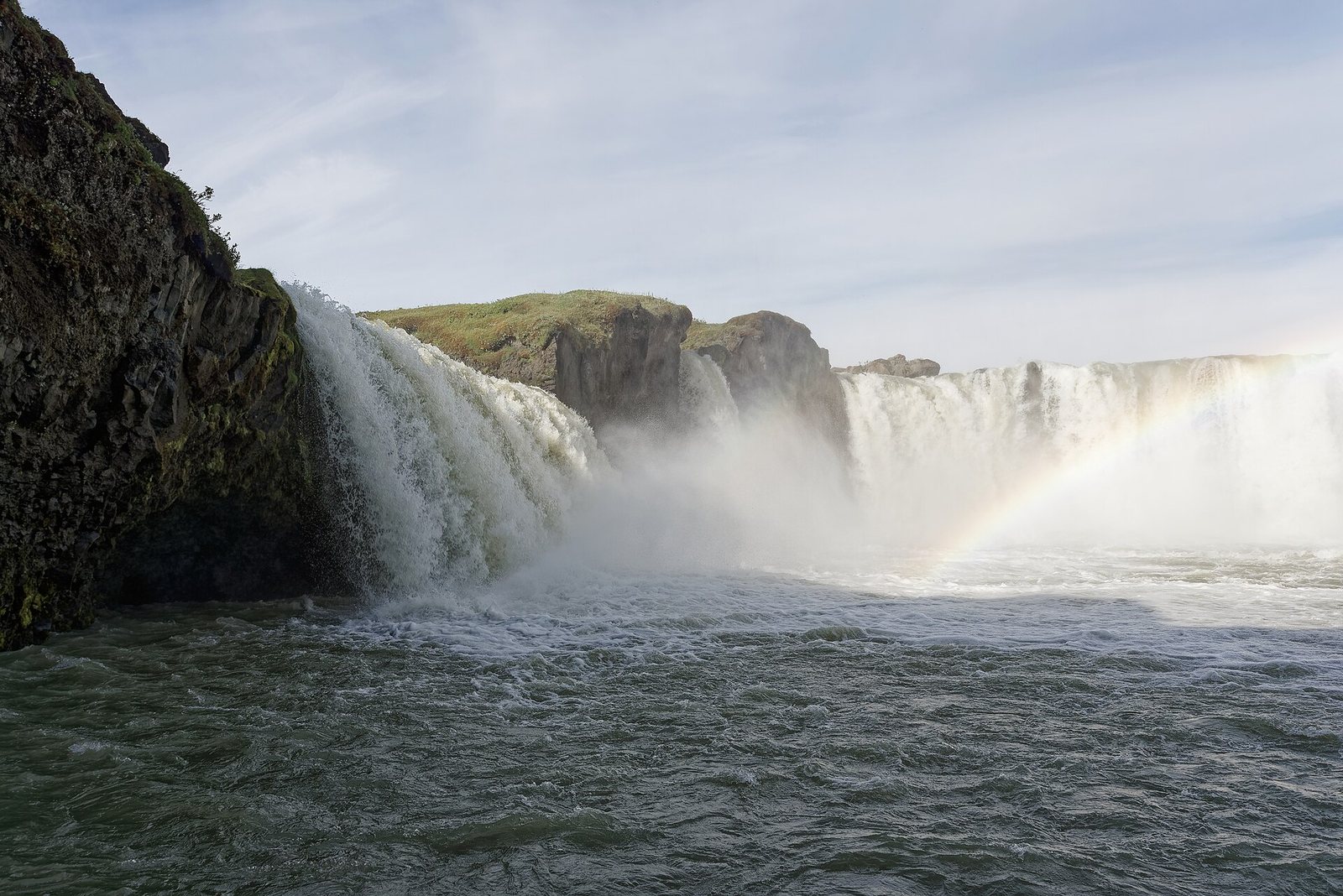
**Goðafoss**, the waterfall of the gods, is a horseshoe of water just off Route 1, where legend says the old pagan idols were thrown in when Iceland adopted Christianity around the year 1000. **Lake Mývatn** is ringed by pseudocraters at **Skútustaðir**, the lava labyrinth of **Dimmuborgir**, the crater **Hverfjall**, and the steaming mud pots of **Hverir**. Soak in the **Mývatn Nature Baths** afterwards. **Dettifoss**, in the north of Vatnajökull National Park, is Europe's most powerful waterfall, and the horseshoe canyon of **Ásbyrgi** lies nearby.
Whales and the coast
**Húsavík** is Iceland's whale watching capital, with humpbacks often seen from spring to autumn and occasional blue whales. Visit the **Húsavík Whale Museum** and warm up at **GeoSea**, sea baths on the cliff. From **Dalvík** or **Hauganes**, boats also head out on Eyjafjörður. The island of **Grímsey**, straddling the Arctic Circle, can be reached by ferry or small plane.
Where to stay
Stay in central **Akureyri** for restaurants and easy flights, or around **Mývatn** for dark skies and early starts. **Húsavík** has guesthouses close to the harbour. Book Mývatn rooms early in summer.
Getting there and around
Domestic flights from Reykjavík take under an hour, and long distance buses run in summer. The drive on Route 1 takes about five hours. Day tours from Akureyri reach Mývatn, Goðafoss and Húsavík. In winter, check road.is before crossing mountain passes, and note that the road to Dettifoss can close.
Practical tips
Mývatn means midge lake, and summer midges can swarm on calm days, so a head net helps. Winter is cold but magical, with snow and good aurora chances. Plan the north with our places to visit list and the free trip planner.
A sample Diamond Circle day
From Akureyri, drive forty minutes east to Goðafoss and walk both sides of the falls. Continue to Lake Mývatn for the pseudocraters at Skútustaðir, lunch at the cowshed café, and a walk through Dimmuborgir. In the afternoon, cross to Hverir and the Krafla area, then continue north to Dettifoss and Ásbyrgi if roads are open, or turn back for a long soak at the Mývatn Nature Baths. The next morning, drive to Húsavík for a whale watching trip and a dip at GeoSea before returning to Akureyri.
When to go
June to August brings the midnight sun, open highland and Dettifoss roads, and the calmest seas for whale watching. September brings autumn colours and the first aurora. From November to March the north is snowy, cold and beautiful, with skiing at Hlíðarfjall, steaming lakes at Mývatn and long dark nights for the northern lights, but some roads close and tours depend on the weather.
Questions about Akureyri and the North
How do I get from Reykjavík to Akureyri?
Fly from Reykjavík's domestic airport in under an hour, drive about five hours on Route 1, or take a long distance bus in summer.
When is the best whale watching in Húsavík?
Roughly April to October, with the best chances and calmest seas in June to August. Some operators run all year.
Is north Iceland worth it in winter?
Yes, if you enjoy snow. Akureyri has skiing, Mývatn has steaming landscapes and baths, and dark skies give good aurora chances. Days are short and some roads close.
What is the Diamond Circle?
A route from Akureyri or Húsavík linking Goðafoss, Lake Mývatn, Dettifoss, Ásbyrgi and Húsavík, often done over one or two days.
Facts checked . Fees, schedules and entry rules change, so always confirm the latest with the official source.