At a glance
- Best for
- History, views and a memorable hike
- Nearest airport
- Cap-Haïtien International, about forty five minutes to an hour by road
- Time needed
- A full day, or a night in Milot
- Best time
- Early morning, December to April
- Getting around
- Driver from Cap-Haïtien, then walk or ride a horse up the mountain
- Good base for
- The Ramiers site and the Chapelle Royale
Sans-Souci Palace
Your visit begins in **Milot**, a small town about forty five minutes from Cap-Haïtien. At its edge stand the ruins of **Sans-Souci Palace**, the royal residence of Henri Christophe, who ruled the northern kingdom from 1811 to 1820. Grand staircases, arched windows and terraces climb the hillside, and you can still see the channels that once carried cool spring water beneath the floors. The palace was badly damaged by the earthquake of 1842 and never rebuilt, which gives it a haunting beauty. Beside it, the domed **Chapelle Royale de Milot** is still a working church.
The climb to the Citadelle
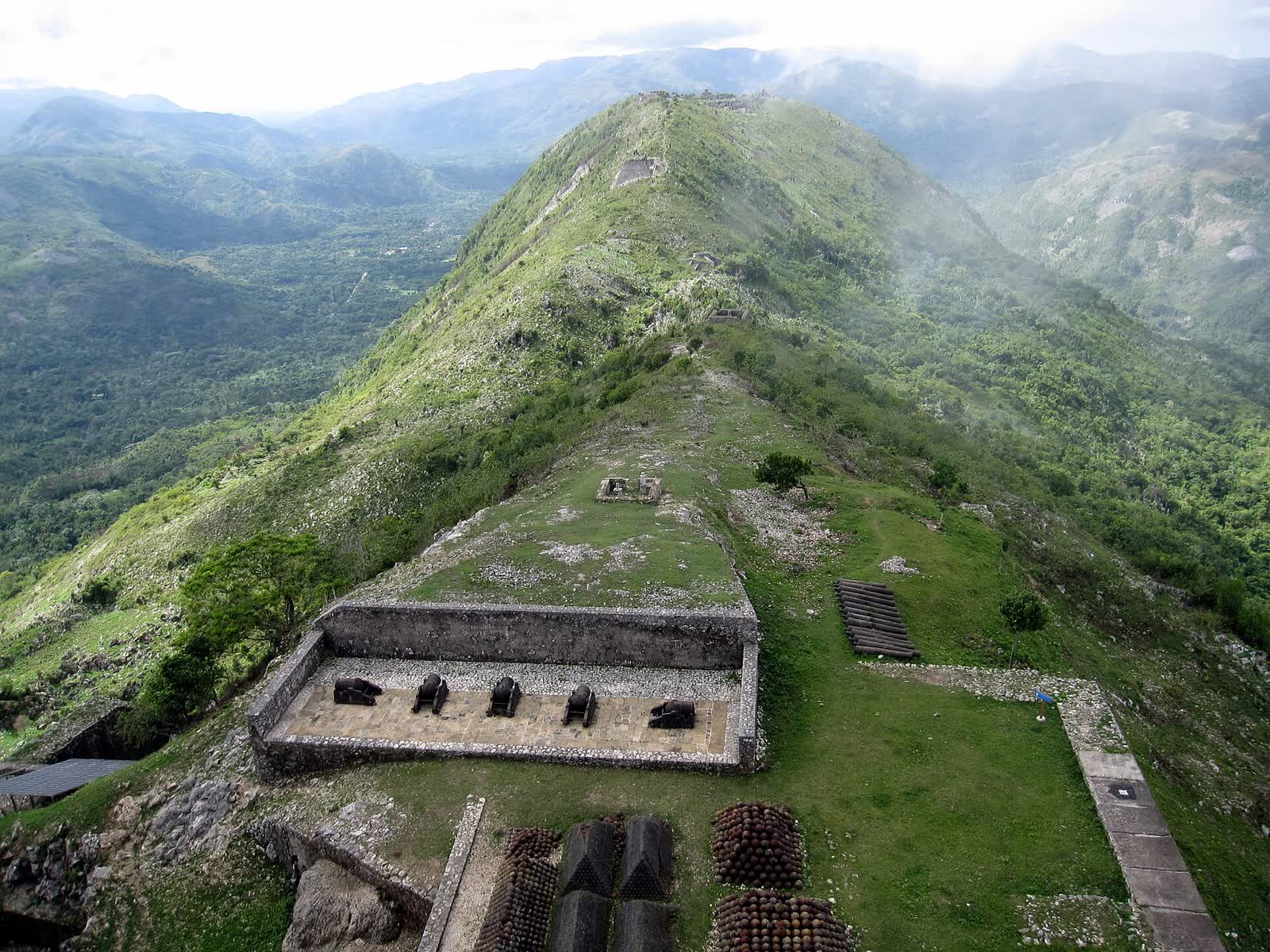
From the palace a steep road winds up the mountain to a parking area, and from there it is a walk of roughly half an hour to an hour up a paved path, or a ride on horseback with a local handler. Go early, before the heat and the afternoon clouds. At the top, the **Citadelle** rises like the bow of a ship, with walls tens of metres high, more than a hundred and fifty cannons and stacks of cannonballs still in place. Inside are barracks, storerooms, gun galleries and the tomb of Henri Christophe. On a clear day the view stretches across the northern plain to Cap-Haïtien and the sea.
The Ramiers site
A short walk beyond the Citadelle, the **Site des Ramiers** holds the remains of small fortifications that completed the defensive system. Few visitors go, so it is quiet and gives a sense of the scale of the whole project.
Guides and practicalities
Official guides wait at the entrance in Milot and on the path. Agree what is included before you start, and be clear if you want a horse, as handlers can be persistent. Entry fees are paid at the site and are set by the national heritage institute (ISPAN): check current details locally or with your hotel. Wear good walking shoes, bring water, sunscreen, a hat and a light rain layer, and carry small notes in gourdes for tips and drinks. There are basic snacks and craft sellers near the car park.
Lakou Lakay and local culture
In Milot, the **Lakou Lakay** cultural centre has hosted visitors for meals of Haitian dishes, music and traditional dance, giving a warm sense of northern rural life. Ask your hotel whether it is currently receiving guests, and book ahead. The town also has small craft workshops selling metalwork, paintings and wood carvings.
Safety
The Milot area has generally been calm compared with the capital, and visitors make day trips from Cap-Haïtien. Still, most governments advise against all travel to Haiti, and blockades or protests on the road can happen. Go with a driver arranged by your hotel or family, set off early, and return to Cap-Haïtien before dark.
A suggested day
Leave Cap-Haïtien around seven in the morning. Visit Sans-Souci on the way up or down, climb to the Citadelle while it is cool, spend an hour exploring the walls and galleries, and walk down for a late lunch in Milot or back in Le Cap. It is one of the great days out in the Caribbean.
Plan it with the free trip planner, and see Cap-Haïtien for where to stay.
Questions about Citadelle and Milot
How hard is the walk to the Citadelle?
It is steep but short, around half an hour to an hour on a paved path from the upper car park. Most reasonably fit visitors manage it, and horses are available.
Do I need a guide?
A guide is not required for the path, but official guides bring the history to life and help with horses and handlers. Agree the details before you start.
Can I visit as a day trip from Cap-Haïtien?
Yes. Most people leave in the morning and are back in Le Cap by mid afternoon.
When is the Citadelle open?
It is usually open daily during daylight hours. Check with your hotel the day before, as closures can happen for weather or local events.
Facts checked . Fees, schedules and entry rules change, so always confirm the latest with the official source.