At a glance
- Best for
- Baroque architecture, royal treasures, art and nature nearby
- Main airport
- Dresden (DRS), or Berlin (BER) about two hours away by train
- Time needed
- Two to three days
- Best season
- May to October, and December for the Striezelmarkt
- Getting around
- Trams, walking and Elbe paddle steamers
- Good base for
- Saxon Switzerland, Meissen, Moritzburg and Prague
Why go
Dresden combines royal splendour with a strong sense of history and renewal. The Saxon kings filled it with treasures, the war almost erased it, and the rebuilding of the Frauenkirche became a symbol of reconciliation. Across the river, the Neustadt is one of Germany's liveliest alternative neighbourhoods, and the sandstone cliffs of Saxon Switzerland are less than an hour away.
The main sights
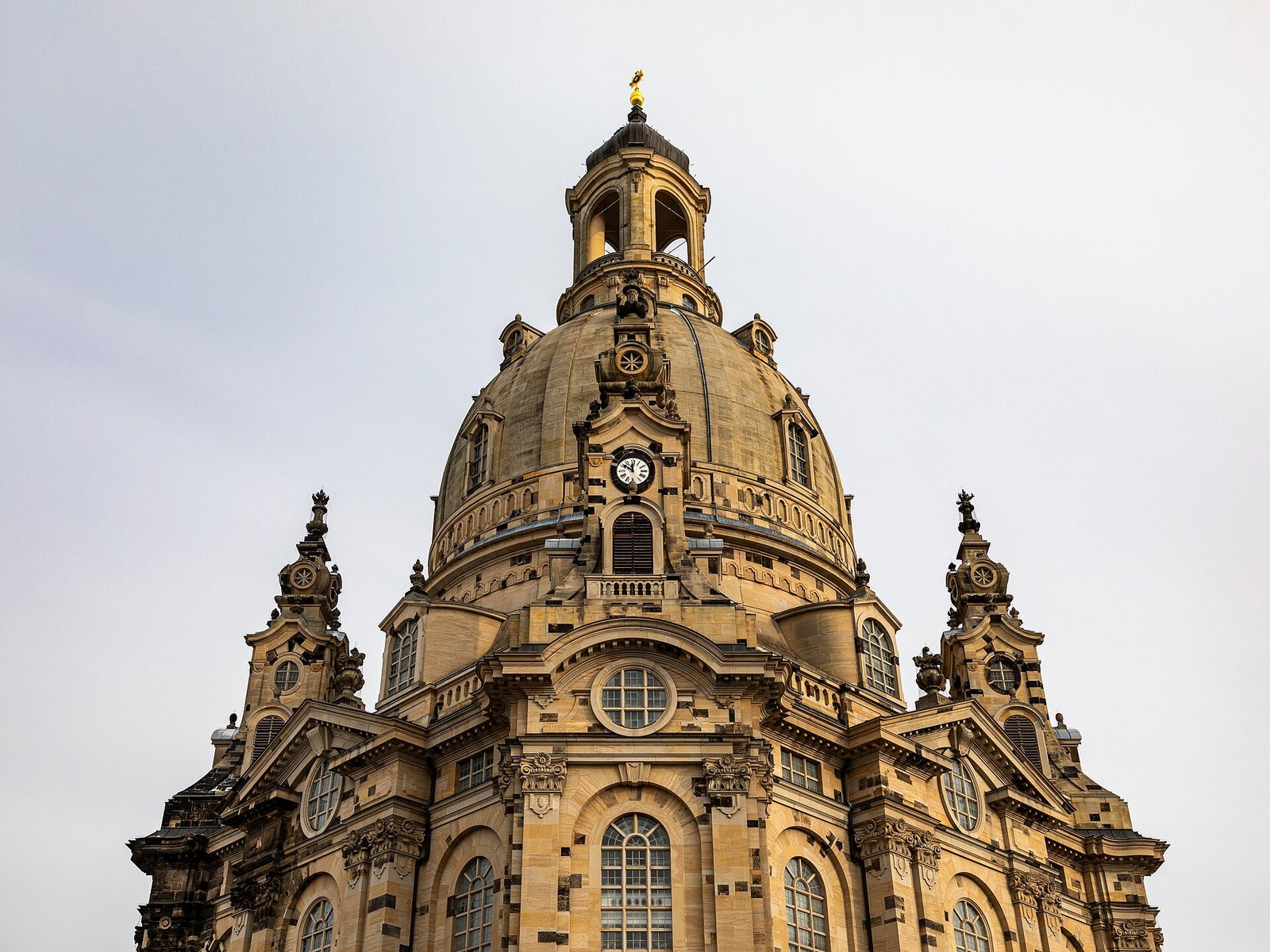
The **Frauenkirche**, a domed Lutheran church, was left as a ruin for decades and rebuilt with the help of donations from around the world, reopening in 2005. Entry is generally free outside services and concerts, and you can climb to the dome for a view. The **Zwinger** is a baroque palace complex with courtyards, fountains and galleries, including the Old Masters Picture Gallery with Raphael's Sistine Madonna.
The **Residenzschloss**, the royal palace, holds the **Green Vault**, one of Europe's richest treasure collections, split into the Historic Green Vault (timed tickets, book ahead) and the New Green Vault. The **Semperoper** opera house, the **Brühl Terrace** above the river, sometimes called the balcony of Europe, and the **Procession of Princes**, a long porcelain tile mural, are all in the old town.
The Neustadt
Despite its name, the Neustadt across the river has more old buildings than the Altstadt, as it was less damaged in the war. The **Äussere Neustadt** is full of bars, cafés, street art and independent shops. Look for the **Kunsthofpassage**, a set of courtyards with whimsical facades, including one where drainpipes play music when it rains. **Pfunds Molkerei**, a dairy shop covered in hand-painted tiles, is a classic stop.
On the river
The **Saxon Steamship Company** runs historic paddle steamers along the Elbe from spring to autumn, upstream to Pillnitz Palace and into Saxon Switzerland. The riverside meadows are a favourite place for summer picnics and the open-air Filmnächte cinema.
Day trips
**Saxon Switzerland National Park** is a landscape of sandstone towers and gorges. The **Bastei Bridge** is the most famous viewpoint, reached by S-Bahn to Kurort Rathen and a short ferry and climb. **Königstein Fortress** sits on a table mountain with huge views. **Meissen**, the home of European porcelain, has a castle and cathedral above the river, and **Moritzburg Castle** stands in a lake. **Prague** is about two and a half hours by train or bus, and **Leipzig** about an hour.
Food
Saxony's specialities include **Sauerbraten** (marinated pot roast), potato soup, and **Eierschecke**, a layered cake with a custard top. Dresden is also the home of **Christstollen**, the fruit bread eaten at Christmas. Local Saxon wines from the Elbe valley are worth trying.
The Striezelmarkt
Dresden's **Striezelmarkt** is one of Germany's oldest Christmas markets, held since the fifteenth century on the Altmarkt. It runs from late November to Christmas Eve, with a giant Christmas pyramid and stollen festival.
Where to stay
The **Altstadt** puts you next to the main sights. The **Neustadt** is better for bars, cafés and a more local feel, and it is a short walk or tram ride over the river. Hotels around the main station are convenient for trains.
Questions about Dresden
How many days do I need in Dresden?
Two days covers the old town, the museums and the Neustadt. Add a day for Saxon Switzerland or Meissen.
Can I visit Saxon Switzerland from Dresden by public transport?
Yes. The S-Bahn runs along the Elbe to Kurort Rathen for the Bastei and to Königstein for the fortress, and paddle steamers run in season.
Do I need to book the Green Vault?
Yes for the Historic Green Vault, which uses timed tickets with limited numbers. Book ahead on the Dresden State Art Collections website.
Is Dresden a good add-on to a Berlin trip?
Yes. Trains take about two hours, and Dresden's compact centre makes it a relaxing contrast to Berlin. Many travellers continue to Prague.
Facts checked . Fees, schedules and entry rules change, so always confirm the latest with the official source.