At a glance
- Best for
- Cathedral, beer halls, carnival, river cruises and castles
- Main airport
- Cologne Bonn (CGN), or Frankfurt (FRA) under an hour away by fast train
- Time needed
- Two days in Cologne, plus one to two days on the Rhine
- Best season
- May to October, November for Carnival opening, December for markets
- Getting around
- Trains, trams, walking and Rhine boats
- Good base for
- Bonn, Düsseldorf, Aachen and the Middle Rhine valley
Why go
Cologne is friendly, unpretentious and easy to enjoy. The cathedral is one of Europe's great buildings, the old town is full of traditional brewery taverns, and the city's museums cover everything from Roman mosaics to Picasso and chocolate. Combine it with a few days on the Rhine and you get a trip of grand churches, castles, wine and river views.
Cologne's main sights
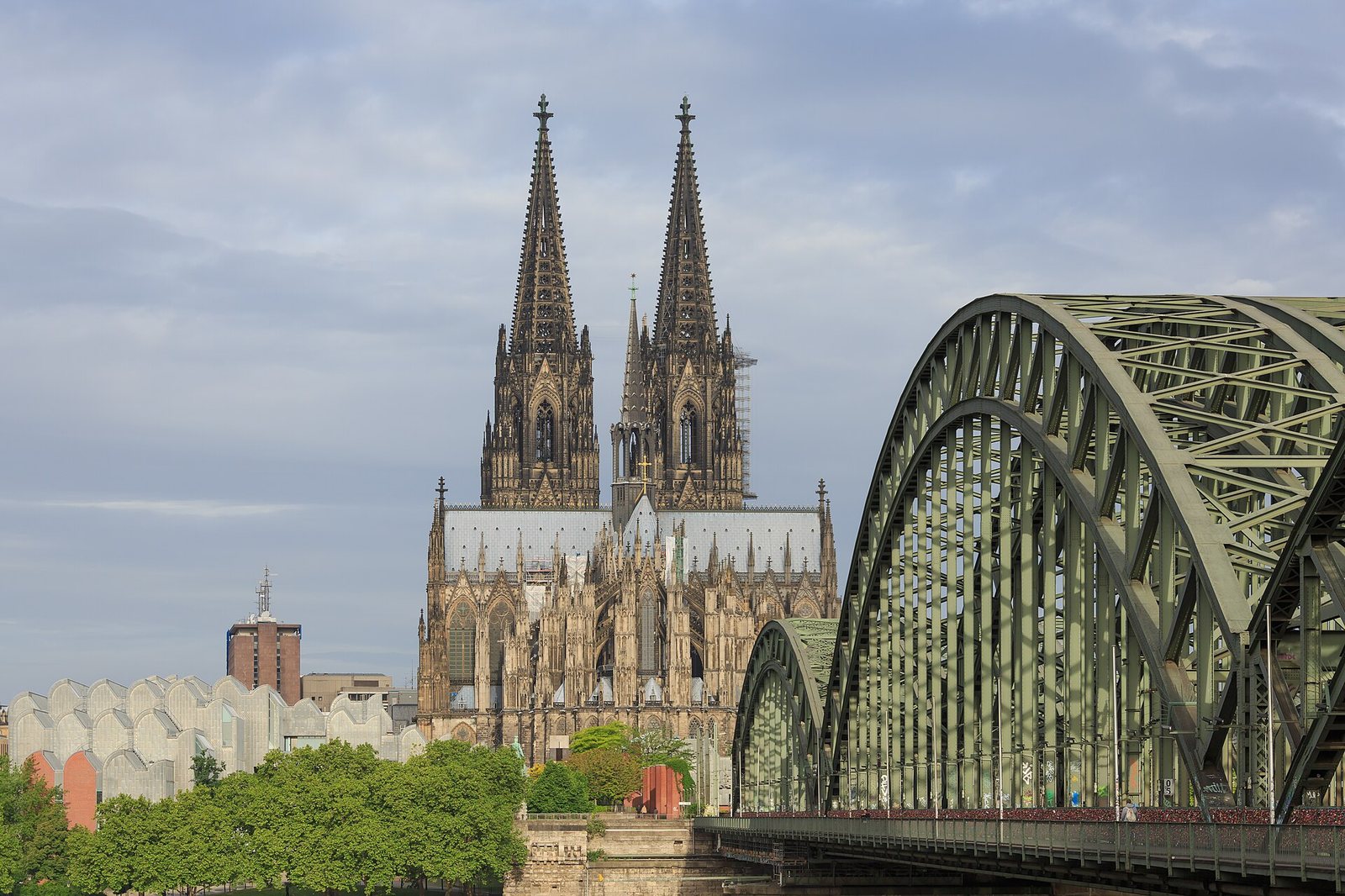
**Cologne Cathedral** (Kölner Dom) is right next to the main station, so it is often the first thing you see. It took more than six centuries to complete and survived the bombing of the Second World War. Entry to the nave is free; climbing the 533 steps of the south tower needs a ticket, and the treasury holds the Shrine of the Three Kings. Dress respectfully and avoid visiting during services.
Nearby, the **Römisch-Germanisches Museum** (partly in temporary premises during renovation) shows Roman Cologne, the **Museum Ludwig** has one of Europe's largest Picasso and pop art collections, and the **Chocolate Museum** on the Rhine is a family favourite. Walk across the **Hohenzollern Bridge**, covered in love locks, for the classic view back to the cathedral.
Kölsch and the brewhouses
Cologne's local beer, **Kölsch**, is light and served in small, slim glasses called Stangen. In traditional brewhouses such as **Früh am Dom**, **Gaffel am Dom** and **Päffgen**, waiters called Köbes keep bringing fresh glasses until you place your beer mat on top of the glass. Pair it with **Halve Hahn** (a rye roll with cheese, not half a chicken) or **Himmel un Ääd**, black pudding with mashed potato and apple.
Carnival
Cologne Carnival officially opens on 11 November at 11.11, but the main celebrations run in the days before Ash Wednesday, usually in February. The street carnival begins on the Thursday before, known as Weiberfastnacht, and peaks with the Rose Monday parade. Expect costumes, music, huge crowds and very busy trains. Book accommodation early.
Neighbourhoods
The **Altstadt** along the Rhine is full of brewhouses. The **Belgian Quarter** has independent shops, cafés and bars, **Ehrenfeld** is creative and multicultural, and the **Südstadt** feels local and relaxed. The **Rheinauhafen**, with its crane-shaped buildings, is a pleasant riverside walk.
The Middle Rhine valley
South of Koblenz, the Rhine winds through a deep gorge between **Koblenz** and **Bingen**, lined with castles on almost every hill. Highlights include the **Marksburg**, one of the few castles never destroyed, **Rheinfels Castle** at St Goar, the **Loreley rock**, and the wine villages of **Bacharach** and **Rüdesheim**. Boats run from around Easter to October, and you can hop on and off between towns. Regional trains run along both banks year-round. **Burg Eltz**, a fairytale castle in a forest valley near the Moselle, is a popular side trip.
Getting around
Cologne's centre is walkable, and trams and S-Bahn trains cover the rest. Cologne Hauptbahnhof is one of Germany's busiest rail hubs, with fast trains to Frankfurt, Berlin, Hamburg, Brussels, Amsterdam and Paris.
Where to stay
Staying near the cathedral and station is convenient for trains. The Belgian Quarter and Südstadt are livelier and more local. On the Rhine, Bacharach, St Goar and Boppard make charming overnight stops. Hotels fill up and prices rise during carnival and large trade fairs at the Koelnmesse.
Questions about Cologne and the Rhine
Can I see the Rhine castles as a day trip from Cologne?
Yes. Take a train to Koblenz or Boppard, then a boat upstream to St Goar, Bacharach or Rüdesheim, and return by train. It makes a long but rewarding day; an overnight stop is more relaxed.
Is Cologne Cathedral free to visit?
Entry to the cathedral is free outside service times. The tower climb and the treasury require tickets; check the cathedral's official website for current hours.
When is Cologne Carnival?
The season opens on 11 November, but the main street carnival runs from the Thursday before Ash Wednesday to Rose Monday, usually in February or early March.
When do Rhine river boats run?
Most scheduled boats run from around Easter to late October, with a reduced timetable at the start and end of the season. Trains run along the river all year.
Facts checked . Fees, schedules and entry rules change, so always confirm the latest with the official source.