At a glance
- Best for
- Old town walks, food, wine bars, baths and nightlife
- Airport
- Tbilisi International Airport (TBS), about twenty to thirty minutes away
- Time needed
- Three to four days including day trips
- Best season
- April to June and September to October
- Getting around
- Walking, metro, buses and taxi apps
- Good base for
- Mtskheta, Uplistsikhe, Kakheti and Kazbegi
Why go
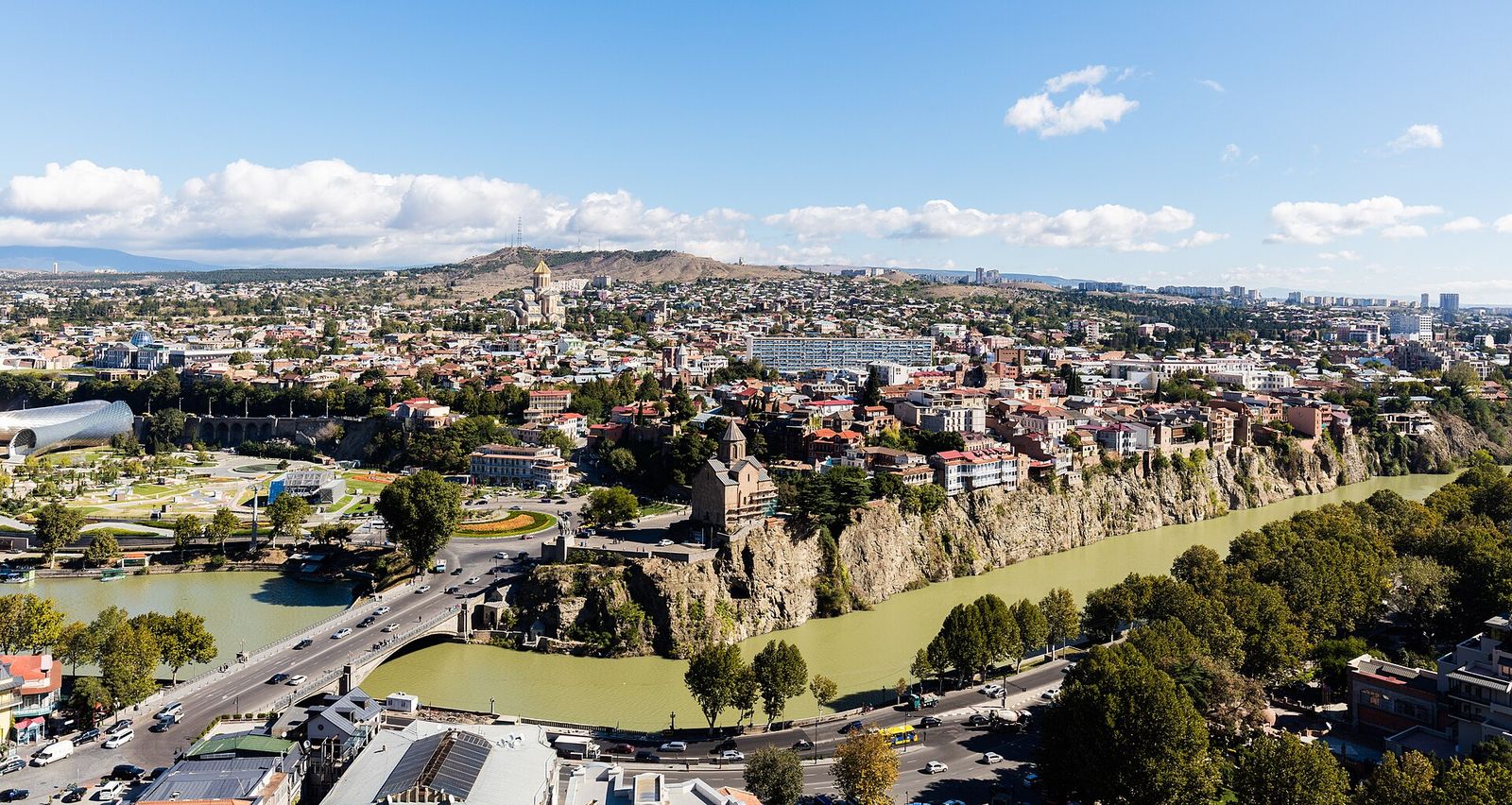
Tbilisi mixes eras like few capitals do. Persian style bathhouses, Orthodox churches, a mosque and a synagogue sit within a few streets of each other; art nouveau mansions line Sololaki; Soviet blocks and glass bridges complete the skyline. The food is generous, the natural wine scene is one of the most exciting anywhere, and Georgian hospitality means strangers often become friends over a shared table.
Top things to do
Start in **Abanotubani**, the bath quarter, where brick domes cover hot sulphur pools; book a private room at **Chreli Abano** or another bathhouse for an hour's soak. Walk or ride the cable car up to **Narikala Fortress** and the **Mother of Georgia** statue for the classic view, then wander down through the **Botanical Garden** to a hidden waterfall. In the old town, visit **Sioni Cathedral** and tiny **Anchiskhati Basilica**, and watch the angel ring the hour on the leaning tower of the **Gabriadze Marionette Theatre**.
On **Rustaveli Avenue**, the grand boulevard, the **Georgian National Museum** displays the gold treasures of ancient Colchis. Cross the **Bridge of Peace** to **Rike Park**, and climb to **Holy Trinity Cathedral** in Avlabari. For something different, browse the **Dry Bridge Market** for Soviet curios, explore the **Open Air Museum of Ethnography** in the hills of Vake, or ride the funicular to **Mtatsminda Park** for an evening Ferris wheel over the lights.
Food and drink
Eat **khinkali**, juicy dumplings you hold by the knot, **khachapuri** cheese bread, walnut rich **pkhali** and grilled **mtsvadi**. Restaurants range from busy khinkali halls to modern kitchens reviving historic recipes. In the evening, the cellars of the old town and Sololaki pour amber **qvevri** wines from small family producers, and many bars will happily guide you through a tasting.
Neighbourhoods and where to stay
**Old Tbilisi** and **Sololaki** put you within walking distance of the baths, fortress and wine bars, though streets are steep and some lanes are noisy at night. **Vera** and **Vake** are leafy, residential and full of cafés, a good choice for families and longer stays. **Chugureti**, around Aghmashenebeli Avenue and the Fabrika courtyard, is creative and lively, and **Marjanishvili** is well connected by metro. Choices run from simple guesthouses and hostels to design hotels in converted factories.
Day trips
**Mtskheta**, the ancient capital and religious heart of the country, is about half an hour north, with **Svetitskhoveli Cathedral** and **Jvari Monastery** on its hilltop. **Uplistsikhe**, a rock cut town near Gori, makes a good half day. Many visitors also do a long day to **Kakheti** or up the **Georgian Military Road** to Kazbegi, though both are better with an overnight stay.
Practical tips
The centre is walkable but hilly, so bring comfortable shoes. The metro is simple and cheap, with signs in Georgian and English, and taxi apps such as Bolt and Yandex Go set the fare before you ride. Large political demonstrations have taken place on Rustaveli Avenue and outside Parliament; avoid them, and check current advice before you go. Summers can be very hot in the gorge, so plan walks for mornings and evenings.
Use our places to visit list for restaurants, baths, bars and stays, and the places finder to see them on a map.
Questions about Tbilisi
How many days do I need in Tbilisi?
Three days covers the old town, baths, museums and a day trip to Mtskheta. Four or five lets you add Uplistsikhe, a slower pace and more evenings in the wine bars.
Are the sulphur baths worth it?
Yes, for most visitors. Book a private room for an hour or two, bring flip flops, and add a traditional scrub if you like. People with heart conditions or who are pregnant should check with a doctor first.
Where should first-timers stay in Tbilisi?
Old Tbilisi or Sololaki for walking to the sights, Vera or Vake for a calmer, leafier base with good cafés.
How do I get from the airport to the city?
Use a taxi app, an official taxi from the rank, or the city bus to the centre. Agree any taxi fare before you set off if you do not use an app.
Facts checked . Fees, schedules and entry rules change, so always confirm the latest with the official source.