At a glance
- Best for
- Old town walks, markets, culture and the hyena feeding
- Time needed
- Two days
- Nearest airport
- Dire Dawa, about an hour's drive away
- UNESCO
- Harar Jugol is a World Heritage Site
- Languages
- Harari, Oromo, Somali and Amharic
- Best season
- October to March
Getting there and safety
Most visitors fly from Addis Ababa to Dire Dawa, then drive about an hour up into the hills to Harar. The road and city are generally calm for visitors, but parts of eastern Ethiopia, especially near the Somali border, carry official warnings. Check your government's current advice for Harari, Dire Dawa and the surrounding regions before you travel.
The Jugol, the old walled town
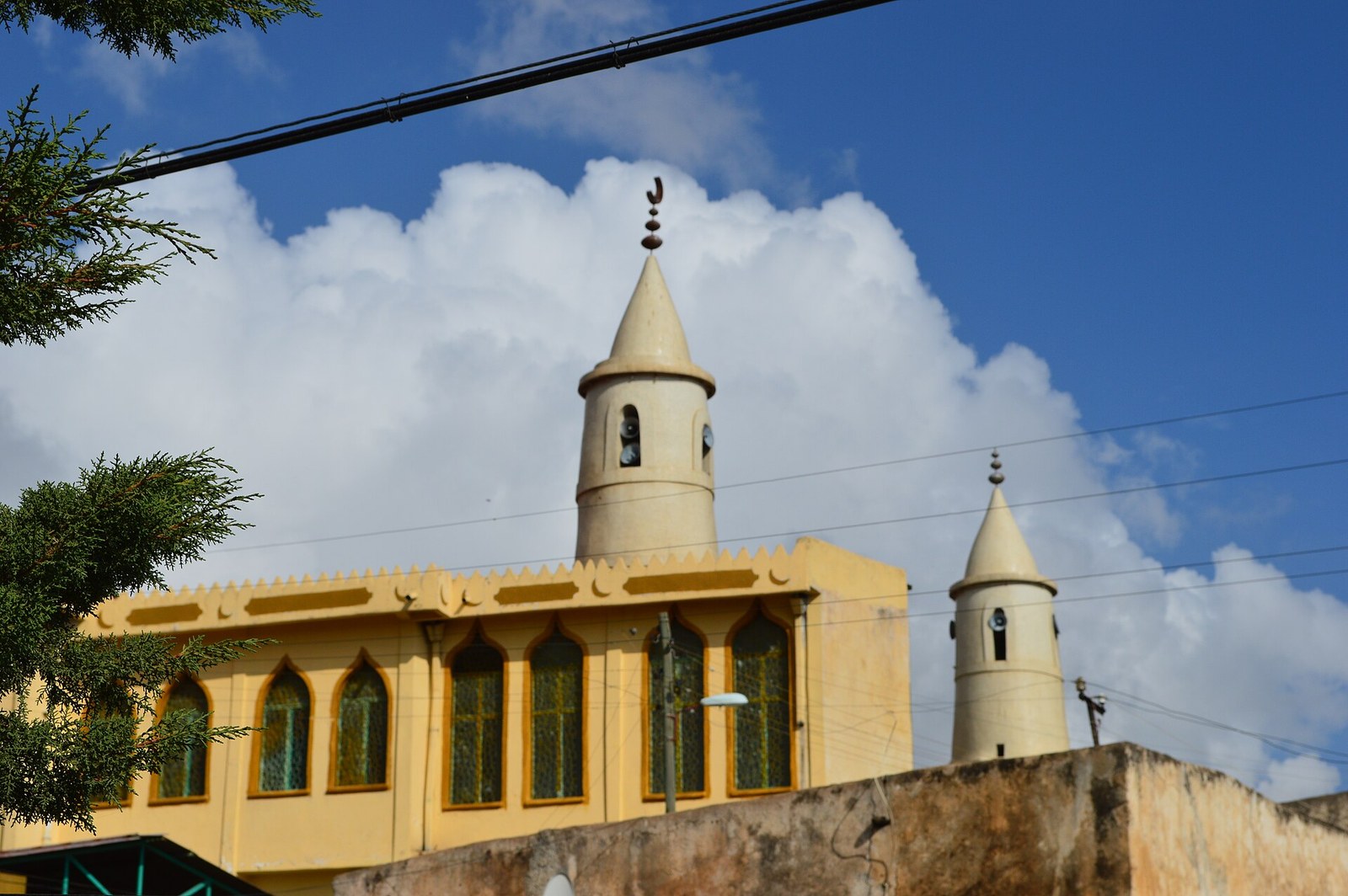
The sixteenth-century walls have five historic gates, and inside lies a dense web of lanes, many too narrow for cars. Houses are painted green, blue and pink, and traditional Harari homes have raised, carpeted living rooms hung with baskets and plates. A local guide is the best way to explore, and can usually take you inside a family home. Highlights include the Grand Mosque, the old Christian church of Medhane Alem and the shrine of Sheikh Abadir.
Rimbaud House and the museums
The French poet Arthur Rimbaud lived in Harar as a trader in the 1880s. The ornate wooden house named after him, built a little later by an Indian merchant, is now a museum with photographs of old Harar. The Sherif Harar City Museum holds a fine private collection of coins, weapons, manuscripts and household objects.
The hyena men
Every evening after dark, outside the walls, hyena men call wild spotted hyenas by name and feed them meat, sometimes from a stick held in their mouths. Visitors can watch and even take a turn. It began as a way of keeping peace between the city and the animals and is now one of the most unusual sights in Africa. Give a small contribution to the feeder, and take a guide or a bajaj there and back.
Markets
Harar's markets are a riot of colour: the Christian market and the Muslim market, the spice lanes, the basket weavers and the Smugglers' Market, where goods arrive from across the region. You will also see khat, the mild leaf stimulant chewed widely in the east, sold in huge bundles every afternoon.
Food and coffee
Harari food is lighter and spicier than highland cooking. Try hulbat, a fenugreek stew, and sambusa, and finish with a cup of coffee made from Harar beans, often spiced with cardamom or served with butter. Many guesthouses in the old town serve home-style dishes.
Where to stay
For atmosphere, stay in a traditional Harari guesthouse inside the walls, where you sleep in a family home with carpets and painted walls. Modern hotels outside the walls are more comfortable but less personal.
Respect and etiquette
Harar is a conservative Muslim city. Dress modestly, with shoulders and knees covered, and women may want a scarf for mosques. Ask before photographing people, as many prefer not to be photographed, and be aware that some may ask for a small payment for photos. During Ramadan, eat and drink discreetly in public during the day.
How to fit it into a trip
Harar is an easy add-on to Addis Ababa, with a short flight to Dire Dawa. It also combines with Dire Dawa's old railway town and, for adventurous travellers, the wild horses of Kondudo.
Questions about Harar
How many days do I need in Harar?
Two days is ideal: one for the old town, museums and markets, and an evening for the hyenas, plus time to slow down over coffee.
How do I get to Harar?
Fly from Addis Ababa to Dire Dawa, then take a car or minibus up to Harar, which takes about an hour.
Is the hyena feeding safe?
It is a long-running tradition and generally safe when you follow the feeder's instructions. Keep still, stay close to your guide and do not wander off in the dark.
Can non-Muslims visit Harar's mosques?
Most of the many mosques are closed to non-Muslims, but you can see them from outside, and the shrines, museums and markets are open to all.
Facts checked . Fees, schedules and entry rules change, so always confirm the latest with the official source.