At a glance
- Best for
- Architecture, café culture, markets and evening strolls
- Airport
- Asmara International Airport
- Time needed
- Two to four days
- Best season
- October to March, dry and mild
- Languages
- Tigrinya, Arabic, English and some Italian
- Getting around
- On foot, shared minibuses and taxis
Why visit Asmara
Few capitals feel like Asmara. Traffic is light, the air is cool and dry, and the main avenue, Harnet Avenue, fills each evening with people dressed up for the passeggiata, the slow social stroll inherited from Italian times. Espresso and macchiato are served from gleaming old machines, bicycles outnumber cars on some streets, and buildings that would be museum pieces elsewhere are simply where people live and work.
The architecture
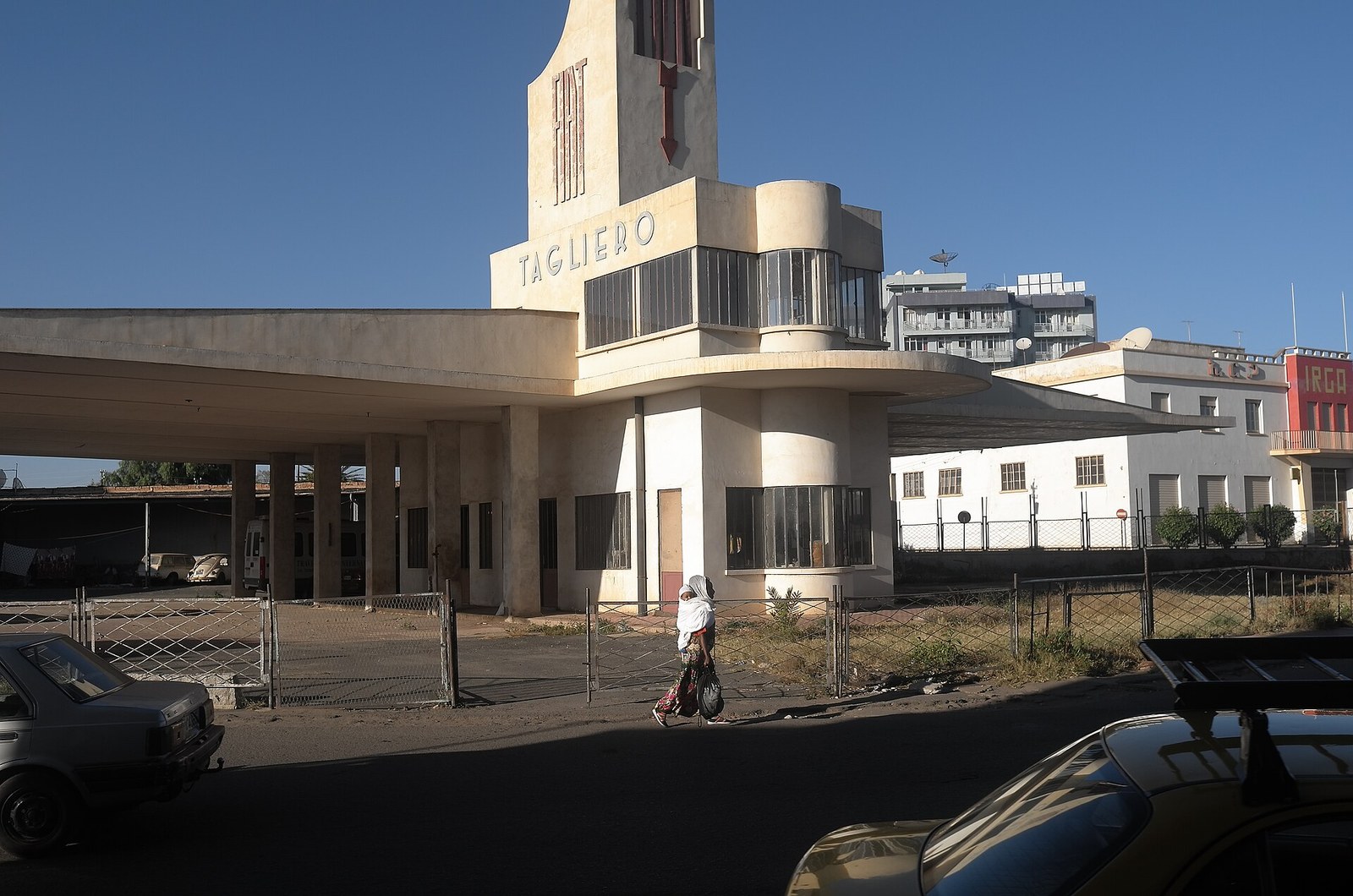
The city was laid out mostly between 1935 and 1941, when Italy poured money into its colony ahead of the invasion of Ethiopia. Architects experimented freely, and the result is a living catalogue of Rationalism, Futurism, Art Deco and Novecento styles. The famous sights are close together:
- **Fiat Tagliero**, the 1938 service station whose concrete wings stretch fifteen metres like an aeroplane.
- **Cinema Impero** on Harnet Avenue, with its tall Art Deco facade and original interior, plus Cinema Roma, Cinema Capitol and Cinema Odeon.
- **The Catholic Cathedral**, its Lombard Romanesque bell tower a landmark you can sometimes climb.
- **Enda Mariam Orthodox Cathedral**, with its bright mosaics, and the Grand Mosque near the market, showing how the city's faiths live side by side.
- **The Bowling Alley**, with 1950s American lanes still set by hand.
Markets and neighbourhoods
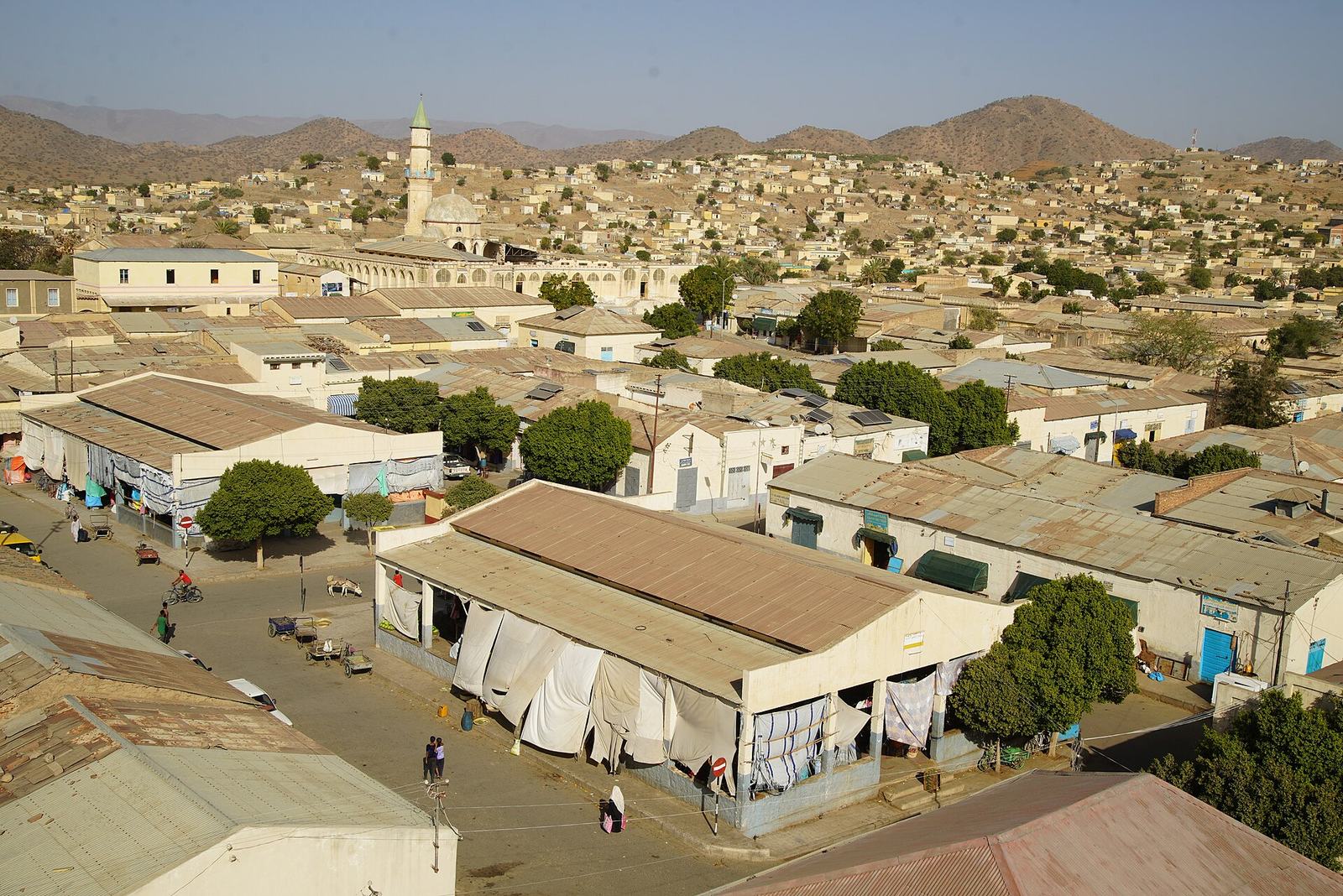
North of the cathedral, the **central market** sells spices, berbere, coffee, baskets and silver. Next to it, the **Medebar** recycling market is a noisy, fascinating maze where craftsmen hammer oil drums and scrap into buckets, stoves and tools. Ask before photographing people. Further out, the **tank graveyard** on the edge of the city is a stark reminder of the independence war, and the **British and Italian war cemeteries** are calm places for reflection.
Food and drink
Asmara mixes Eritrean and Italian cooking with ease. Try zigni, a spicy stew eaten with injera or the flatbread taita, shiro made from ground chickpeas, ful for breakfast, and fit fit. Italian style pizza, pasta and pastries are everywhere, and the local Asmara beer is light and cheap. Coffee is a ritual: in homes it is roasted and brewed in a jebena over three rounds.
Practical tips
The city centre is easy to walk, and short taxi rides or shared minibuses cover longer distances. Money is cash only for visitors, so change dollars or euros at an official exchange office soon after arriving. Internet is limited to some hotels and internet cafés and is slow. Photography of government buildings, the military and some infrastructure is not allowed, so keep your camera down near official sites. Apply for your travel permits here before heading anywhere else, and allow a day for them.
Day trips
Within easy reach are the hilltop monastery of Debre Bizen, which admits men only, the green forest of Filfil in the eastern escarpment, and the old railway towards Nefasit when steam excursions run. Check what your travel permit needs to cover for each.
Questions about Asmara
Is Asmara safe to walk around?
Asmara is widely regarded as one of the calmest capitals in Africa, and walking in the centre day or evening is normal. Use usual care with valuables and follow your government's travel advice.
How many days do I need in Asmara?
Two full days covers the main architecture, the markets and the cafés. Add a day for permits and a day trip to Filfil or the railway.
Can I visit the cinemas?
Cinema Impero and Cinema Roma still operate and often show films or football, so the easiest way inside is to buy a ticket or a coffee at the bar.
Is English spoken in Asmara?
Yes, English is widely understood in hotels, shops and among younger people, and older residents may speak Italian. A few words of Tigrinya, like selam for hello, are warmly received.
Facts checked . Fees, schedules and entry rules change, so always confirm the latest with the official source.