At a glance
- Best for
- Music, Afro Cuban culture, history and carnival
- Nearest airport
- Antonio Maceo International, about fifteen to twenty minutes away
- Time needed
- Two to three nights
- Best time
- November to April, or July for carnival
- Getting around
- Walking in the centre, taxis and moto taxis
- Good base for
- El Cobre, the Gran Piedra and Baracoa further east
Parque Céspedes and the centre
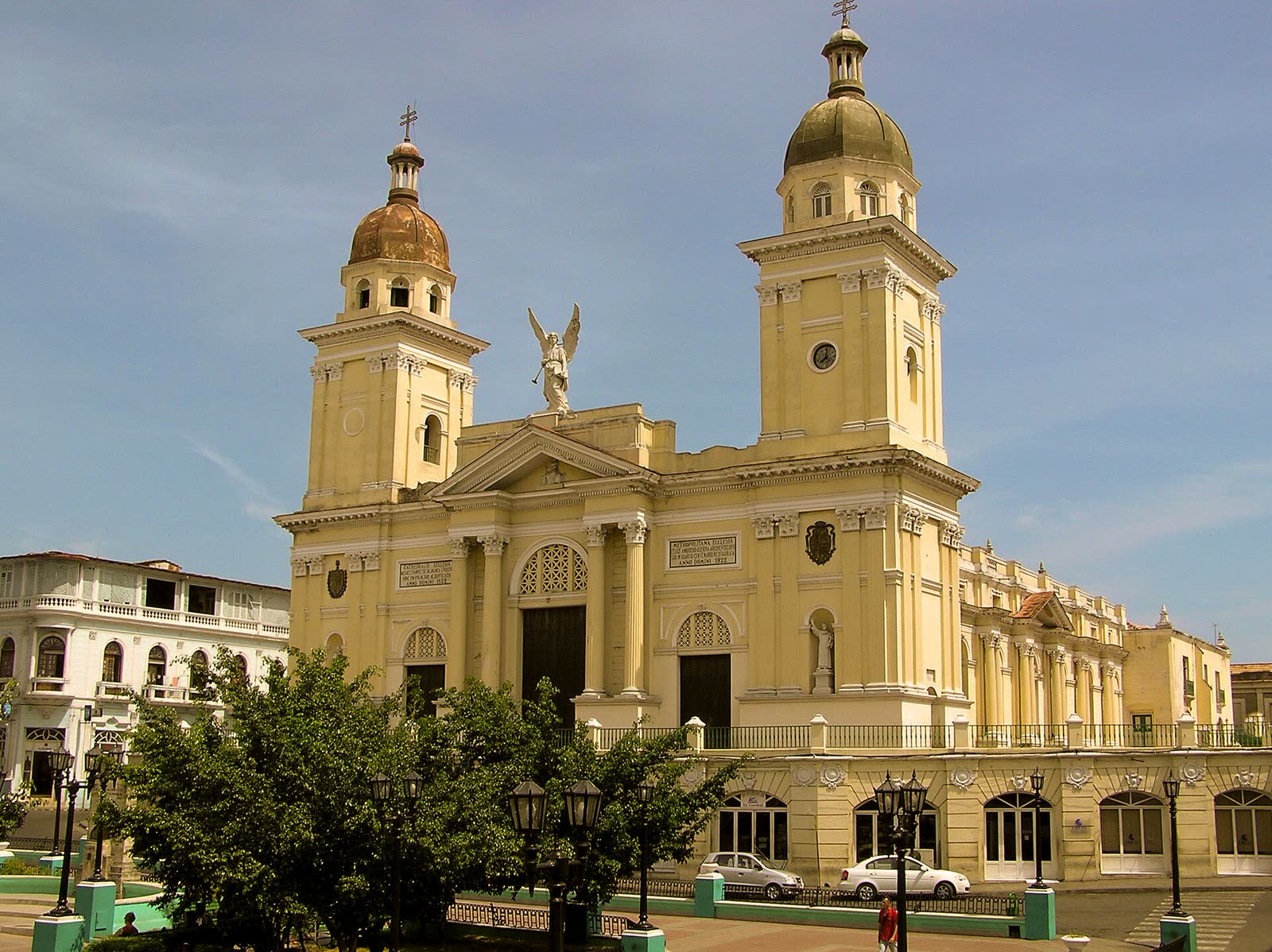
The heart of the city is **Parque Céspedes**, a busy square overlooked by the cathedral and the **Casa de Diego Velázquez**, said to be one of the oldest houses in the Americas, now a museum of colonial furniture. The balcony bars around the square are good for people watching. The streets that spill downhill towards the bay are steep and lively, and **Calle Heredia** is the city's cultural street.
Music
Santiago is the cradle of **son**, the rhythm at the root of salsa. The **Casa de la Trova** on Calle Heredia has hosted legendary musicians for decades and still has live music from the afternoon into the night. Look out too for traditional **tumba francesa** groups, a dance tradition brought by Haitian migrants and recognised by UNESCO, and the city's carnival comparsas rehearsing in their neighbourhoods.
Carnival
The **Carnaval de Santiago**, usually held in July, is the biggest and most famous in Cuba, with parades, congas, giant puppets and music in the streets for days. It coincides with the anniversary of the attack on the Moncada barracks on 26 July. Accommodation books up, and it can be very hot and crowded, but the atmosphere is unforgettable. The **Festival del Caribe**, also in early July, brings performers from across the region.
History
The **Moncada Barracks**, where Fidel Castro launched his failed attack in 1953, is now a school with a museum about the revolution. The **Santa Ifigenia Cemetery** holds the tombs of José Martí and Fidel Castro, with a changing of the guard at Martí's mausoleum. **San Juan Hill**, on the edge of town, recalls the 1898 battle of the Spanish American War.
The Morro and the bay
The **Castillo de San Pedro de la Roca**, known as El Morro, is a UNESCO World Heritage fortress on a cliff at the mouth of the bay, with spectacular views of the coast and an evening cannon ceremony. Below it, small boats sometimes cross to **Cayo Granma**, a tiny island village in the bay.
El Cobre and the Gran Piedra
About half an hour west, the **Basílica del Cobre** is Cuba's most important shrine, home of the Virgen de la Caridad del Cobre, the country's patron saint. Pilgrims leave offerings, including medals and tokens left by Cubans abroad. East of the city, the **Gran Piedra** is a huge rock on a mountain ridge, reached by hundreds of steps, with views to the sea and old French coffee plantations nearby, also part of a UNESCO site.
Practical tips
Santiago has more persistent hustlers than most Cuban cities, so be firm and polite. It is hot all year, so plan walks for the morning. Power cuts and water shortages are often worse in the east, so ask your casa about backup supplies. Flights and long Viazul bus rides connect the city with Havana, and it is the gateway to **Baracoa**, Cuba's first town, at the island's tip.
Questions about Santiago de Cuba
Is Santiago de Cuba worth the trip from Havana?
Yes, if you love music and history and have at least ten days. It is a long journey by road, so many travellers fly one way. With a shorter trip, focus on the west and centre instead.
When is the Santiago carnival?
The carnival is usually held in the second half of July, peaking around 25 to 27 July. Dates and scale vary year to year, so confirm with the Cuban tourism board before planning around it.
Is Santiago de Cuba safe?
It is generally safe for visitors, but hustlers can be persistent and petty theft happens. Keep valuables out of sight, use licensed taxis at night and be firm with unwanted offers.
How do I get to Baracoa from Santiago?
Viazul buses run between the two when fuel allows, crossing the mountains on the dramatic La Farola road. Shared taxis are an alternative. Allow most of a day and book ahead.
Facts checked . Fees, schedules and entry rules change, so always confirm the latest with the official source.