At a glance
- Best for
- History, architecture, music, art and food
- Nearest airport
- José Martí International, about thirty to forty minutes by taxi
- Time needed
- Three to four full days
- Best time
- November to April, with late afternoons for the Malecón
- Getting around
- Walking, official and classic car taxis, bicitaxis
- Good base for
- Day trips to Las Terrazas, the eastern beaches and Matanzas
Old Havana
**Habana Vieja** is the historic core and the easiest place to begin. Four main squares anchor it: **Plaza de Armas**, with its secondhand book market and the Palacio de los Capitanes Generales, home of the city museum; **Plaza de la Catedral**, framed by the baroque cathedral; **Plaza de San Francisco**, beside the old port; and **Plaza Vieja**, ringed with colourful mansions, cafés and a small brewery. Linking them are Calle Obispo, busy and commercial, and quieter lanes such as Mercaderes and Oficios. The restoration work of the City Historian's Office has given many buildings new life, while streets a few blocks away show how hard daily life is.
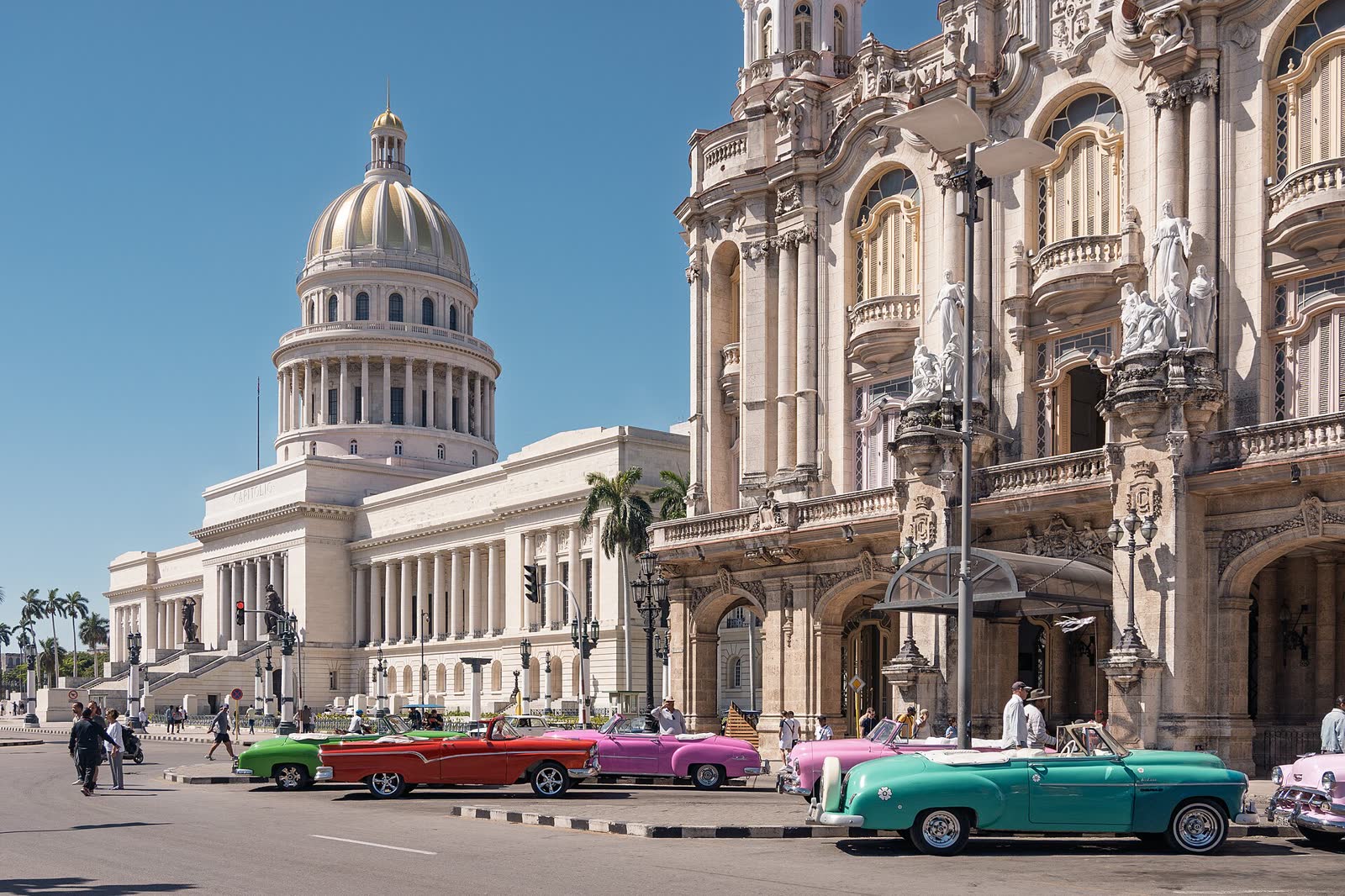
Nearby, the **Capitolio** dominates the skyline, the **Gran Teatro de La Habana** hosts the national ballet, and the **Museo de la Revolución** sits in the former presidential palace. Across the harbour, the **Morro Castle** and **La Cabaña** fortress offer views back over the city, and the cannon ceremony at La Cabaña each evening is a memorable ritual.
The Malecón and Centro Habana
The **Malecón** sea wall runs for several kilometres from Old Havana to Vedado. At sunset, families, couples, fishermen and musicians gather along it. Behind it, **Centro Habana** is dense, lively and very local, with crumbling balconies, the Chinatown arch and Callejón de Hamel, a painted alley where Afro Cuban rumba is played on Sunday afternoons.
Vedado and Miramar
**Vedado** is the modern heart of the city, laid out in a grid of tree lined streets with art deco and modernist buildings. Here you will find the Hotel Nacional, the University of Havana, the Plaza de la Revolución with the giant portraits of Che Guevara and Camilo Cienfuegos, the Coppelia ice cream park and many of the best music venues. Further west, **Miramar** has embassies, grand villas and some of the smarter paladares.
Art, music and nights out
Havana's evenings are its great draw. **Fábrica de Arte Cubano** in a former oil mill mixes galleries, concerts and bars and is busiest from Thursday to Sunday. Jazz clubs, salsa nights and the famous cabaret at the Tropicana keep going late. Ask your casa host what is on, since programmes change and power cuts sometimes cancel shows.
Getting around
Old Havana is best on foot. Between districts, use official yellow taxis, classic car taxis, or ride hailing style apps that local hosts can recommend, agreeing the fare before you start. Bicitaxis are fun for short hops. Walk carefully: pavements are broken and street lighting is weak, especially during blackouts.
Where to stay
Most visitors stay in a **casa particular**, a licensed room in a family home, which is often the best value and the warmest welcome. Old Havana suits sightseeing, Vedado suits nightlife and a calmer stay, and Centro Habana sits between the two. Choose a casa or hotel with a generator or backup power if you can, and confirm water and air conditioning arrangements.
Staying safe and comfortable
Havana is generally safe for visitors, but pickpocketing and bag snatching happen in crowded areas, and hustlers known as jineteros approach tourists with offers of cigars, restaurants and rooms. A polite no is enough. Carry only the cash you need for the day, and keep small notes handy.
Questions about Havana
How many days do I need in Havana?
Three to four full days covers Old Havana, the Malecón, Vedado, a museum or two, a classic car tour and a couple of nights of music. Add a day for a trip to Las Terrazas or the beaches east of the city.
Is it better to stay in Old Havana or Vedado?
Old Havana puts the main sights on your doorstep but is busy and noisy. Vedado is calmer, greener and better for nightlife and music venues. First-timers often split their stay between the two.
Is a classic car tour worth it?
For most visitors, yes. An hour or two in an open top car along the Malecón, through Vedado and out to the Bosque de La Habana is great fun. Agree the route, duration and fare clearly before you set off.
Are there power cuts in Havana?
Yes, power cuts have become common across Cuba, including Havana, though tourist hotels and some casas have generators. Bring a torch, a power bank and patience, and ask about backup power when you book.
Facts checked . Fees, schedules and entry rules change, so always confirm the latest with the official source.