At a glance
- Best for
- Architecture, history and a day out of Abidjan
- Gateway
- Félix Houphouët-Boigny International Airport (ABJ), about three hours by road
- Time needed
- A long day or one night
- Best season
- November to March
- Getting around
- Taxis between sights
- Must see
- Basilique Notre-Dame de la Paix
A capital built from a village
Félix Houphouët-Boigny led Côte d’Ivoire from independence in 1960 until his death in 1993. He was born in the village of N’Gokro, and from the 1960s onward he poured resources into turning it into a modern city. In 1983 Yamoussoukro became the official political capital, although most government business, embassies and the economy remain in Abidjan. The result is a city of huge avenues, lakes and landmark buildings with surprisingly little traffic, an extraordinary sight after the bustle of Abidjan.
The Basilica of Our Lady of Peace
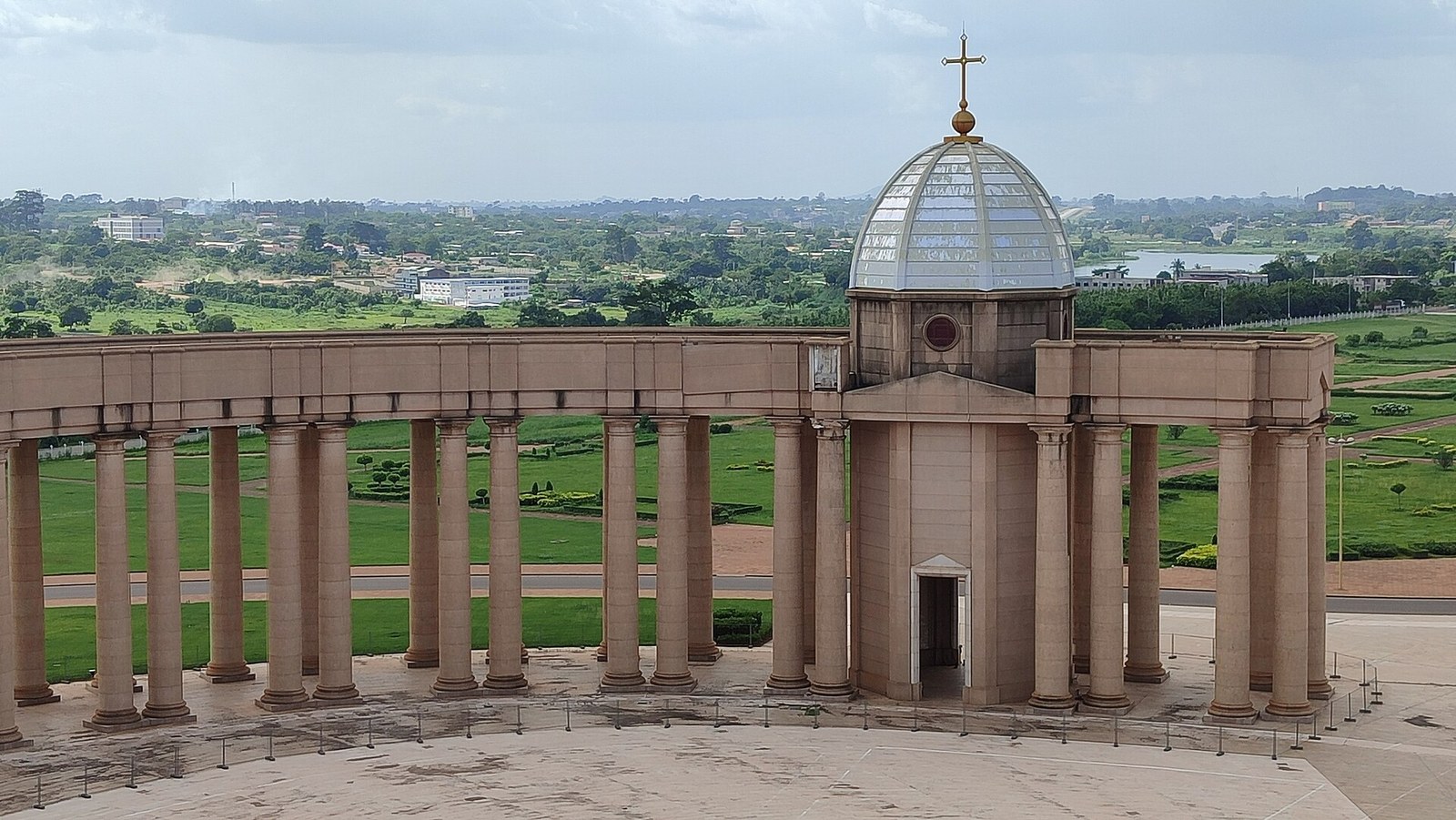
The Basilique Notre-Dame de la Paix is the reason most people come. Completed in 1989 and consecrated by Pope John Paul II in 1990, it was inspired by St Peter’s in Rome, with a vast dome, a colonnaded plaza and huge stained-glass windows made in France. In one window, Houphouët-Boigny himself appears among the figures. Guided visits take you inside the nave and, at times, up to viewpoints high in the dome. Dress modestly, with shoulders and knees covered, and check opening hours before you go, as they can change for services and events.
The sacred crocodiles
Beside the presidential palace lies the Lac aux Caïmans, home to crocodiles that are associated with the president’s family and treated as sacred. For years a keeper fed them in the late afternoon in front of onlookers. Today you can usually see them from the lakeside, but keep well back from the water and follow any instructions from guards: these are wild animals, and the palace grounds are off limits.
More to see
- **The Grande Mosquée**, a large modern mosque with a tall minaret, a counterpart to the Basilica.
- **The Fondation Félix Houphouët-Boigny pour la Recherche de la Paix**, a grand marble complex built for peace conferences.
- **The INP-HB campus**, the national polytechnic, with bold modernist buildings.
- **Hôtel Président**, a 1970s landmark with a tower restaurant and golf course, worth a visit even if you stay elsewhere.
- **The town market**, for fabrics, fruit and Baoulé crafts.
Yamoussoukro lies in Baoulé country, and nearby villages still weave the narrow-strip Baoulé cloth and carve masks. Ask locally if you would like to visit with a guide.
Getting there
The motorway from Abidjan makes the trip about three hours by road. Comfortable intercity bus companies run frequent services from Adjamé and Yopougon, and taxis or hired drivers are also possible. Yamoussoukro is also a natural break on the road west to Man or to Daloa.
Where to stay
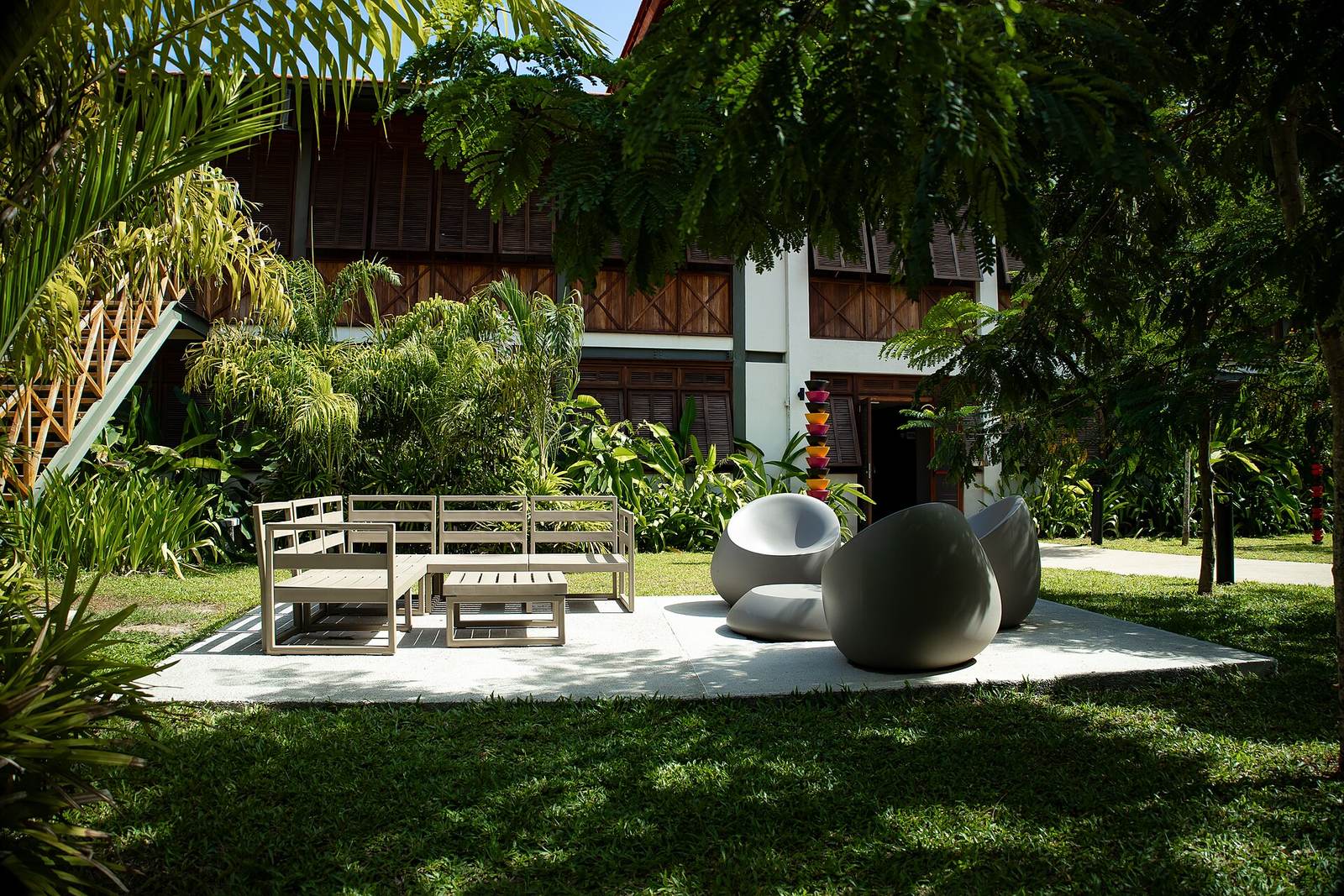
Hotel choice is modest but adequate, from the grand Hôtel Président and Hôtel des Parlementaires to simpler hotels near the centre. One night is plenty for most visitors, letting you see the Basilica in the morning light and the lakes at sunset.
Practical tips
Distances between sights are large and the sun is strong, so use taxis rather than walking. Bring water, a hat and modest clothing for the Basilica and the mosque. Photographing the presidential palace and soldiers is not allowed, so keep your camera down near official buildings.
Food
Yamoussoukro has a relaxed maquis scene with foutou, sauce graine, kedjenou and grilled meats, popular with the city’s many students. The hotel restaurants offer French and international dishes. Try the fresh fruit at the market and a glass of gnamakoudji, the spicy ginger juice found across the country.
Questions about Yamoussoukro
Is Yamoussoukro worth visiting?
Yes, for the Basilica alone. Its scale and setting are unforgettable, and the city’s boulevards, lakes and crocodiles make it unlike anywhere else in West Africa.
Can I do Yamoussoukro as a day trip from Abidjan?
It is possible, with about three hours each way, but staying one night is more relaxed and lets you see the city at its best.
Can I go inside the Basilica?
Yes, on guided visits during opening hours. Dress modestly and check times before you go, as services and events can change them.
Is Yamoussoukro the capital?
It is the official political capital, but Abidjan remains the economic hub and home to most embassies and government business.
Facts checked . Fees, schedules and entry rules change, so always confirm the latest with the official source.