At a glance
- Best for
- Hiking, volcano views and birdlife
- Island
- Grande Comore (Ngazidja)
- Time needed
- Two days with a night near the summit
- Difficulty
- Hard: long, steep and unshaded
- Best season
- May to October
- Guide
- Strongly recommended
About the volcano
Karthala rises to well over two thousand metres and dominates Grande Comore. It is a shield volcano that has erupted many times in recorded history, most recently in the 2000s, when ash fell on Moroni and lava reached parts of the island. Its summit caldera is huge, with steep inner walls and smaller pit craters inside. The volcano is monitored by the Karthala Volcano Observatory, and climbing may be closed if activity increases, so always check the current situation before you plan.
The main routes
- **From M'vouni, above Moroni:** the most used route. It climbs through farmland and forest to the crater rim. Most hikers start before dawn and either camp near the rim or come down the same long day.
- **From Boboni:** a longer approach from the north, with forest and good birdlife.
- **Traverses:** experienced hikers sometimes go up one side and down another, which needs vehicle support at both ends.
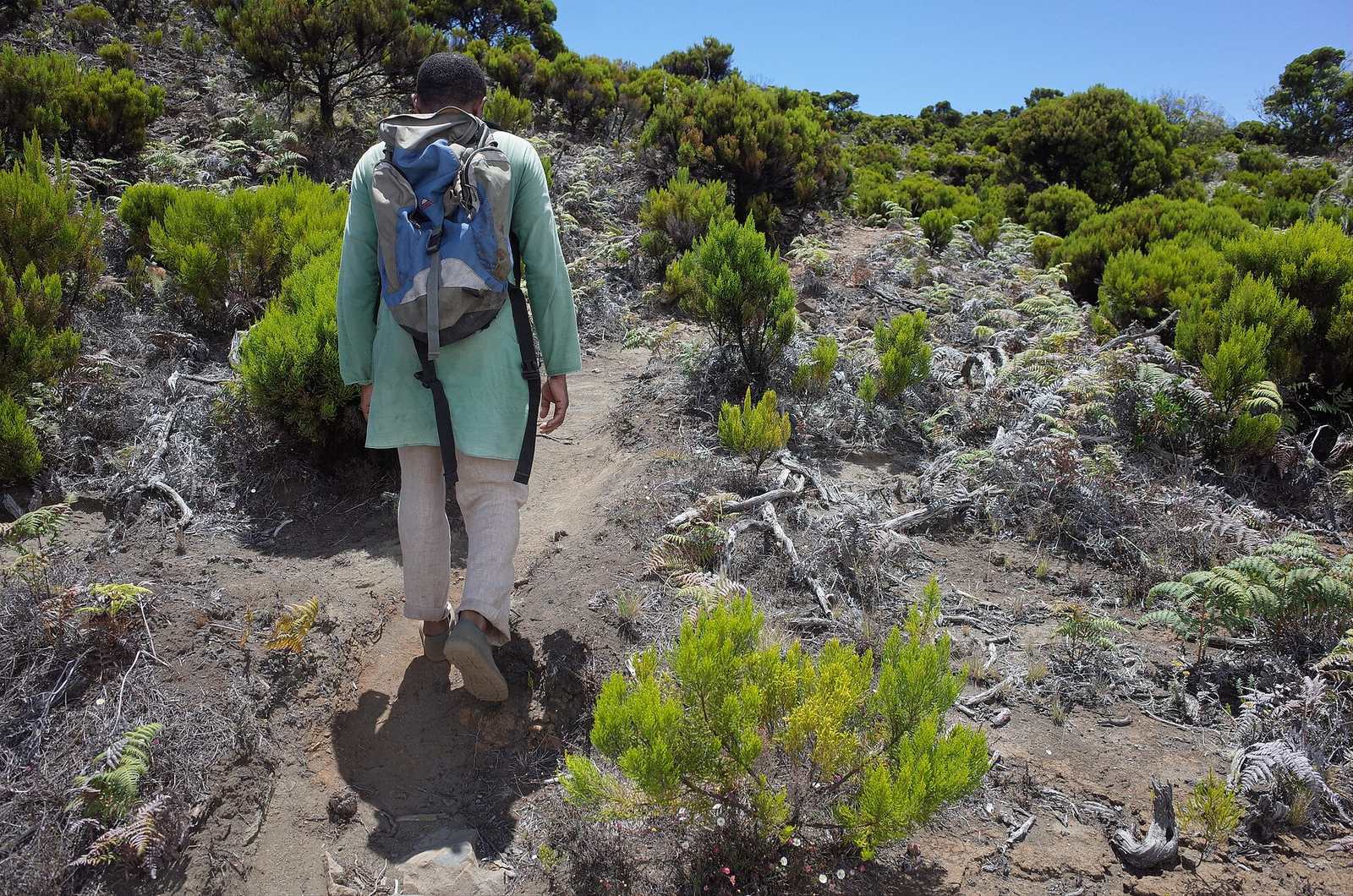
Trails are rough, poorly marked in places and fog can roll in quickly. Hiring a local guide, arranged through your hotel or a known tour operator in Moroni, is strongly advised and often essential for finding the way.
What you will see
The lower slopes are farmed with bananas, cassava and fruit trees. Higher up, you enter cloud forest with mosses, giant heathers and birds found only in the Comoros, such as the Karthala scops owl and the Grande Comore drongo, which birdwatchers come specifically to find. Above the treeline, the landscape turns to bare lava fields and finally the crater itself, an enormous bowl of rock and ash.
How hard is it?
This is a demanding hike. There is a big height gain, little shade on the upper slopes and no reliable water on the mountain. You need good fitness, sturdy boots and the willingness to walk for many hours. It can be cold and windy at the summit at night, even though the coast is hot.
What to pack
- At least three to four litres of water per person, plus purification tablets
- Warm layers, a waterproof jacket, hat and gloves for the summit
- Sun protection and a head torch
- Tent and sleeping bag if camping, unless your guide supplies them
- Snacks and food for the whole trip
When to go
The cooler, drier months from May to October give the best chance of clear views and safer trails. In the wet season, from November to April, trails are muddy, clouds often cover the summit and storms are more likely.
Safety
Tell your hotel your plans, go with a guide, and turn back if the weather closes in. Medical help on the mountain is not available, and evacuation would be slow, so make sure your travel insurance covers hiking at altitude.
Questions about Mount Karthala
Do I need a guide to climb Mount Karthala?
It is strongly recommended. Trails are hard to follow, fog is common and a local guide knows water, campsites and the current conditions on the volcano.
How long does the hike take?
Most people take two days with a night near the crater rim. Very fit hikers do it in one long day, starting before dawn.
Is Karthala safe to climb?
It is an active volcano, so check with the observatory and local authorities before you go. When it is quiet and you go with a guide in the dry season, it is a challenging but rewarding hike.
Can I see lava?
Not usually. Between eruptions the crater is a vast area of cooled lava and ash rather than a glowing lake.
Where should I stay before and after the climb?
Most hikers sleep in Moroni the night before and set off very early by taxi to the trailhead at M'vouni, so the steepest section is done before the midday heat. Plan an easy rest day afterwards, ideally at a beach on the north coast, because your legs will be tired and the descent is long and hard on the knees.
Facts checked . Fees, schedules and entry rules change, so always confirm the latest with the official source.