At a glance
- Best for
- Desert scenery, photography and remoteness
- Gateway
- N'Djamena, usually with Ennedi
- Time needed
- Two to three nights within a longer expedition
- Best season
- November to February
- UNESCO
- Lakes of Ounianga, listed in 2012
- Getting there
- Only with a specialist operator
What the lakes are
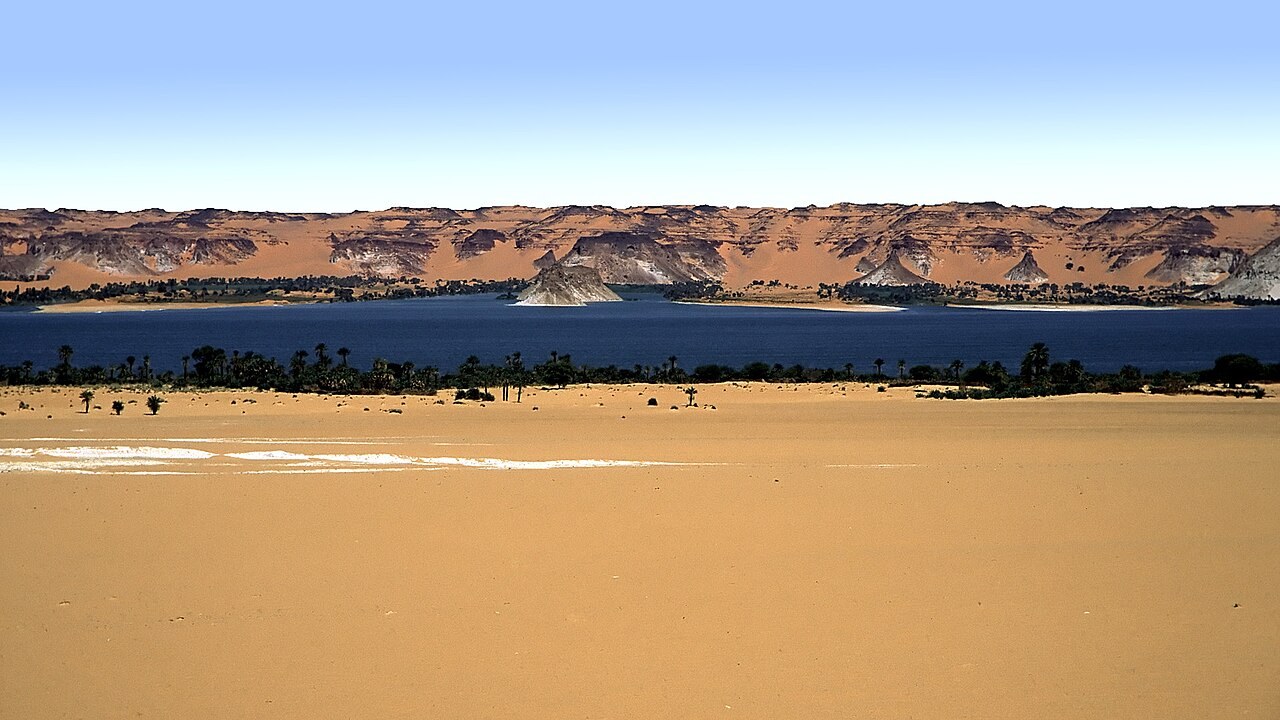
The lakes lie in two main groups in north eastern Chad, about a day's drive north of the Ennedi Plateau. UNESCO listed them in 2012 as the Lakes of Ounianga, recognising both their beauty and the rare way they survive. There is almost no rain here, and evaporation is intense, yet underground water from a vast ancient aquifer keeps the lakes alive. Floating mats of reeds slow evaporation on some of them, keeping their water fresh.
Ounianga Kebir and Lake Yoa
Ounianga Kebir is the larger group and home to Lake Yoa, the biggest of the lakes, a deep, salty, startlingly blue body of water ringed by sand and rock. The small town of Ounianga Kebir sits nearby, with palm gardens and a market where traders cross between Libya and the south. From the ridges above, the contrast of blue water and orange sand is extraordinary.
Ounianga Serir
Ounianga Serir, to the east, is a cluster of narrower lakes separated by dunes and ridges. Some are fresh and green with reeds, others red or purple from algae and minerals, all within a short walk of each other. Lake Teli is the largest here. Swimming is sometimes possible in the fresher lakes, but ask your guides, as the salty ones sting and the local people depend on the fresh water.
The people
Toubou communities live around the lakes, growing dates in the palm groves and keeping camels and goats. Salt has long been gathered from the shores. Visits should be arranged through your guides, with respect for privacy, and always ask before taking photographs.
How trips work
Ounianga is visited almost only as part of a longer expedition with Ennedi, run by specialist operators with four-wheel-drive vehicles and camping. Overland trips from N'Djamena take several days each way across the Sahel and desert, and some itineraries use charter flights to cut the distance. Permits are required and are normally handled by your operator.
When to go
November to February is by far the best time, with warm days, cold nights and clear skies. Strong winds can blow sand from late winter into spring, and summer heat is extreme.
Safety and travel advice
Ounianga sits in a region where several governments advise against all travel, partly because of its distance from help and its position on routes towards Libya. Read your government's current advice, check your insurance, and only consider a trip with an established operator that knows the region and holds the necessary permissions.
Practical tips
Bring sunglasses, a scarf against wind-blown sand and layers for chilly nights. Electronics need protection from dust. Carry copies of your passport and permits, and follow your guides' advice at every checkpoint.
Who Ounianga suits
Ounianga suits travellers already planning an Ennedi expedition who want to see something truly unique. It is remote and demanding, with long drives over sand and rock, so it is best for those comfortable with camping and simple conditions. Photographers will love the changing colours of the lakes across the day, and anyone interested in climate history will find the lakes a living record of a greener Sahara.
Questions about the Ounianga lakes
How many lakes are there at Ounianga?
UNESCO describes eighteen lakes in two main groups, Ounianga Kebir and Ounianga Serir.
Can you swim in the Ounianga lakes?
Sometimes in the fresher lakes, with your guides' agreement. The salty lakes such as Lake Yoa are not pleasant for swimming.
How do I get to Ounianga?
As part of a supported expedition from N'Djamena, usually combined with Ennedi. Check current travel advice before planning.
Why do the lakes not dry up?
They are fed by groundwater from an ancient aquifer, and reed mats on some lakes slow evaporation.
What is the best way to photograph the lakes?
Climb the ridges above Lake Yoa or the Serir lakes early in the morning or late in the afternoon, when the colours are richest and the light is soft.
Facts checked . Fees, schedules and entry rules change, so always confirm the latest with the official source.