At a glance
- Best for
- Markets, river sunsets, food and first-night logistics
- Gateway
- N'Djamena International Airport (NDJ)
- Time needed
- Two to three nights
- Best season
- November to February, the cool dry months
- Language
- French and Chadian Arabic
- Getting around
- Hotel cars or trusted taxis
Why N'Djamena is worth your time
Founded by the French in 1900 as Fort-Lamy, the city was renamed N'Djamena in 1973, after a nearby village whose name is often translated as a place of rest. Today it is home to well over a million people from every corner of Chad. Most visitors spend two or three days here: to recover from the flight, to sort permits, cash and SIM cards, and to meet operators before heading to Zakouma or the desert. Used well, those days are a fine introduction to the country.
Neighbourhoods to know
The centre runs along Avenue Charles de Gaulle and Avenue Mobutu, with the Grand Marché, banks, the main mosque and many offices. The quieter riverside areas towards the Chari hold several of the larger hotels and embassies. Klemat and the commercial streets around the centre are busy by day. Chagoua, Moursal, Sabangali and Farcha are big residential districts, and Farcha on the western side is home to the abattoir, factories and some popular local grills. Diguel and the newer eastern suburbs are expanding fast.
What to see and do
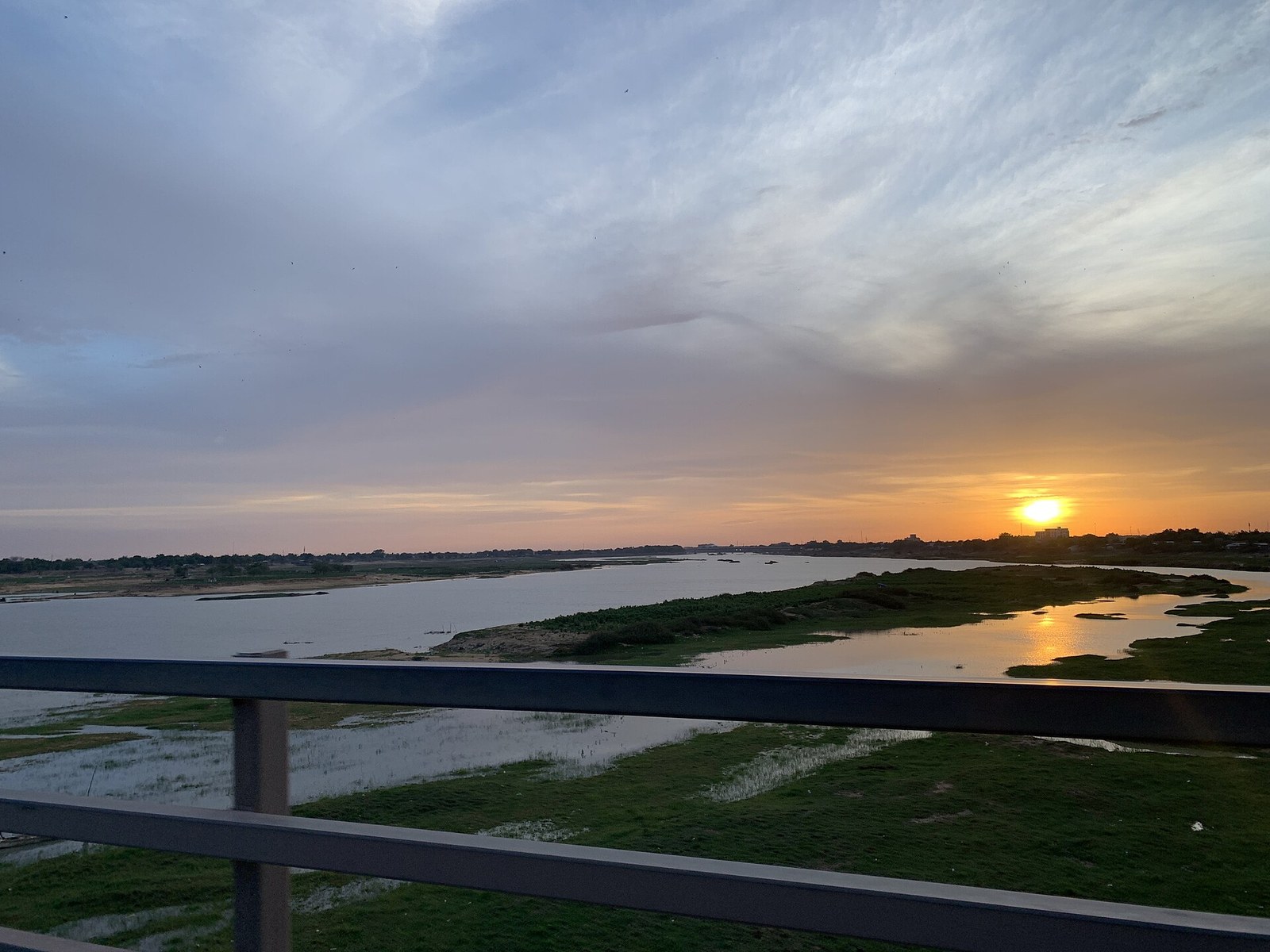
The Grande Mosquée Roi Fayçal, with its twin minarets, is the city's best-known landmark; view it respectfully from outside unless invited in. The Grand Marché is a maze of fabric, spices, leather, silver jewellery and household goods, best visited with a local companion in the morning. The Musée National du Tchad holds a cast of the Toumaï skull, the seven-million-year-old hominid found in the Djurab desert, along with Sao terracottas and traditional objects. The Place de la Nation and the monuments along the river show the city's official face. Sunset over the Chari, with fishermen poling pirogues past the Cameroonian bank, is the moment most visitors remember.
Short trips out
Gaoui, a village a short drive north east, was once a fortified Kotoko town and is known for its painted houses and pottery. Douguia, further north towards Lake Chad, is a riverside escape with a hotel by the water. Check current travel advice before any trip out of the city, as the Lake Chad region is covered by strong warnings.
Food and drink
Fish from the Chari, grilled or in sauce, is the local favourite, alongside boule, the millet or sorghum staple, with okra or meat sauce. Grilled mutton and brochettes are everywhere in the evening. The larger hotels have international restaurants, and the city has good Lebanese, Chinese and West African kitchens. Try karkanji, the chilled hibiscus drink, and the strong sweet tea served almost everywhere.
Where to stay
The main international hotels are the Radisson Blu, the Hilton and the Novotel La Tchadienne, all with security, generators and reliable water, which matters here. There are smaller mid-range hotels in the centre. Most visitors choose a bigger hotel for the first nights, as it makes cash, transport and communication much easier.
Staying safe
Government travel advice urges great caution in N'Djamena. Avoid demonstrations and large gatherings, do not walk around after dark, keep valuables out of sight and use transport arranged by your hotel or operator. Never photograph government buildings, the presidential palace, military sites, bridges or the airport. Register with your embassy if it offers that service.
Questions about N'Djamena
How many days should I spend in N'Djamena?
Two or three nights is enough for the main sights, a market visit and the paperwork most trips need. Many visitors also spend a final night here before flying home.
Can I walk around N'Djamena?
Short walks near your hotel in daylight are usually fine, but most visitors use hotel cars or trusted drivers. Avoid walking after dark.
Can I take photos in N'Djamena?
Be very careful. Never photograph official buildings, police, the military, bridges or the airport, and always ask people before taking their picture. Check whether a photography permit is currently required.
What is N'Djamena known for?
Its position where the Chari and Logone rivers meet, the Grand Marché, the great mosque, river fish and its role as the hub for every trip into Chad.
Facts checked . Fees, schedules and entry rules change, so always confirm the latest with the official source.