At a glance
- Best for
- History, architecture, food, wine and nightlife
- Airport
- Plovdiv Airport (PDV), with limited flights; Sofia is two hours away
- Time needed
- Two to three days
- Best season
- April to June and September to October
- Getting around
- On foot in the centre; buses and taxis beyond
- Nearby
- Bachkovo Monastery, Asen's Fortress, the Rhodopes, wineries
Why go
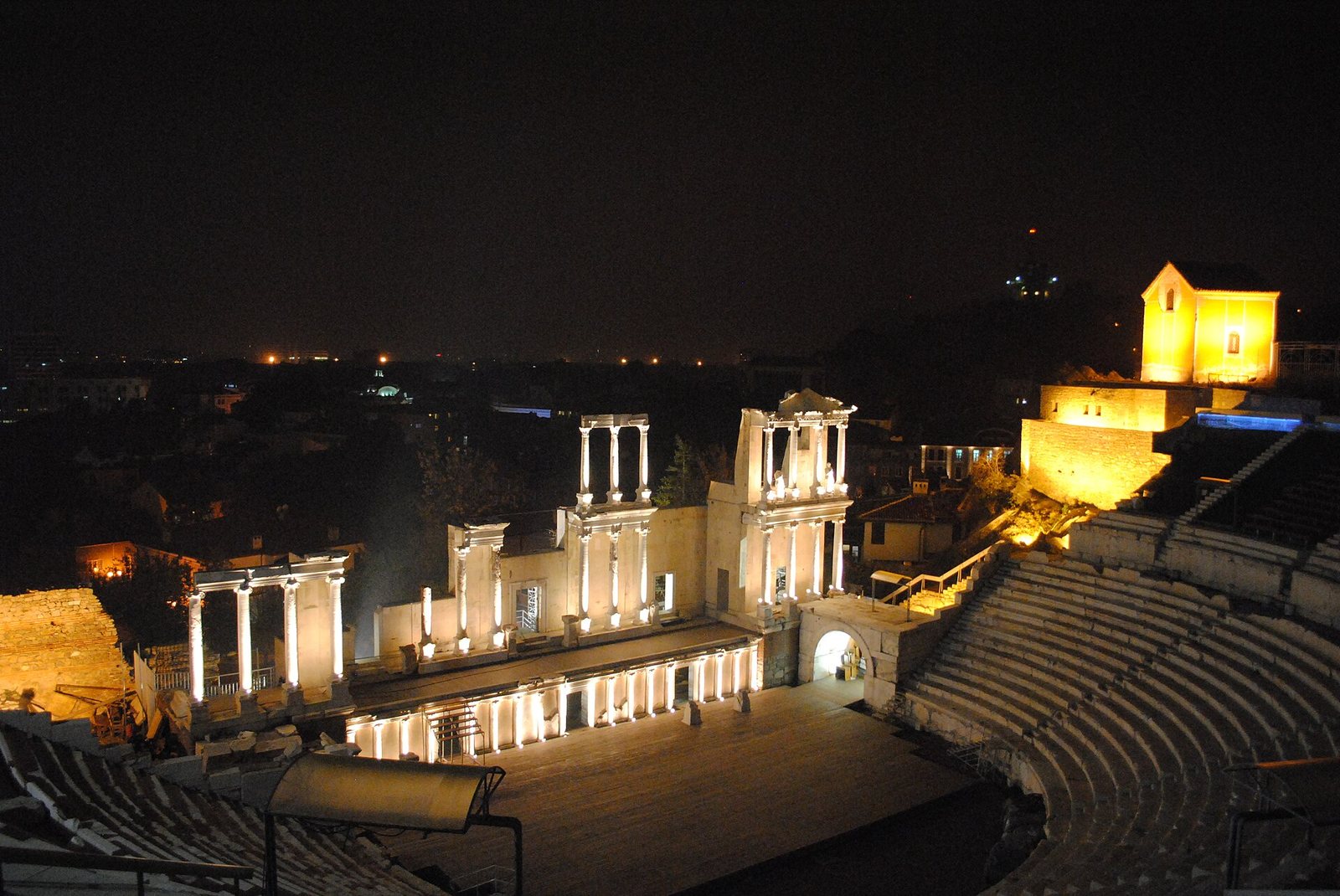
In Plovdiv you can sit in a Roman theatre that still hosts summer opera, walk cobbled lanes past nineteenth century mansions, then drink local wine in a quarter of small bars that did not exist fifteen years ago. The city feels lived in rather than staged, and it is small enough to enjoy without a plan.
What to see
The **Ancient Theatre of Philippopolis** sits on the slope between two of the hills, with views to the Rhodope mountains. Below the main pedestrian street lies part of the **Roman Stadium**, and nearby the **Ancient Forum** and the **Small Basilica** show more of the Roman city. The restored **Great Basilica**, with its huge floor mosaics, is one of the best early Christian sites in the Balkans.
The **Old Town** is the heart of the visit: steep cobbled streets lined with Bulgarian revival houses painted in deep blues, ochres and reds, their upper floors jutting over the lane. Several are open as museums, including the **Balabanov House**, the **Ethnographic Museum** in the Kuyumdzhiev House and the **Hindliyan House**. Climb **Nebet Tepe** for sunset over the rooftops.
Kapana
**Kapana**, meaning the trap, is a tangle of small streets north of the main square that was revived as a creative district. It is full of craft beer bars, wine bars, galleries, small shops and good, affordable restaurants. Evenings here are relaxed and sociable rather than loud.
The main street and hills
The long pedestrian **Main Street** runs from the central square to the Dzhumaya Mosque and the Roman Stadium, and is the place for an evening stroll. For green space, walk up **Bunardzhik hill** to the Alyosha monument, or **Sahat Tepe** for the old clock tower.
Day trips
Thirty minutes south, **Bachkovo Monastery** is the second largest monastery in Bulgaria, with important frescoes and a market of honey and herbs outside. Close by, **Asen's Fortress** perches on a crag above the Asenitsa river. The **Rhodope mountains** beyond are full of villages, caves and gorges, and the wineries of the Thracian plain around **Brestovitsa** and **Perushtitsa** welcome visitors for tastings.
Where to stay
Stay in or near the **Old Town** for atmosphere, or around **Kapana** and the **Main Street** for restaurants and nightlife. Guesthouses in restored houses are a lovely choice, and there are modern hotels near the centre.
Getting there and around
Trains and buses from Sofia take around two to three hours. The centre is walkable but hilly, with cobbles that are hard on wheels and heels, so pack comfortable shoes.
Food and drink
Plovdiv eats well. Try **shopska salad** of tomato, cucumber and grated white cheese, **kavarma** stew baked in a clay pot, grilled **kebapche** sausages and **banitsa** pastry for breakfast. The Thracian plain produces some of Bulgaria's best red wine, especially from the local **Mavrud** grape, which you will find by the glass in Kapana's wine bars. For something sweet, look for **boza**, a thick malted drink, or a slice of syrupy baklava from an old style pastry shop. Lunch is usually the big meal, and many restaurants offer good value set lunches on weekdays.
Plan it
Link Plovdiv with Sofia and Veliko Tarnovo using the free trip planner, and browse our places to visit for food and drink.
Questions about Plovdiv
How many days do I need in Plovdiv?
Two days covers the Roman sites, the Old Town and Kapana. Add a day for Bachkovo Monastery, Asen's Fortress or a winery visit.
Is Plovdiv better than Sofia?
They are different. Plovdiv is smaller, older and more atmospheric; Sofia has more museums, the mountain and better transport links. Most visitors enjoy both.
Can I see a show at the Roman theatre?
Yes. The theatre hosts opera, concerts and festivals in summer. Check the city's cultural calendar for dates.
How do I get from Sofia to Plovdiv?
Trains and buses run several times a day and take around two to three hours. Buses are often a little faster and more frequent.
Facts checked . Fees, schedules and entry rules change, so always confirm the latest with the official source.