At a glance
- Best for
- History, views, crafts and a slower pace
- Airport
- Sofia (SOF) or Varna (VAR), each around three hours away
- Time needed
- Two days
- Best season
- May to June and September to October
- Getting around
- On foot, with taxis for Arbanasi and the station
- Nearby
- Arbanasi, Tryavna, Etar, Emen Canyon, Shipka
Why go
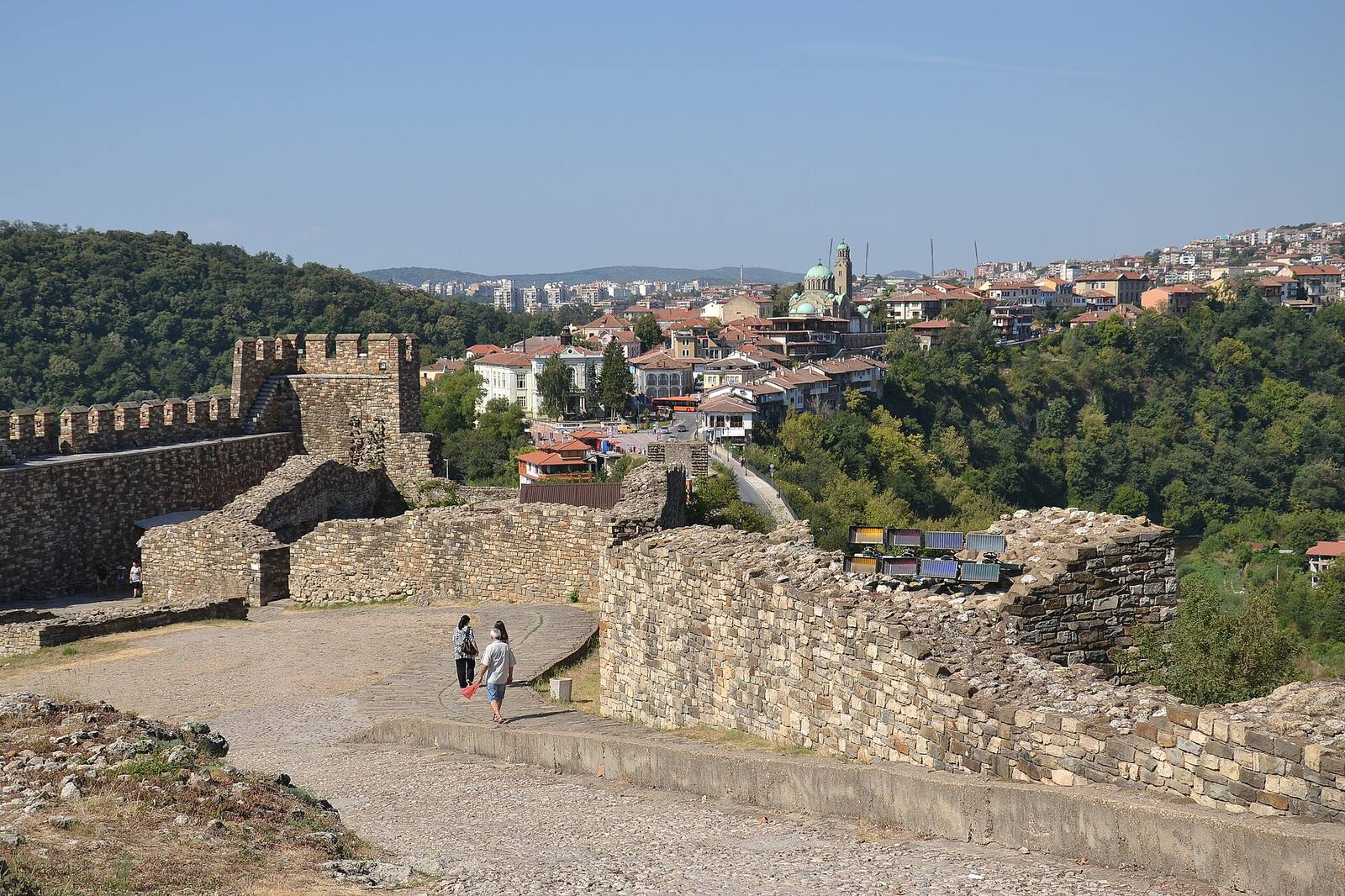
Few towns have a setting like this. The Yantra loops back on itself several times, and the town is built on the ridges between, so almost every corner has a view of rooftops, cliffs and the fortress hill. It is small, friendly and full of history, and it sits in the middle of the country, making it a natural break between Sofia and the coast.
Tsarevets fortress
**Tsarevets** covers a whole hill, ringed by walls and reached across a narrow stone bridge. Inside are the foundations of the royal palace, houses, churches and monasteries, and on the summit the **Patriarchal Cathedral of the Holy Ascension**, rebuilt with strikingly modern frescoes. Go in the morning for space and light, and walk out to **Execution Rock** for the drop to the river.
On some evenings the fortress hosts a **sound and light show**, with coloured lights, music and bells playing across the walls. It runs when there are enough people booked, often for groups, so check the schedule locally and watch from the viewpoints if you hear the bells.
The old town
**Gurko Street** is the most beautiful lane, its revival houses perched above the river. **Samovodska Charshiya** is the old craft market street, where you can watch potters, coppersmiths, woodcarvers and icon painters at work and buy directly from them. Across the river, the **Monument to the Asen Dynasty** and the **State Art Gallery** stand on a meander with the best view back to the town.
The **Church of Saints Peter and Paul** and the **Church of the Forty Martyrs**, with its column inscriptions from the medieval khans, are worth seeking out below Tsarevets.
Arbanasi
On the plateau above town, **Arbanasi** was a rich merchant village of fortress like stone houses. Its **Church of the Nativity** looks plain outside but is covered inside with thousands of painted figures. It is a short taxi ride or a pleasant walk, and a lovely place for a long lunch.
Day trips
The **Etar Architectural Ethnographic Complex** near Gabrovo is an open air museum of working crafts powered by water. **Tryavna** is known for its woodcarving school. The **Shipka Memorial** and the **Buzludzha** monument sit on the Balkan range, and **Emen Canyon** and its waterfall make a good short hike. Further south lies **Kazanlak** and the Valley of the Roses.
Where to stay
Stay in the **old town** around Gurko Street or Samovodska Charshiya for views and atmosphere. Many guesthouses have balconies over the gorge; ask for one when you book.
Getting there and around
Buses run from Sofia, Plovdiv, Varna and Burgas. Trains go to the town station or to Gorna Oryahovitsa nearby. The old town is steep but walkable.
Food and drink
The old town has traditional taverns with terraces hanging over the gorge, which are the places to try local favourites such as **kapama**, meat and sauerkraut slow cooked in a sealed pot, and **sarmi**, stuffed vine or cabbage leaves. Grilled meats, fresh salads with white cheese and a glass of local red are standard. As a student town it also has relaxed cafés, bakeries and small bars, especially around the main street, so eating out is easy on every budget. Book a table with a view for sunset.
Plan it
See how Veliko Tarnovo fits between the capital and the coast with our free trip planner, and use our places to visit for food and stays.
Questions about Veliko Tarnovo
How many days do I need in Veliko Tarnovo?
Two days lets you see Tsarevets, the old town and Arbanasi without rushing. Add a day for Etar, Tryavna or Shipka.
When does the sound and light show run?
It runs on selected evenings when enough tickets are booked, and on public holidays. Ask your guesthouse or the tourist information centre for the current schedule.
Is Veliko Tarnovo good for families?
Yes. Children usually love the fortress walls, the craft workshops and the open air museum at Etar. The steep cobbled streets are hard work with a pushchair.
How do I get from Veliko Tarnovo to the coast?
Direct buses run to Varna and Burgas and take around three to four hours, depending on the route.
Facts checked . Fees, schedules and entry rules change, so always confirm the latest with the official source.