At a glance
- Best for
- Culture, crafts, markets, cafés and day hikes
- Airport
- Paro International Airport (PBH), about an hour away
- Time needed
- Two days
- Best season
- March to May and September to November
- Altitude
- Around 2,300 metres
- Guide needed
- Not inside Thimphu if you pay the full fee; check current rules
Why go
Thimphu is where Bhutan's old and new meet most clearly. Office workers in the national dress, the gho and kira, walk past monks, archery fields and coffee shops. It has the country's best museums and craft schools, its biggest market and its widest choice of food, so it is the natural place to begin a trip and learn how the country works before you head into the valleys.
What to see
**Tashichho Dzong** is the great fortress monastery that houses the throne room and government offices as well as the central monk body in summer. Visitors can usually enter the courtyards in the late afternoon after offices close; dress modestly with long sleeves and long trousers or skirt. At dusk the flag is lowered in a short ceremony.
**Buddha Dordenma**, a giant gilded Buddha on a hill above the city, holds over a hundred thousand smaller Buddha statues inside. The view down the valley is excellent, and the walk around the Kuensel Phodrang nature park behind it is easy.
**The National Memorial Chorten** is the city's spiritual centre. From dawn until night, older Bhutanese walk clockwise around it spinning prayer wheels and counting beads. Join them for a circuit; it is one of the most moving sights in Thimphu.
The **Centenary Farmers Market** by the river is busiest from Friday to Sunday, full of chillies, red rice, dried yak cheese and ferns, with a handicraft section across the cantilevered footbridge. The **Folk Heritage Museum** recreates a traditional farmhouse, and the **National Institute for Zorig Chusum** lets you watch students learn the thirteen traditional arts, from thangka painting to wood carving. The **Royal Textile Academy** shows Bhutan's extraordinary weaving.
Other favourites include the **Motithang Takin Preserve**, home to the national animal, the strange looking takin; **Changangkha Lhakhang**, an old temple where parents bring newborns for blessings; the hilltop **Sangaygang** viewpoint covered in prayer flags; and the **Changlimithang** archery ground, where you can often watch the national sport.
Day hikes
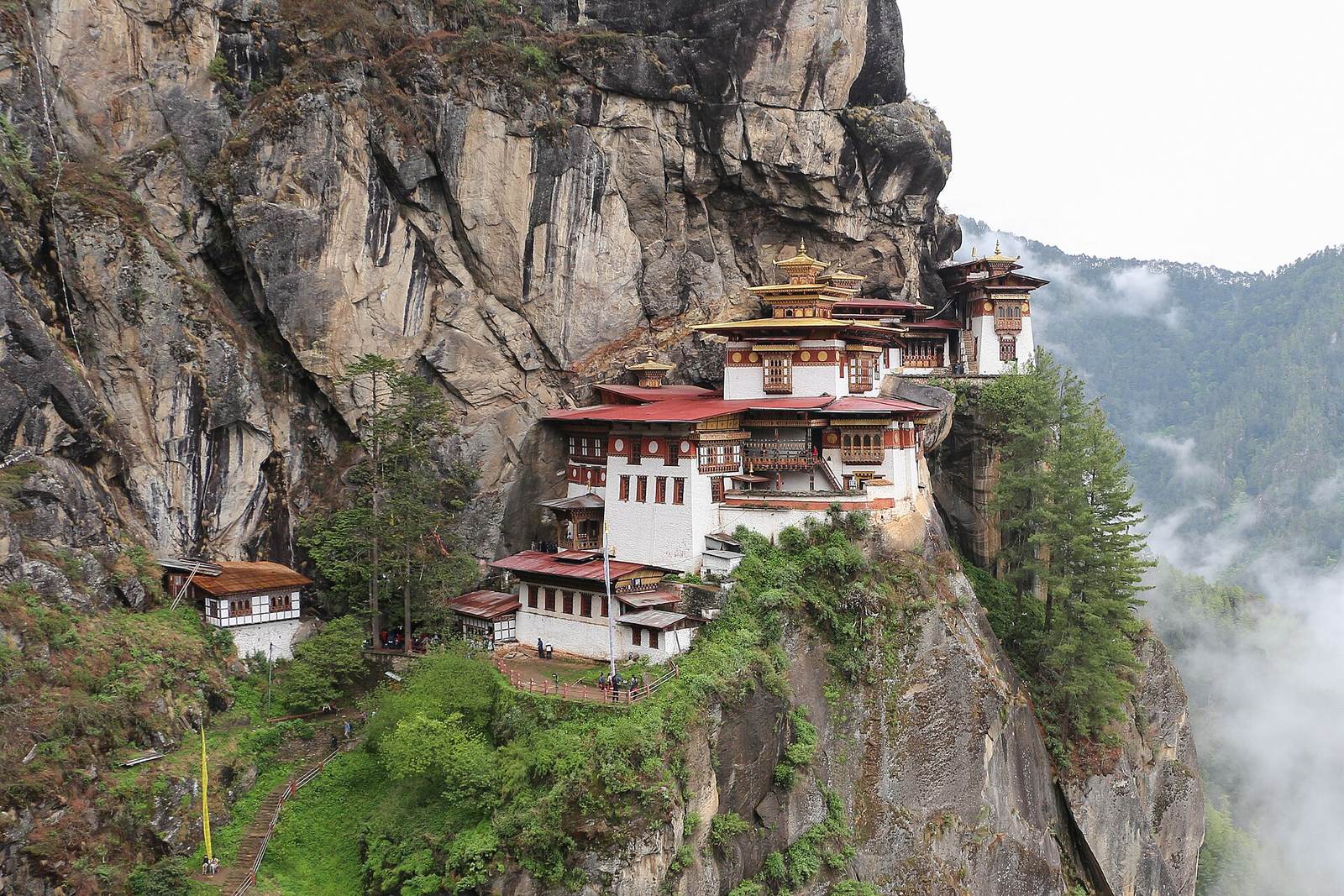
Thimphu has excellent day walks. The trail to **Cheri Monastery** follows a river through forest to a meditation centre founded in the seventeenth century. **Tango Monastery**, nearby, is a Buddhist university on a cliff. **Phajoding**, high above the city, is a steep half day climb with huge views. These help you adjust to altitude before Tiger's Nest.
Food and cafés
Thimphu has the most varied food in Bhutan. Try ema datshi, chillies in cheese, at a local restaurant, momos from a small canteen, and modern Bhutanese cooking at the better restaurants. Norzin Lam, the main street, and the streets around the clock tower square are lined with cafés, bakeries and bars. Remember that Tuesday is a dry day across Bhutan, when bars close and alcohol is not sold.
Where to stay
Most visitors stay in the central core around Norzin Lam and the clock tower, within walking distance of cafés and shops. Quieter hotels sit on the slopes of Motithang and along the river, and several luxury lodges are tucked into the hills above town. Tourists must stay in hotels certified by the Department of Tourism; your tour operator or the official tourism site will show the options.
Getting there and around
Thimphu is around an hour by road from Paro airport along the river. Taxis are plentiful and metered by the trip, and the centre is easy on foot. Beyond Thimphu and Paro, a licensed guide and vehicle are required, so most visitors organise transport through a tour operator. Plan your route with the free trip planner, and browse places to visit for cafés and sights.
Questions about Thimphu
How many days do I need in Thimphu?
Two days is ideal. That covers the dzong, Buddha Dordenma, the Memorial Chorten, the weekend market and a crafts school, with time for a short hike.
Can I explore Thimphu without a guide?
Under current rules, visitors paying the full Sustainable Development Fee can explore Thimphu and Paro without a guide. Check the official Department of Tourism site, as the rules have changed several times.
When is the Thimphu Tshechu?
The Thimphu Tshechu takes place in autumn, usually September or October, on dates set by the lunar calendar. Check the official tourism site for each year's dates and book well ahead.
Is Thimphu at high altitude?
It sits at around 2,300 metres. Most visitors feel only mild breathlessness on stairs, but take the first day gently and drink plenty of water.
Facts checked . Fees, schedules and entry rules change, so always confirm the latest with the official source.