At a glance
- Best for
- Punakha Dzong, rice terraces, rafting and easy hikes
- Airport
- Paro International Airport (PBH), around four hours
- Time needed
- Two days
- Best season
- October to April
- Altitude
- Around 1,200 metres
- Road
- Over the Dochula pass from Thimphu
Why go
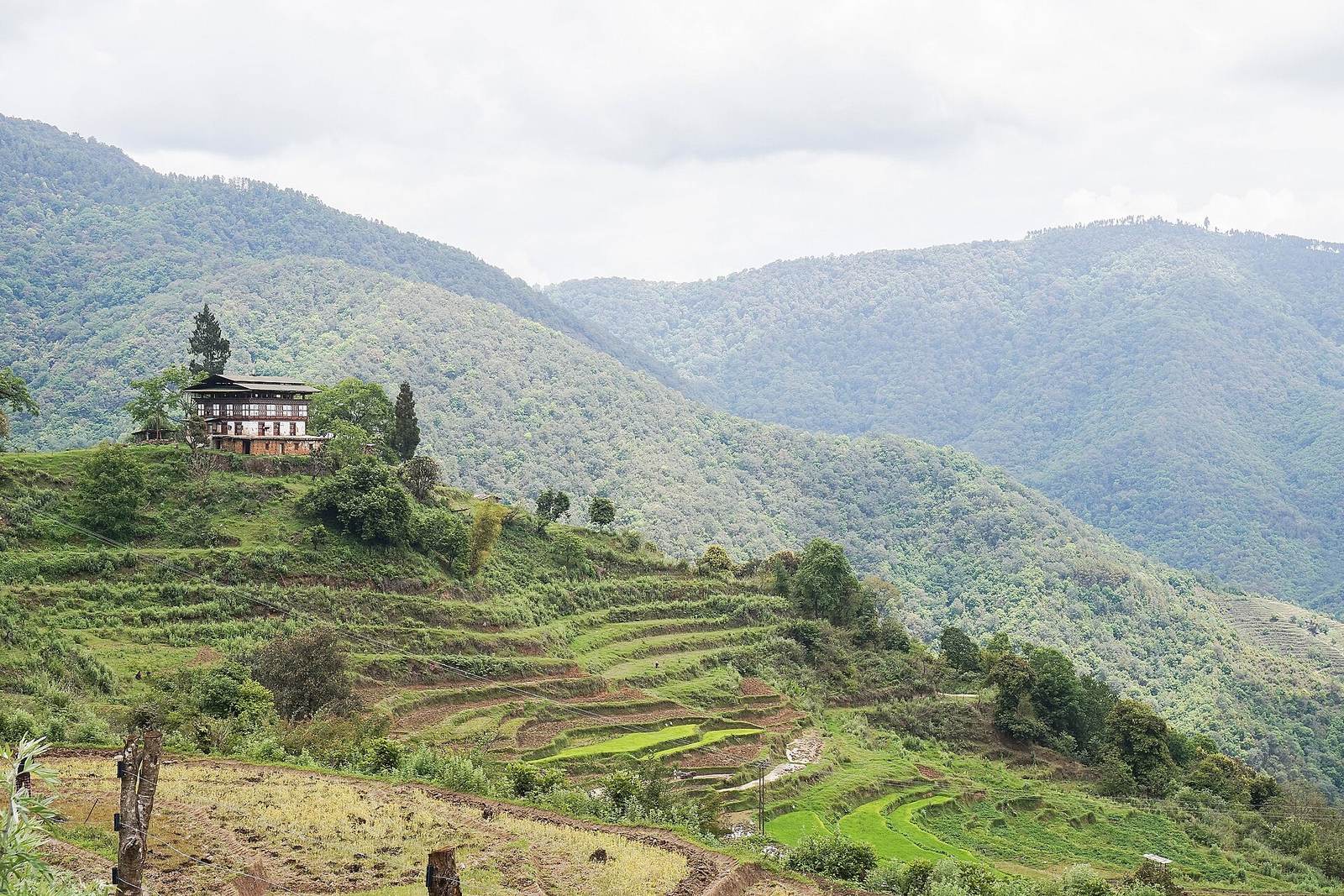
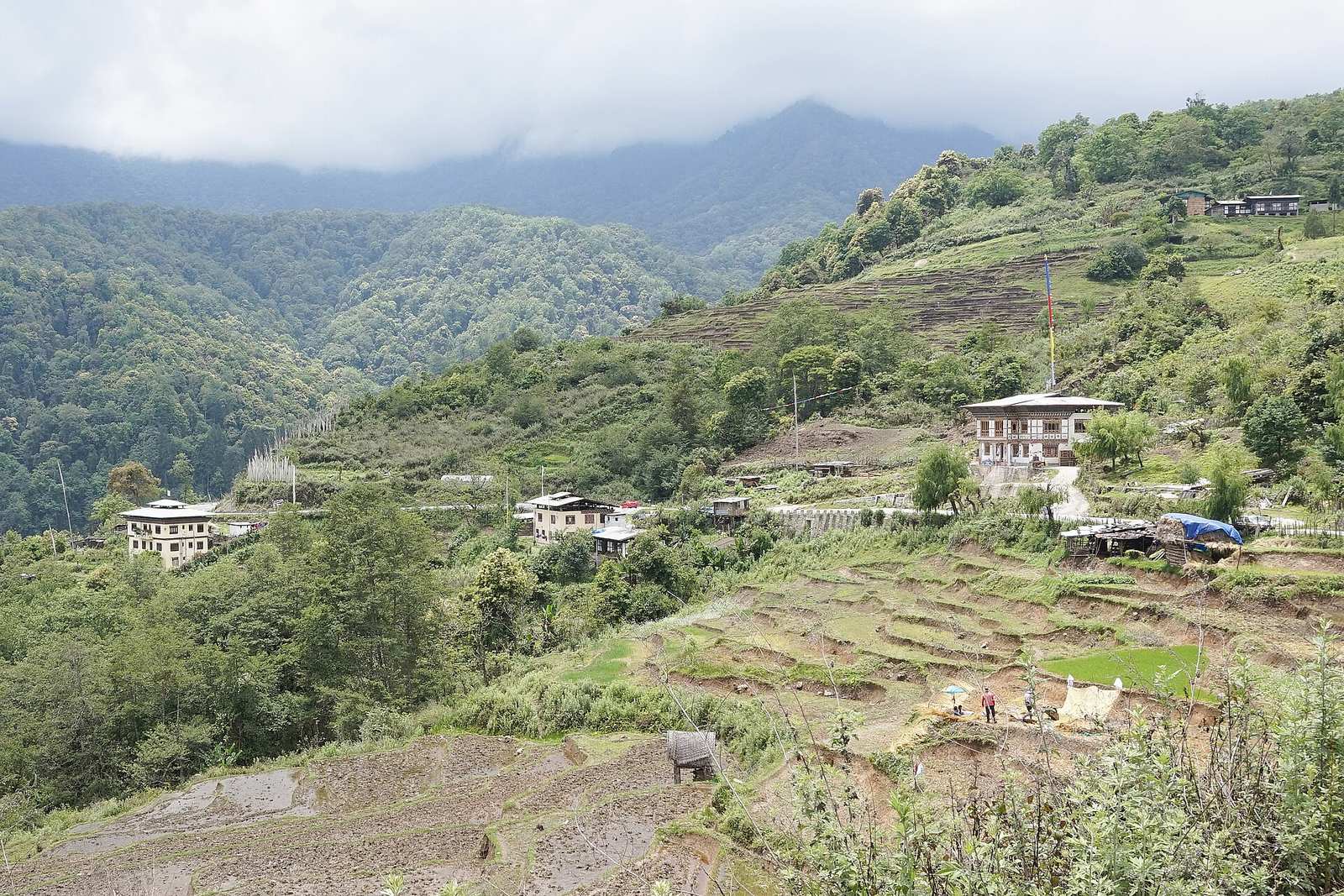
Punakha is where many travellers fall in love with Bhutan. The drive from Thimphu crosses the Dochula pass, with its 108 chortens and, on clear winter mornings, a sweep of snow peaks. You then drop into a soft green valley that grows two rice crops a year, where jacarandas flower purple around the dzong in spring and the air is warm enough for shirtsleeves in midwinter.
Punakha Dzong
**Punakha Dzong**, the palace of great happiness, was built in 1637 by Zhabdrung Ngawang Namgyel, who unified Bhutan. It sits on a spit of land at the meeting of two rivers, reached by a covered wooden cantilever bridge. Inside are three courtyards and a soaring assembly hall with gilded statues. Royal weddings and coronations have been held here, and the central monk body spends the winter here. In late winter or early spring the Punakha Drubchen and Tshechu reenact a seventeenth century battle with costumed warriors.
What else to see
**Chimi Lhakhang**, the fertility temple, honours Drukpa Kunley, the divine madman, a fifteenth century saint famous for his outrageous humour. It sits on a hillock reached by a pleasant twenty minute walk through rice fields and the village of Sopsokha, where houses are painted with phalluses to ward off evil. Couples hoping for children come from all over the world for a blessing.
**Khamsum Yulley Namgyal Chorten**, built by the Queen Mother, is a gilded temple on a ridge above the Mo Chhu, reached by a walk up through the fields with fine valley views from its roof. The **Punakha Suspension Bridge**, one of the longest in Bhutan, swings over the river behind the dzong and is draped in prayer flags.
At Dochula, the **Druk Wangyal Chortens** and **Druk Wangyal Lhakhang** commemorate a 2003 military victory, and the **Royal Botanical Park** at Lampelri nearby offers forest walks among rhododendrons in spring. On the way into the valley, the hilltop nunnery of **Sangchhen Dorji Lhuendrup** looks over the river.
Experiences
Gentle **rafting** on the Mo Chhu or Pho Chhu is one of the most popular activities, floating past the dzong in calm water from around October to May. The valley also has easy village walks, and in the north the **Jigme Dorji National Park** begins, home to the rare takin and the route of longer treks. Hot spring baths and farm visits round out a stay.
Food
Punakha is rice country. Look out for red rice, fresh vegetables and river fish in season, and stop for tea at the cafés along the valley floor in Khuruthang, the main town. The Dochula pass has a café with a view where travellers break the drive.
Where to stay
Most hotels are spread along the valley rather than in one town, from simple lodges in Khuruthang to resorts on the hillsides and some of Bhutan's finest luxury lodges among the rice fields. Wangdue Phodrang, just south, has more options. Use Department of Tourism certified stays.
Getting there
Punakha is two to three hours from Thimphu by road over Dochula, and around four from Paro. A licensed guide and vehicle are required. Combine it with Phobjikha or Bumthang further east, and use the free trip planner to fit the drives into realistic days. See places to visit for more ideas.
Questions about Punakha
How many days do I need in Punakha?
Two nights is ideal. That covers the dzong, Chimi Lhakhang, the Khamsum Yulley chorten hike, the suspension bridge and a rafting trip.
Is Punakha warmer than Thimphu?
Yes. At around 1,200 metres it is about a thousand metres lower than Thimphu, so winters are mild and summers can be hot and humid.
Can anyone visit Chimi Lhakhang?
Yes. Visitors of every background are welcome. Dress modestly, remove shoes before entering the shrine and follow your guide's lead.
When is the best time to see the jacarandas?
The jacaranda trees around Punakha Dzong usually flower in April and early May.
Facts checked . Fees, schedules and entry rules change, so always confirm the latest with the official source.