At a glance
- Best for
- Markets, art, food and nightlife
- Gateway
- Cardinal Bernardin Gantin International Airport (COO)
- Time needed
- Two to three nights
- Best season
- November to March, the drier months
- Getting around
- Zemidjan motorbike taxis, taxis and ride apps
- Language
- French, with Fon and Goun widely spoken
Why Cotonou is worth your time
Many people treat Cotonou as a transit stop on the way to Ouidah or Abomey, but the city rewards a couple of days. Its name in Fon means the mouth of the river of death, a nod to the lagoon, yet the mood is upbeat. Recent years have brought new seafront promenades, cleaner streets and fresh landmarks such as the giant bronze Amazon statue honouring the women warriors of Dahomey.
The neighbourhoods
**Ganhi** is the old commercial centre near the port, with banks, the cathedral of Notre-Dame des Apôtres and the Fondation Zinsou. **Haie Vive**, in Cadjehoun near the airport, is the favourite area for visitors, packed with restaurants, bars, cafés and guesthouses within walking distance of each other. **The Marina** along the seafront holds the big hotels and the new beach promenade. **Fidjrossè** to the west is where locals head for the beach at weekends. **Jonquet** is the late-night quarter, and **Akpakpa**, across the lagoon bridges, is a more residential, working side of the city.
What to see and do
Start with **Dantokpa market**, often described as the largest open-air market in West Africa. It sprawls along the lagoon and sells everything from wax-print cloth and spices to motorbike parts and the Vodun fetish stalls of the marché des féticheurs. Go in the morning, keep your bag in front of you and consider a local guide for your first visit.
The **Fondation Zinsou** shows contemporary African art in changing exhibitions and is free to enter. The **Institut Français** runs concerts, film nights and exhibitions most weeks. For crafts, the **Centre de Promotion de l'Artisanat** gathers carvers, bronze casters, appliqué makers and fabric sellers in one place.
The classic half day out is a pirogue trip from the jetty at Abomey-Calavi to **Ganvié**, the stilt village on Lake Nokoué. The **Songhaï Centre**, an influential farm and training centre, is an easy add-on on the road to Porto-Novo.
Food and drink
Cotonou is a great place to try Beninese cooking. Look for pâte, a smooth maize dough eaten with sauce feuille or peanut sauce, amiwo, a red maize dish cooked in tomato sauce, akassa wrapped in leaves, grilled fish with spicy pepper sauce, and wagasi cheese from the north. Street stalls in Jonquet and Haie Vive serve these late into the night. Try a bissap or baobab juice by day, and a local beer or a careful taste of sodabi palm spirit by night.
Where to stay
The Marina has the international hotels, including the Sofitel and the Novotel, close to the beach and centre. Haie Vive and Cadjehoun suit travellers who want restaurants on the doorstep and a short ride to the airport. Budget guesthouses cluster around Haie Vive and Jonquet. Always choose somewhere with reliable air conditioning, security and a generator.
Getting around
The yellow-shirted zemidjan, or zem, motorbike taxis are everywhere and very cheap, but agree the fare before you get on and ask for a helmet. Shared and private taxis are available, and ride apps such as Gozem operate in the city. Traffic is heaviest near Dantokpa and the bridges at rush hour.
Staying safe
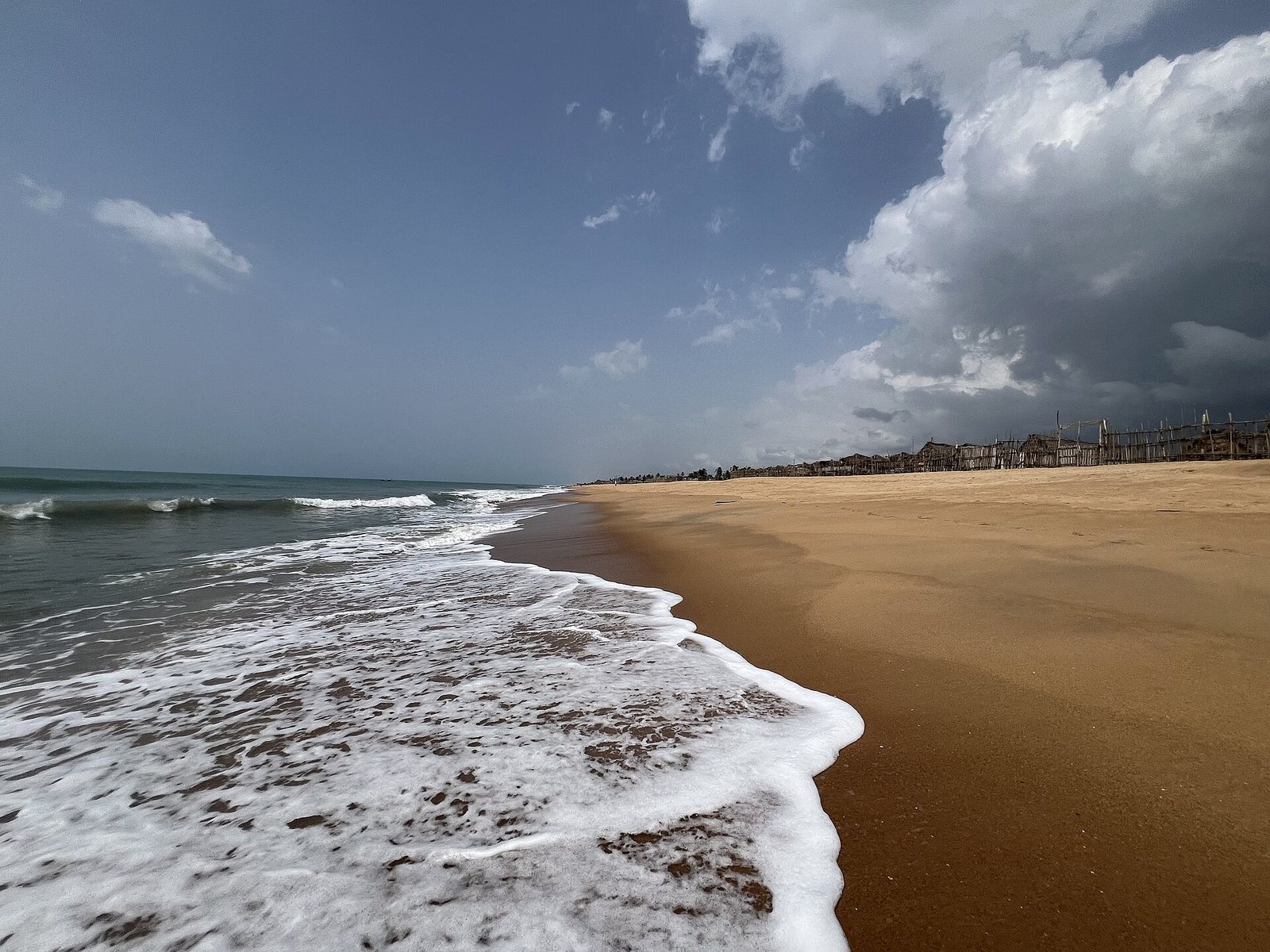
Cotonou is calmer than many West African cities, but petty theft happens, especially in markets and on the beach. Do not swim at the city beaches, where currents are dangerous. Avoid walking alone on dark beaches or quiet streets at night, and keep phones out of reach of passing motorbikes.
Questions about Cotonou
How many days should I spend in Cotonou?
Two or three nights covers Dantokpa, the Fondation Zinsou, a Ganvié trip and a night out. Many visitors also use Cotonou as a base for day trips to Porto-Novo and Ouidah.
Is Cotonou safe for tourists?
Most visits pass without trouble. Take normal care against bag snatching, avoid empty beaches at night and use known taxis or ride apps after dark.
Can you swim at Cotonou's beaches?
Swimming is not advised. The Atlantic has strong rip currents along this coast, so enjoy the beach from the sand and swim in hotel pools.
Is Cotonou the capital of Benin?
Porto-Novo is the official capital, but Cotonou is the seat of government, the biggest city and the economic centre.
Facts checked . Fees, schedules and entry rules change, so always confirm the latest with the official source.