At a glance
- Best for
- Museums, heritage, art and souqs
- Airport
- Sharjah International (SHJ)
- Time needed
- One to two days
- Best season
- November to March
- Getting around
- Taxis, ride hailing and buses
- Rules
- Dry emirate with a stricter decency code
Why visit Sharjah
Sharjah was named UNESCO's Arab Capital of Culture back in 1998 and has kept building on that ever since. More than a dozen museums cover Islamic art, archaeology, calligraphy, science and the sea. The Sharjah Biennial has made it a name on the global art map, and the Sharjah International Book Fair each autumn is one of the largest in the world. It is also the main base for budget airline flights into the UAE.
The Heart of Sharjah
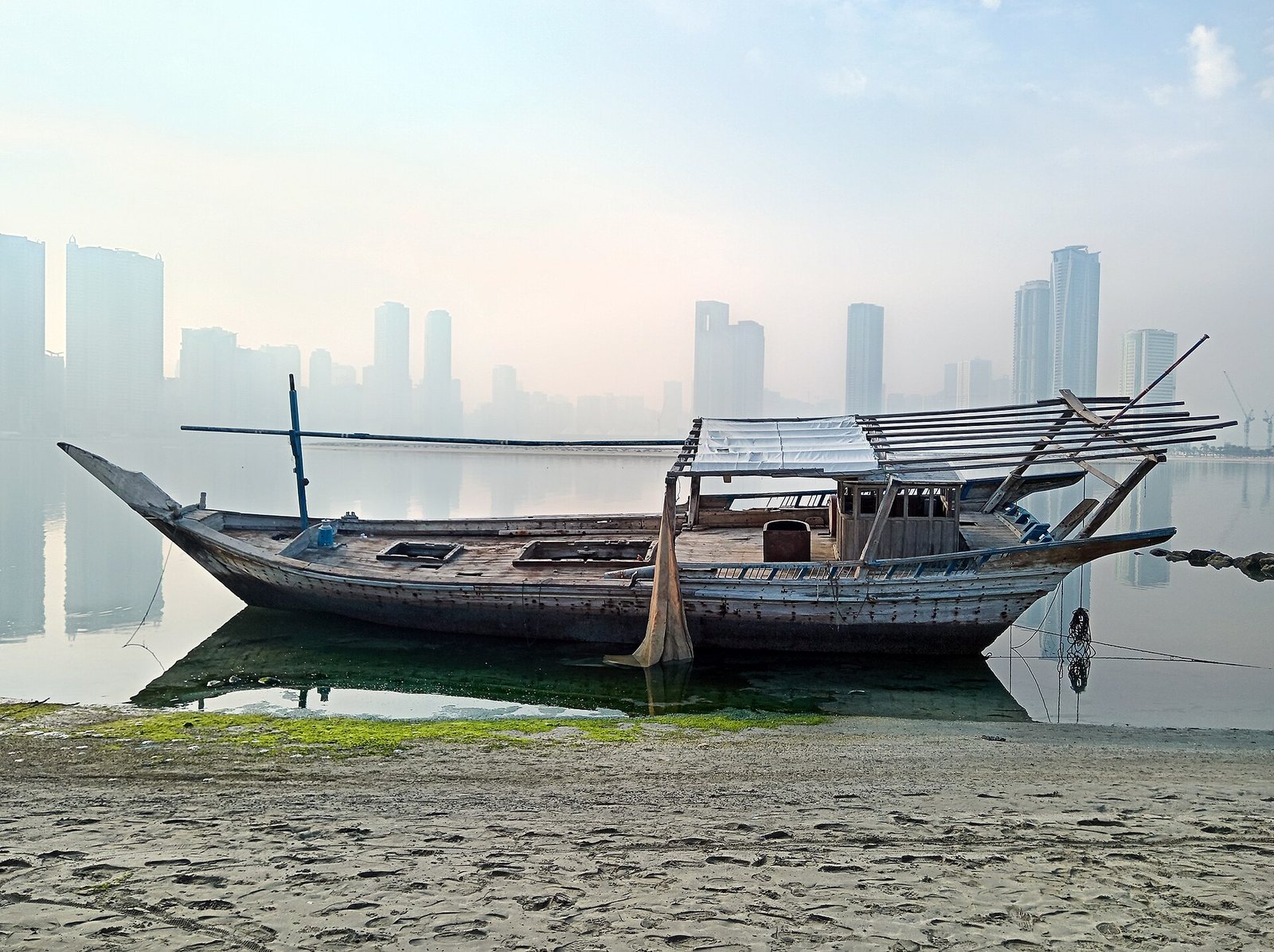
The restored old town between the creek and the Corniche is a maze of coral stone houses, courtyard museums and quiet lanes. Visit Al Hisn, the fort at the centre of the old city, then Bait Al Naboodah, a merchant's home that shows family life in the pearling era. Souq Al Arsah, one of the oldest markets in the country, sells spices, antiques, carpets and silver under a palm frond roof. The Sharjah Calligraphy Museum and the Sharjah Heritage Museum are close by.
The museums
The Sharjah Museum of Islamic Civilization, in a former souq on the Corniche with a golden dome, is the standout: astrolabes, manuscripts, ceramics and textiles from across the Muslim world. The Sharjah Art Museum holds Orientalist paintings and modern Arab art. Sharjah Archaeology Museum tells the story from the Stone Age onwards. Families love the Sharjah Aquarium and the Maritime Museum on the waterfront.
Art and design
The Sharjah Art Foundation runs galleries in restored buildings around Al Mureijah Square, and its flying saucer building, a 1970s modernist landmark, is a lively venue. The Rain Room, an installation where you walk through falling water without getting wet, is in Al Majaz. Many spaces are free to enter.
Souqs and the waterfront
The Central Souq, known as the Blue Souq for its tiled facades, is great for carpets, gold and souvenirs. Al Majaz Waterfront and Al Qasba canal are popular evening walks with fountains and family restaurants. Al Noor Island has a butterfly house, sculpture and gardens.
Beyond the city
An hour inland, Mleiha Archaeological Centre offers fossil hunting, Bronze Age tombs, desert stargazing and guided hikes near the fossil rock. Sharjah also controls enclaves on the east coast, including Khor Fakkan, with its mountain backed beach and waterfall, and Kalba, known for its mangroves and birdlife.
Where to stay
Sharjah's hotels are generally cheaper than Dubai's, and many travellers use it as a base. Al Majaz and Al Khan are good for waterfront hotels and families. Remember that hotels here do not serve alcohol.
Getting around
Taxis are metered, ride hailing apps work, and buses link Sharjah to Dubai and Ajman. Traffic between Sharjah and Dubai can be very heavy at rush hour, so travel outside peak times if you can.
Before you go
Sharjah's decency laws mean shoulders and knees should be covered in public, and tight or revealing clothing is frowned upon. Couples should keep affection private. Plan your culture days with the free trip planner, and see our places to visit for more ideas.
Questions about Sharjah
Is Sharjah worth visiting from Dubai?
Yes. It is next door and holds some of the best museums and heritage areas in the Gulf. A full day covers the Heart of Sharjah and the Museum of Islamic Civilization.
Can I drink alcohol in Sharjah?
No. Sharjah is a dry emirate, so alcohol is not sold in hotels, bars or shops, and drinking in public is against the law.
What should I wear in Sharjah?
Cover your shoulders and knees, avoid tight or see through clothing, and save swimwear for the beach or pool.
Is Sharjah a good base for budget travellers?
Often yes. Hotels tend to cost less than Dubai, and Sharjah International Airport is the hub for low cost flights, but allow for traffic into Dubai.
Facts checked . Fees, schedules and entry rules change, so always confirm the latest with the official source.