At a glance
- Best for
- History, architecture, food, shopping and nightlife
- Airports
- Istanbul Airport (IST) on the European side and Sabiha Gökçen (SAW) on the Asian side
- Time needed
- Three to five days
- Best season
- April to June and September to November
- Getting around
- Tram, metro, ferries, Marmaray and walking, all with an Istanbulkart
- Language
- Turkish, with English common in tourist areas
Why go
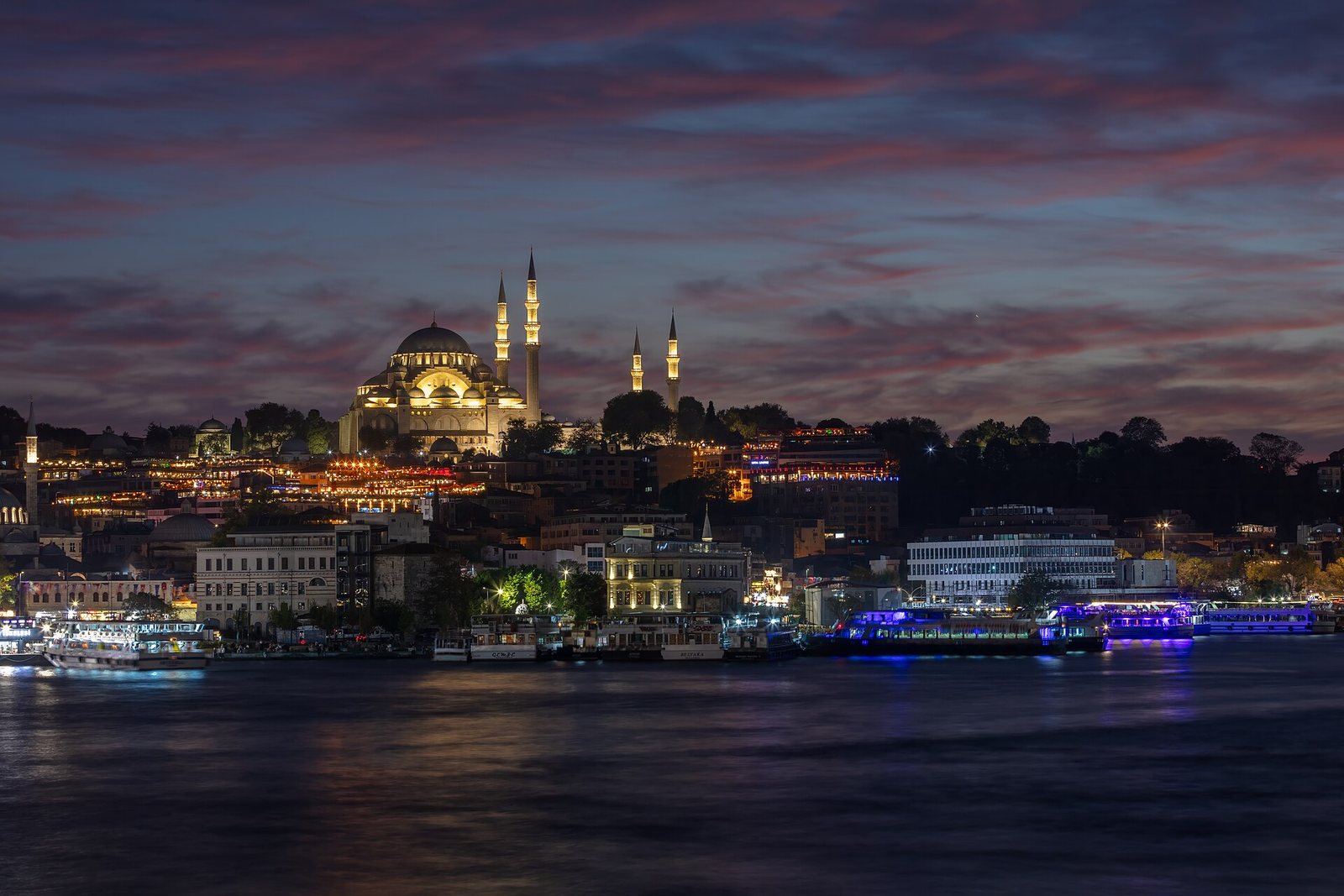
In one morning you can stand under the dome of Hagia Sophia, walk through the courtyards of the sultans at Topkapı and get happily lost in the Grand Bazaar. In the afternoon a ferry carries you across to Asia for coffee and a market, and at night the city glows along the water. Istanbul is also one of the great food cities of the world, from fish sandwiches by the Galata Bridge to slow cooked stews in workers' canteens.
The old city: Sultanahmet
The historic peninsula holds the headline sights, all a short walk apart. **Hagia Sophia**, built as a cathedral in the sixth century, is a working mosque again, so dress modestly and avoid prayer times. Facing it is the **Blue Mosque** (Sultanahmet Mosque), with its six minarets and blue Iznik tiles. **Topkapı Palace** was the home of the Ottoman sultans; allow half a day for the courtyards, treasury and harem. Beneath the streets, the **Basilica Cistern** is a forest of Roman columns in the dark. The **Istanbul Archaeology Museums** are quieter and superb.
Bazaars and the Golden Horn
The **Grand Bazaar** is one of the oldest covered markets in the world, with thousands of shops selling carpets, lamps, ceramics and gold. Downhill, the **Spice Bazaar** (Egyptian Bazaar) is smaller and full of Turkish delight, spices and dried fruit, and the streets around it in **Eminönü** are where locals actually shop. The **Süleymaniye Mosque**, Sinan's masterpiece, has a terrace with one of the best views in the city and far fewer crowds than Sultanahmet.
Beyoğlu, Galata and Karaköy
Across the Galata Bridge, the **Galata Tower** rises over steep lanes of cafés and design shops. **İstiklal Avenue** runs from Tünel to **Taksim Square**, with its red nostalgic tram, old passages and side streets of meyhanes, the Turkish taverns where meze and rakı flow late. **Karaköy** on the waterfront is a hub of cafés and galleries, including **Istanbul Modern**.
The Asian side and the Bosphorus
Take a ferry to **Kadıköy** for the food market streets, street art and an evening walk to **Moda**. Further up the Bosphorus, villages such as **Ortaköy**, **Arnavutköy** and **Bebek** have mosques and wooden mansions on the water. A public ferry along the strait is one of the best value experiences in Türkiye; the long Bosphorus tour from Eminönü runs up to **Anadolu Kavağı**, near the Black Sea. On the Golden Horn, colourful **Balat** and **Fener** are old Greek, Jewish and Armenian neighbourhoods with churches, synagogues and cafés.
Where to stay
**Sultanahmet** puts you beside the sights but is quiet at night. **Karaköy**, **Galata** and **Cihangir** suit people who want cafés, bars and a lively evening. **Kadıköy** and **Moda** give a local feel and easy ferries. Avoid choosing a hotel purely because it is cheap and far out: Istanbul traffic is heavy, and time near a tram, metro or ferry stop matters more than a few extra stars.
Getting around
Buy an **Istanbulkart**, the rechargeable transport card, from machines at stations and use it on trams, metro, buses, the funiculars, the Marmaray rail tunnel under the Bosphorus and the ferries. The T1 tram links Sultanahmet, Eminönü and Karaköy. Use registered yellow, turquoise or black taxis and the BiTaksi app, insist on the meter and agree nothing in advance. Both airports connect to the city by metro or Havaist and Havabüs coaches.
Questions about Istanbul
How many days do I need in Istanbul?
Three full days covers Sultanahmet, the bazaars, a Bosphorus ferry and Galata. Four or five lets you add the Asian side, Balat and a museum or two at a gentler pace.
Which Istanbul airport should I fly into?
Istanbul Airport (IST) is the main hub and closer to the European side sights. Sabiha Gökçen (SAW) is on the Asian side and used by many budget airlines. Both have public transport to the centre, but allow plenty of time in traffic.
Is Istanbul safe for tourists?
Generally yes, with normal city care. Watch for pickpockets on trams and in crowds, the shoe shine and friendly stranger bar scams around Taksim, and taxi drivers who avoid the meter.
Can I visit mosques as a tourist?
Yes, outside prayer times. Women cover their hair and shoulders, everyone covers knees, shoes come off at the door, and visitors stay behind the barriers in larger mosques. Scarves are usually available at the entrance.
Facts checked . Fees, schedules and entry rules change, so always confirm the latest with the official source.