At a glance
- Best for
- Old City walks, souks, food and history
- Airport
- Damascus International Airport (DAM), about thirty to forty minutes from the centre
- Time needed
- Three to four days, plus day trips
- Best season
- March to May and September to November
- Getting around
- Walking in the Old City, yellow taxis and ride apps elsewhere
- Good base for
- Maaloula, Saydnaya and the Barada valley
Why go
Few places let you walk through so many layers of history in one afternoon. A Roman gate leads into a souk built under the Ottomans, which ends at a mosque raised on the site of a Roman temple and a Byzantine church. Then you sit down in a restored courtyard with a lemon tree, a fountain and a glass of tea. Damascus is busy, noisy and still recovering from years of war and economic hardship, but it is also gentle, sociable and full of beauty once you step off the main roads.
Top things to do
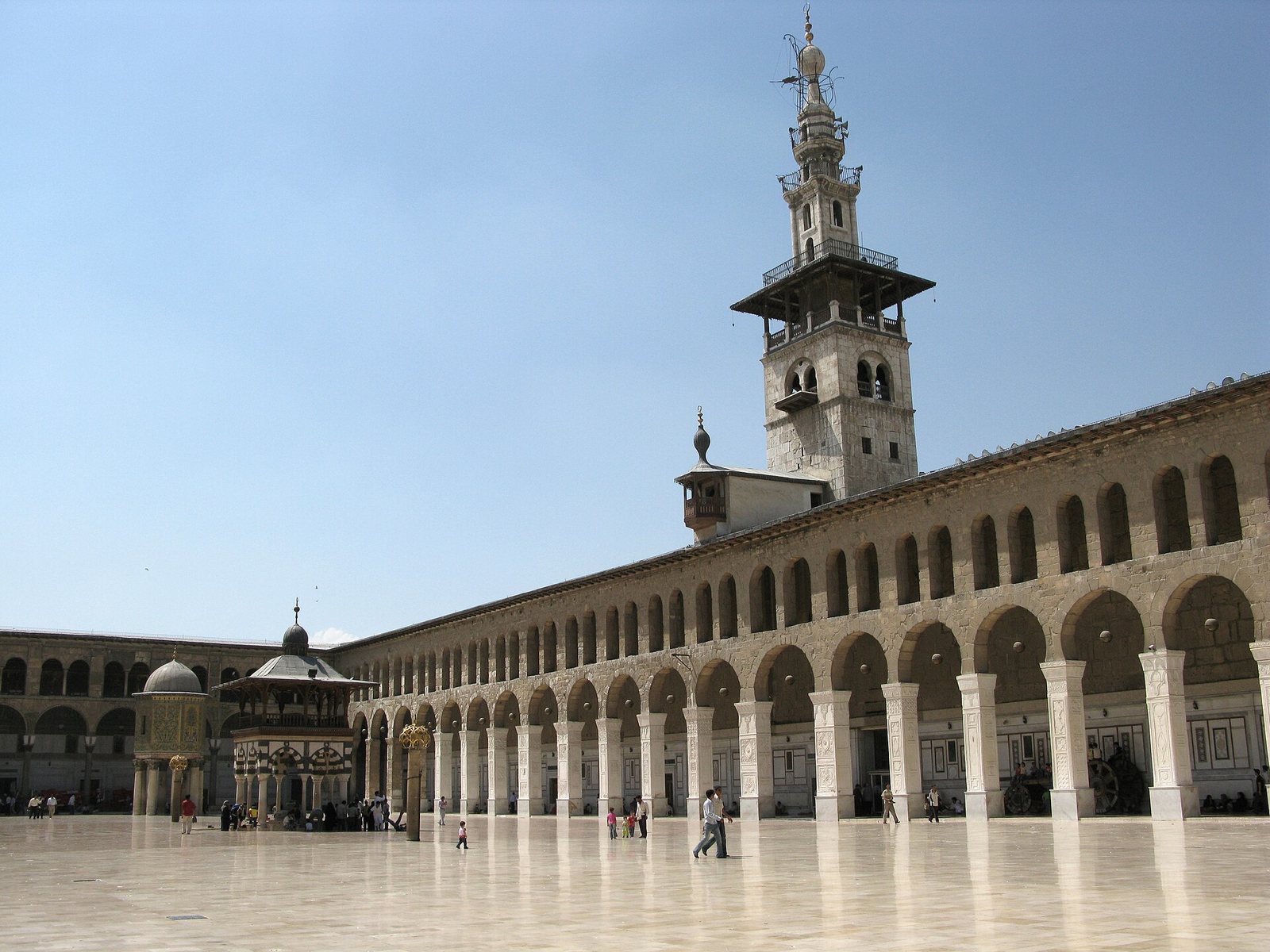
Start at the **Umayyad Mosque**, one of the oldest and grandest mosques in the world, with its golden mosaics, vast marble courtyard and the shrine said to hold the head of John the Baptist. Women are given a robe to wear at the entrance, and everyone removes their shoes. Visit near sunset, when families gather in the courtyard.
Reach the mosque through **Souq al Hamidiyah**, the great covered market with its iron roof pierced by old bullet holes that let in shafts of light. Stop at **Bakdash** for pounded ice cream with pistachios, a Damascus ritual since the late nineteenth century. Nearby, the **Azem Palace** is an eighteenth century governor's residence of black and white stone courtyards, and the **Tomb of Saladin** sits in a small garden beside the mosque.
Walk east along **Straight Street** (Souq Medhat Pasha), mentioned in the Bible, past spice sellers, copper workers and the Roman arch, into the Christian quarters of **Bab Touma** and **Bab Sharqi**. Here you will find the **Chapel of Saint Ananias**, built over the cellar where Saint Paul is said to have been baptised, old churches and some of the city's best courtyard restaurants.
Outside the walls, the **National Museum of Damascus** holds treasures from Ugarit, Mari and Palmyra, including a reconstructed synagogue from Dura Europos. Check opening hours locally, as they have changed often. For views over the whole city, go up **Mount Qasioun** at dusk.
Food
Damascus has one of the great kitchens of the Arab world. Try **fatteh** (chickpeas, yoghurt and toasted bread) for breakfast, **shawarma** and **falafel** from street counters, **kibbeh** in many forms and Damascene sweets such as **barazek** sesame biscuits and pistachio **halawet el jibn**. Courtyard restaurants in the Old City serve long mezze spreads in the evening. Alcohol is served in some Christian quarter restaurants and bars, but always be discreet.
Where to stay
The most memorable choice is a **boutique courtyard hotel** inside the Old City walls, often in a restored Ottoman house. They are small and atmospheric, though rooms can be dark and the lanes are not reachable by car. Larger modern hotels sit outside the walls near the centre and offer more reliable power and space. Book ahead in spring and autumn, and confirm the hotel can register your stay as required.
Getting around
The Old City is best on foot. For longer trips use the yellow taxis, agreeing the fare first, or ride hailing apps that work in Damascus. Traffic is heavy and checkpoints, though fewer than before, can still slow journeys. Keep a copy of your passport with you at all times.
Safety
Damascus has been the most visited part of Syria since the change of government, but most Western governments still advise against all travel to the country. Incidents can happen without warning. Avoid demonstrations, military sites and the outer suburbs that saw heavy fighting, where unexploded ordnance remains. Do not photograph security forces or government buildings. Dress modestly, especially in mosques and conservative neighbourhoods.
Day trips
The mountain village of **Maaloula**, an hour north, has cliff convents and residents who still speak a western dialect of Aramaic, though it was damaged in the war. Nearby **Saydnaya** has an ancient convent on a rocky hill. Check current advice and road conditions before any trip outside the city, and use the free trip planner to fit Damascus into your route.
Questions about Damascus
How many days do I need in Damascus?
Three days covers the Old City, the Umayyad Mosque and the museum at a calm pace. Add a fourth for Maaloula or Mount Qasioun.
Is the Old City of Damascus walkable?
Yes, and walking is the only real way to see it. The lanes are narrow and uneven, so wear comfortable shoes and carry a downloaded map.
What should I wear to the Umayyad Mosque?
Cover shoulders and knees. Women should also cover their hair, and robes are usually provided at the entrance. Shoes come off before the courtyard.
Can I drink alcohol in Damascus?
Some restaurants and bars in the Christian quarters of Bab Touma and Bab Sharqi have served alcohol, but rules and attitudes can change. Be discreet and never drink in public.
Facts checked . Fees, schedules and entry rules change, so always confirm the latest with the official source.