At a glance
- Best for
- River views, music, art and food
- Airport
- Maya-Maya International Airport (BZV)
- Time needed
- Two to four days
- Best season
- June to September, the long dry season
- Languages
- French and Lingala
- Getting around
- Taxis, best arranged through your hotel
Why visit Brazzaville
Founded in the 1880s by the explorer Pierre Savorgnan de Brazza, the city was the capital of French Equatorial Africa and briefly the capital of Free France during the Second World War. Today it is a relaxed city of around two million people, where life moves at the pace of the river. Visitors come for the music, the art, the food and the sense of being somewhere few travellers have reached. It is also the base for trips to Lesio-Louna and for flights to the northern forests.
Neighbourhoods to know
**Centre-ville and the Plateau** hold the ministries, banks, larger hotels and the riverside Corniche. This is where most visitors stay.
**Poto-Poto** is the creative heart, home to the green-roofed Basilique Sainte-Anne, the famous painting school and busy markets. It is lively, colourful and best explored by day.
**Bacongo**, in the south, is the home of Marché Total, the biggest market in the city, and of the sapeurs, the elegantly dressed gentlemen of La Sape who parade their designer suits at weekends.
**Moungali and Ouenzé** are dense residential districts with markets and nightlife, while **Mpila** runs along the river to the north.
What to see and do
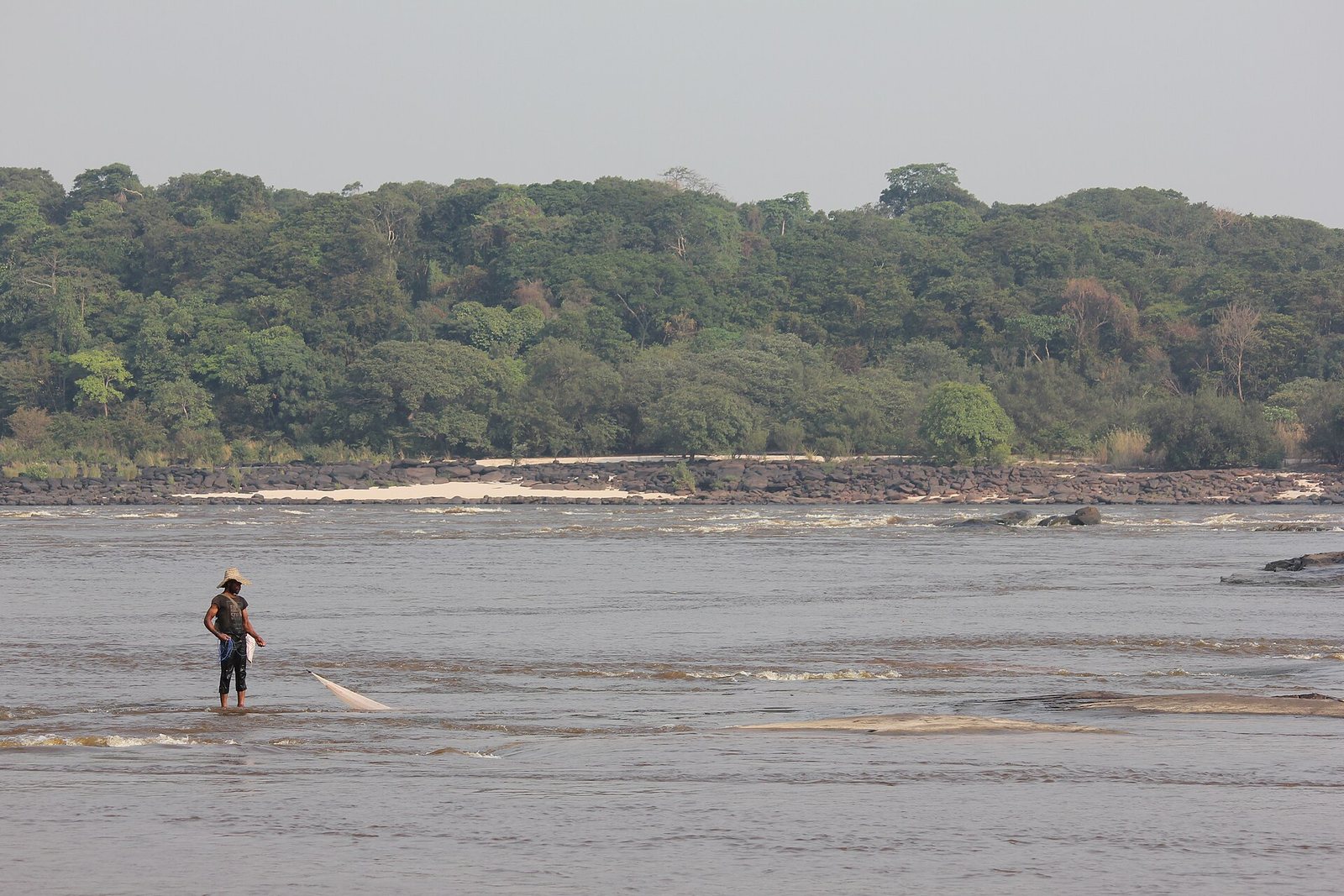
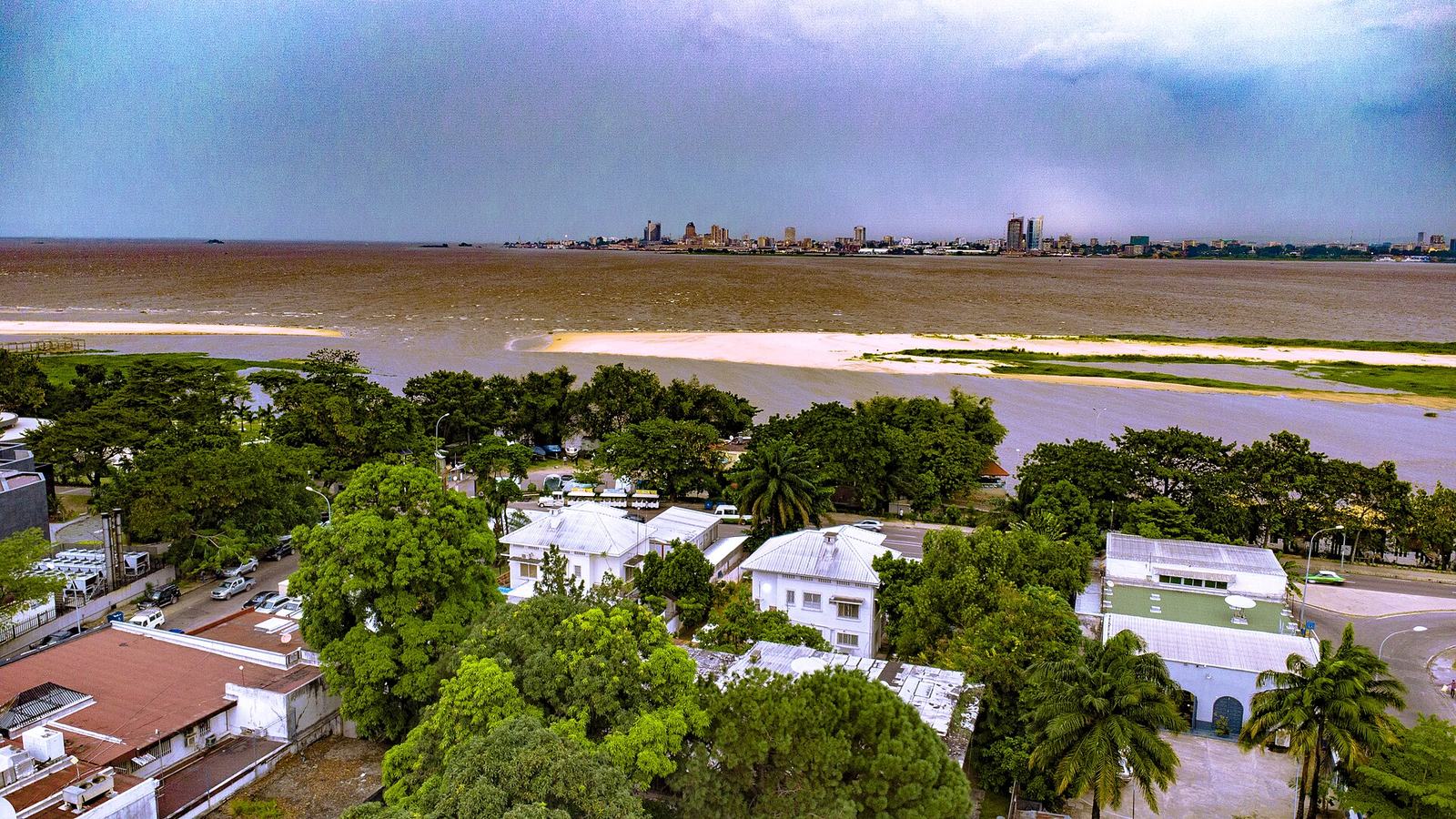
Start on the **Corniche**, the riverside road with views across to Kinshasa, and the **Mémorial Pierre Savorgnan de Brazza**, a white marble monument and museum. In Poto-Poto, the **Basilique Sainte-Anne du Congo** is the city's best known building, and the **Ecole de Peinture de Poto-Poto** has trained painters since 1951; you can watch them work and buy directly. In the late afternoon head south to **Les Rapides**, where the Congo River crashes over rocks below the city. At weekends, look for the sapeurs in Bacongo and spend an evening with live rumba, the music that UNESCO recognises as shared heritage of both Congos.
Food and drink
Brazzaville eats well. Try **saka-saka** (pounded cassava leaves), **poulet moambé** in palm nut sauce, **maboké** (fish steamed in leaves), grilled river fish such as capitaine with plantain, and **chikwangue**, the cassava bread wrapped in leaves. Ngok and Primus are the local beers. Riverside terraces on the Corniche suit a sunset dinner, while maquis in Poto-Poto and Bacongo serve simple, authentic plates.
Getting around
Taxis are the usual way to move around. Agree the fare before you get in, use taxis your hotel recommends, especially at night, and avoid walking in unfamiliar areas after dark. Ferries cross to Kinshasa, but crossing requires a separate visa for the Democratic Republic of the Congo and can be slow and confusing; check current advice before attempting it.
Staying safe
Most visits pass without trouble. Petty theft happens in markets and busy areas, so keep phones and cash out of sight. Do not photograph government buildings, the presidential palace, bridges or soldiers. Carry a copy of your passport and visa, as police checks are common. Read your government's latest advice before you travel.
A suggested two days
On day one, start early at the Mémorial de Brazza and walk the Corniche, then head to Poto-Poto for the basilica, the painting school and lunch at a local maquis. Spend the late afternoon at Les Rapides and have dinner by the river. On day two, explore Marché Total in Bacongo in the morning while it is cooler, visit the Ateliers Sahm or the Institut Français for contemporary art, and finish with live rumba. If you have a third day, make the trip north to Lesio-Louna to see the gorillas, or simply slow down and enjoy the river. Use the free trip planner to fit Brazzaville into a longer route.
Questions about Brazzaville
Can I see Kinshasa from Brazzaville?
Yes. From the Corniche and Les Rapides you look straight across the Congo River at the Kinshasa skyline. Crossing over is a separate trip that needs a separate visa.
Is Brazzaville safe for first-time visitors?
Many visitors find it calm and friendly by day. Use recommended taxis at night, keep valuables hidden, avoid photographing official buildings and follow your government's current travel advice.
Where should I stay in Brazzaville?
Most first-timers stay in Centre-ville or near the Corniche, close to restaurants, banks and the river. Hotels near Maya-Maya airport suit short stopovers.
What is La Sape?
La Sape is a Congolese culture of elegant dress. Sapeurs wear designer suits, bright colours and polished shoes, and you are most likely to see them in Bacongo at weekends. Always ask before taking photos.
Facts checked . Fees, schedules and entry rules change, so always confirm the latest with the official source.