At a glance
- Best for
- History, food, architecture and culture
- Airport
- Allama Iqbal International Airport (LHE)
- Time needed
- Three days
- Best season
- October to March
- Language
- Punjabi and Urdu, with English in hotels
- Getting around
- Ride apps, rickshaws, the Orange Line metro and Metrobus
The Walled City
Old Lahore was once enclosed by walls with thirteen gates, and its lanes still carry the life of the Mughal city. The **Walled City of Lahore Authority** has restored the royal route from **Delhi Gate**: start at the painted vaults of the **Shahi Hammam**, walk past spice and wedding stalls to the **Wazir Khan Mosque**, whose tile work and frescoes are some of the most beautiful in South Asia, then continue through the bazaars towards the fort. Go in the morning when it is cooler and quieter, and let a guide show you the havelis hidden off the main lane.
Lahore Fort and Badshahi Mosque
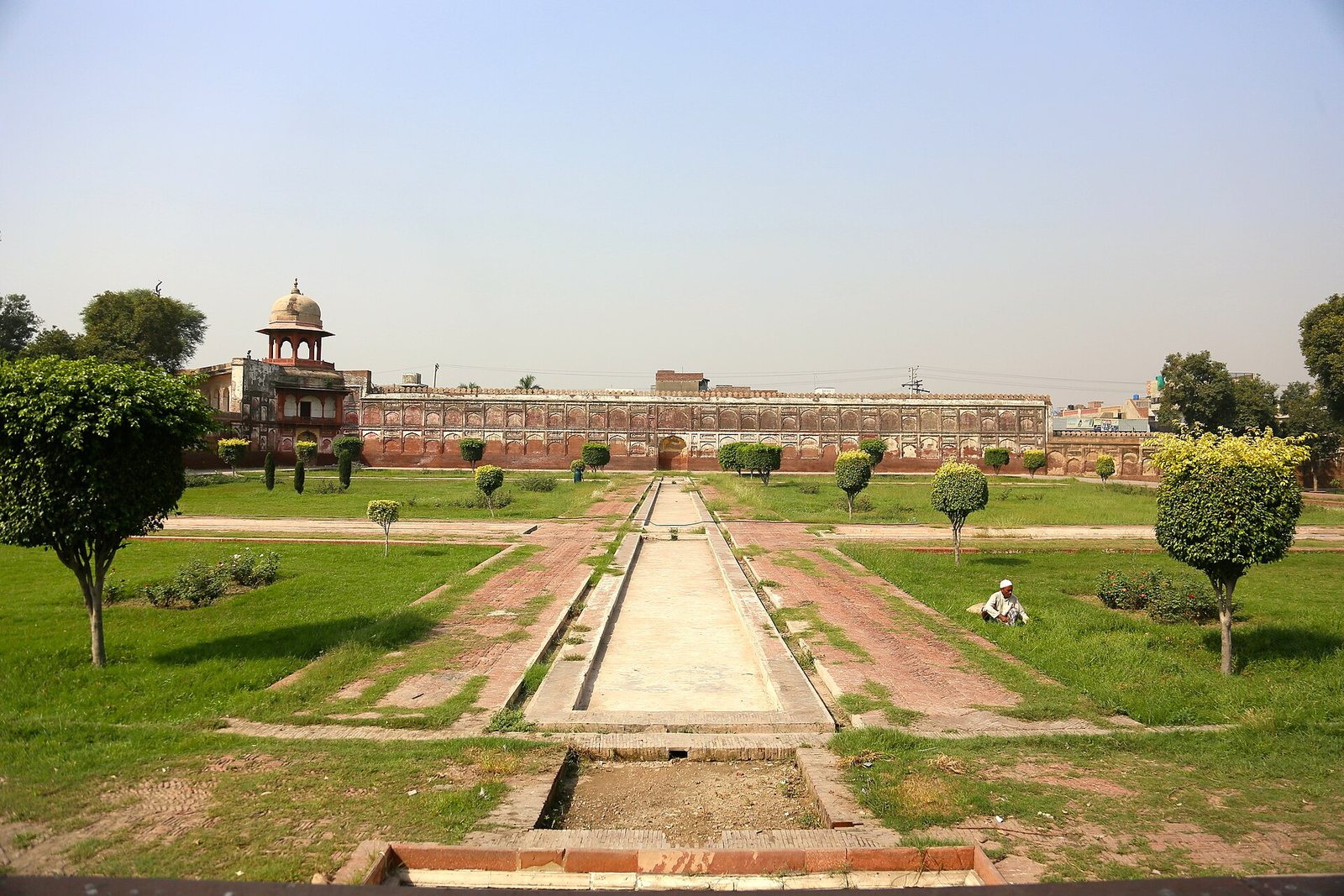
**Lahore Fort** is a UNESCO World Heritage Site, built and rebuilt by Akbar, Jahangir, Shah Jahan and Aurangzeb. Do not miss the **Sheesh Mahal**, a hall of tiny mirrors, and the long **Picture Wall** of tiled elephants, camels and hunting scenes. Across the Hazuri Bagh stands the **Badshahi Mosque**, completed in 1673, its courtyard large enough for tens of thousands of worshippers. Beside it is the samadhi of Ranjit Singh, an important Sikh site. At sunset the rooftop restaurants of **Fort Road Food Street** look straight at the floodlit domes.
Beyond the old city
On The Mall, the **Lahore Museum** holds the famous Fasting Buddha and a superb Gandhara collection, with the Zamzama cannon from Kipling's Kim outside. The **Minar-e-Pakistan** marks where the resolution for Pakistan was passed in 1940. East of the centre, the **Shalimar Gardens** are terraces of fountains built by Shah Jahan, and across the Ravi the **Tomb of Jahangir** is peaceful and finely inlaid. The great shrine of **Data Darbar** is busiest on Thursday evenings, when qawwali music fills the air.
The Wagah border ceremony
Every evening before sunset, Pakistani and Indian soldiers perform a loud, high kicking flag lowering ceremony at the Wagah crossing, about forty minutes from the city. Crowds cheer from grandstands, and it is a memorable piece of theatre. Arrive early, bring your passport, and leave bags behind as security is tight.
Eating in Lahore
Lahore lives to eat. Breakfast is **nihari**, **paye** or **halwa puri**; lunch might be **daal chawal**; evenings mean **karahi** cooked to order, **tikka**, **seekh kebab** and fish fried in gram flour batter in winter. **Gawalmandi**, **Lakshmi Chowk**, **Anarkali** and Fort Road are the classic food quarters, while **MM Alam Road** in Gulberg is lined with modern cafés. Finish with **kulfi**, **falooda** or a tall glass of **lassi**.
Where to stay
**Gulberg** is the most practical base, with modern hotels, restaurants and malls. **The Mall** area puts you close to the museum and old city, and a few restored guesthouses let you sleep inside the Walled City itself. **DHA** is quieter and leafy but further from the sights.
Getting around
Ride apps such as Careem, inDrive and Yango are the easiest way to get around, with fares agreed in the app. The **Orange Line** metro train and the **Metrobus** cover key routes cheaply. Rickshaws are fun for short hops, but agree the fare first. Traffic is heavy at rush hour, so plan sights by area.
Practical tips
Dress modestly and carry a scarf for mosques and shrines, and take off your shoes at the entrance. October to March is ideal; summer is extremely hot and winter can bring thick smog, so check air quality if you have breathing problems. During Ramadan many restaurants open only after sunset.
Questions about Lahore
How many days do I need in Lahore?
Three days covers the Walled City, the fort and mosque, the museum, the Shalimar Gardens and an evening at Wagah, with time for the food streets.
Is Lahore safe for tourists?
Lahore is visited by many foreign travellers and is generally welcoming. Watch your phone and bag in crowded bazaars, use ride apps at night and check your government's current travel advice before you go.
When is the Wagah ceremony?
It takes place daily shortly before sunset, so the time shifts with the season. Arrive at least an hour early and confirm locally that it is running, as it can be changed when tensions rise.
What food is Lahore famous for?
Nihari, paye, halwa puri, karahi, tikka, fried fish in winter, lassi and kulfi. The old city food streets are the best place to try them.
What is the smog season?
From about November to January, smog can be severe. Check air quality forecasts and carry a good mask if you are sensitive.
Facts checked . Fees, schedules and entry rules change, so always confirm the latest with the official source.