At a glance
- Best for
- Museums, architecture, food, fjord life and easy nature
- Airport
- Oslo Airport Gardermoen (OSL), about twenty minutes from the centre by express train
- Time needed
- Two to three days
- Best season
- May to September, plus December for Christmas markets
- Getting around
- Walking, metro, trams, buses and fjord ferries on one Ruter ticket
- Good base for
- The Bergen Railway, Fredrikstad and the forests of Nordmarka
Why go
Oslo mixes big city culture with outdoor life like few capitals can. In one day you can walk on the sloping roof of the Opera House, see Edvard Munch's The Scream, sail to an island for a swim and still reach a forest lake by metro before dinner. The city is small enough to cover on foot, and its new architecture along the fjord, from the Opera House to the Munch museum and the Deichman library, is reason enough to visit.
The main sights
The **Oslo Opera House** in Bjørvika is free to walk on, and the roof gives wide views across the fjord. Next door, **MUNCH** holds the largest collection of the painter's work. The **National Museum** opened in 2022 near Aker Brygge and gathers art, design and architecture from Norway and beyond, including a version of The Scream. **Akershus Fortress** guards the harbour, and the **Royal Palace** sits at the top of Karl Johans gate, the main street.
Take the ferry or bus to the **Bygdøy** peninsula for the **Norwegian Museum of Cultural History**, an open air museum with a stave church and old farmhouses, the **Fram Museum** with its polar ship, and the **Kon-Tiki Museum**. The Viking ships are moving to the new **Museum of the Viking Age**, which is due to reopen after a long rebuild, so check its status before planning around it. **Vigeland Park** in Frogner is free and holds more than two hundred sculptures by Gustav Vigeland, and the **Holmenkollen** ski jump has a ski museum and views over the whole city.
Neighbourhoods
**Sentrum** is the centre around Karl Johans gate and the main station, Oslo S. **Aker Brygge** and **Tjuvholmen** are polished waterfront districts with restaurants and the Astrup Fearnley art museum. **Grünerløkka** is the relaxed, creative quarter of cafés, vintage shops and bars along the Akerselva river walk. **Frogner** is elegant and residential, and **Grønland** and **Tøyen** are multicultural, lively and good value for food. **Bjørvika** is the newest district, around the Opera House and the waterfront saunas.
Food and drink
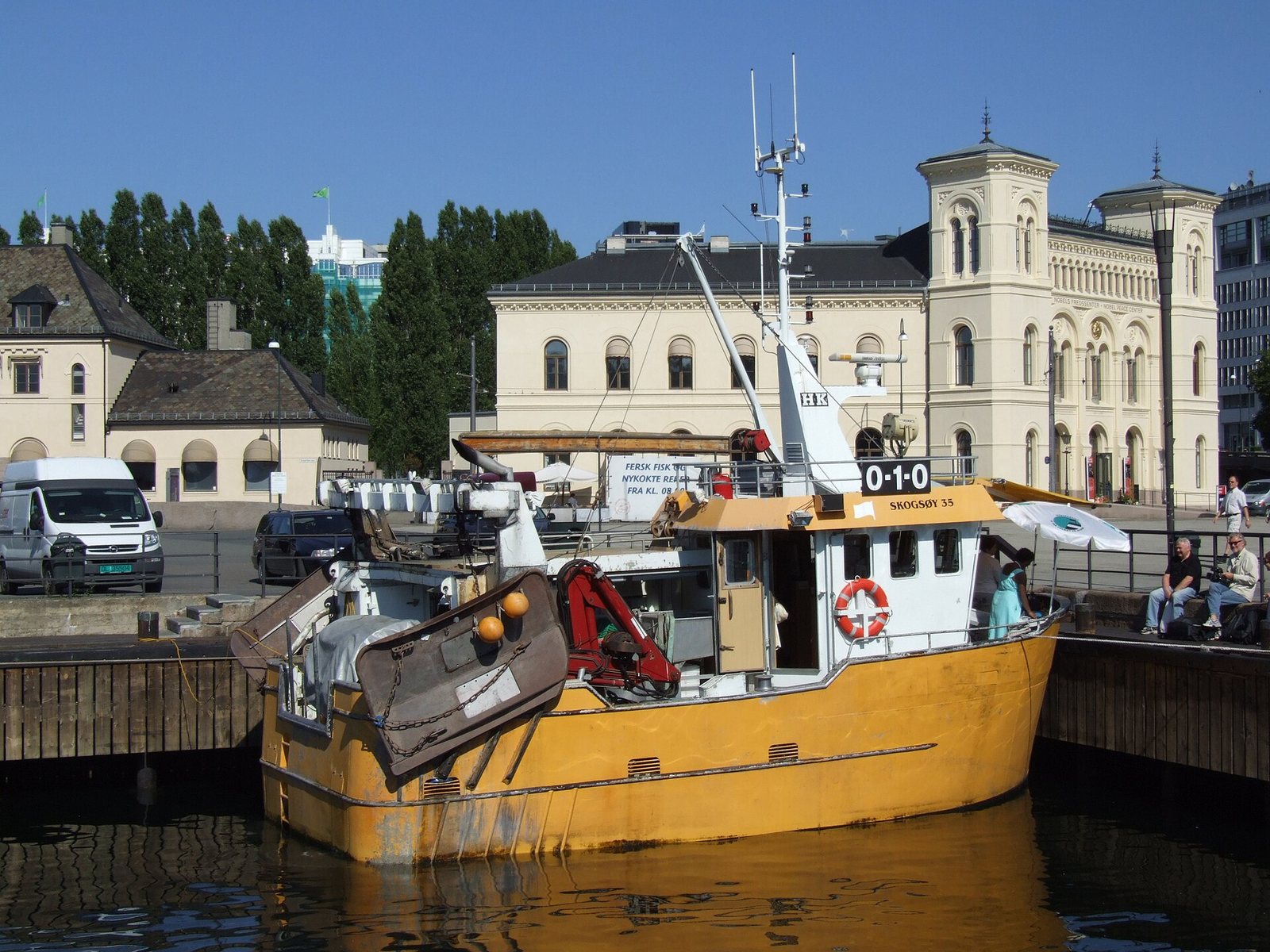
Oslo is expensive, so plan meals well. Bakeries sell cinnamon and cardamom buns that make an affordable breakfast, and **Mathallen** food hall in Vulkan has stalls for Norwegian cheese, fish and street food. Fresh shrimp eaten on the quay, waffles with brown cheese and a hot dog from a petrol station kiosk are all part of local life. Grønland has the best value meals in the city, with Turkish, Pakistani and Vietnamese places. Alcohol stronger than light beer is sold only in Vinmonopolet shops, which close early and are shut on Sundays.
Outdoor Oslo
The **Oslofjord islands** such as Hovedøya, Gressholmen and Langøyene are reached by public ferry from Aker Brygge in summer on a normal transit ticket. The floating **fjord saunas** near the Opera House let you sauna then jump into the fjord, even in winter. Metro line 1 climbs to **Frognerseteren** for forest walks in summer and sledging and cross country skiing in winter, and **Sognsvann** lake at the end of line 5 has an easy loop trail.
Where to stay
First timers do well around **Sentrum** and **Oslo S** for easy airport trains and connections. **Aker Brygge** is upmarket and on the water, **Grünerløkka** suits travellers who like cafés and nightlife, and **Majorstuen** and **Frogner** are quiet and leafy. Budget travellers will find hostels and simple chain hotels near the station.
Getting around
The **Flytoget** express train and regular Vy trains run from the airport to Oslo S. In the city, one **Ruter** ticket works on the metro, trams, buses and many local ferries, bought in the RuterBillett app. Walking covers most of the centre, and city bikes and e-scooters are widely used in summer.
Questions about Oslo
How many days do I need in Oslo?
Two full days covers the waterfront, the main museums and Bygdøy. A third day lets you add the islands, the fjord saunas or a forest walk.
Is Oslo expensive?
Yes, eating out and alcohol cost a lot. Bakeries, food halls, supermarkets, free sights like the Opera House roof and Vigeland Park, and a transit ticket for the island ferries all help.
Can I see the northern lights in Oslo?
Only rarely. Oslo is too far south and too bright for reliable aurora. Fly north to Tromsø or Lofoten between late September and late March for a real chance.
Is Oslo safe?
Yes, it is very safe. Watch for pickpockets around Oslo S, Karl Johans gate and busy trams, and keep normal care at night around the station and parts of Grønland.
Facts checked . Fees, schedules and entry rules change, so always confirm the latest with the official source.