At a glance
- Best for
- Fjord cruises, hiking, scenic drives, glaciers and photography
- Airport
- Bergen (BGO) or Ålesund Vigra (AES)
- Time needed
- Three to six days
- Best season
- May to September, when mountain roads and ferries run fully
- Getting around
- Buses, express boats, car ferries and sightseeing cruises
- Good base for
- Geirangerfjord, Trollstigen, Jostedalsbreen glacier and the Atlantic coast
Why go
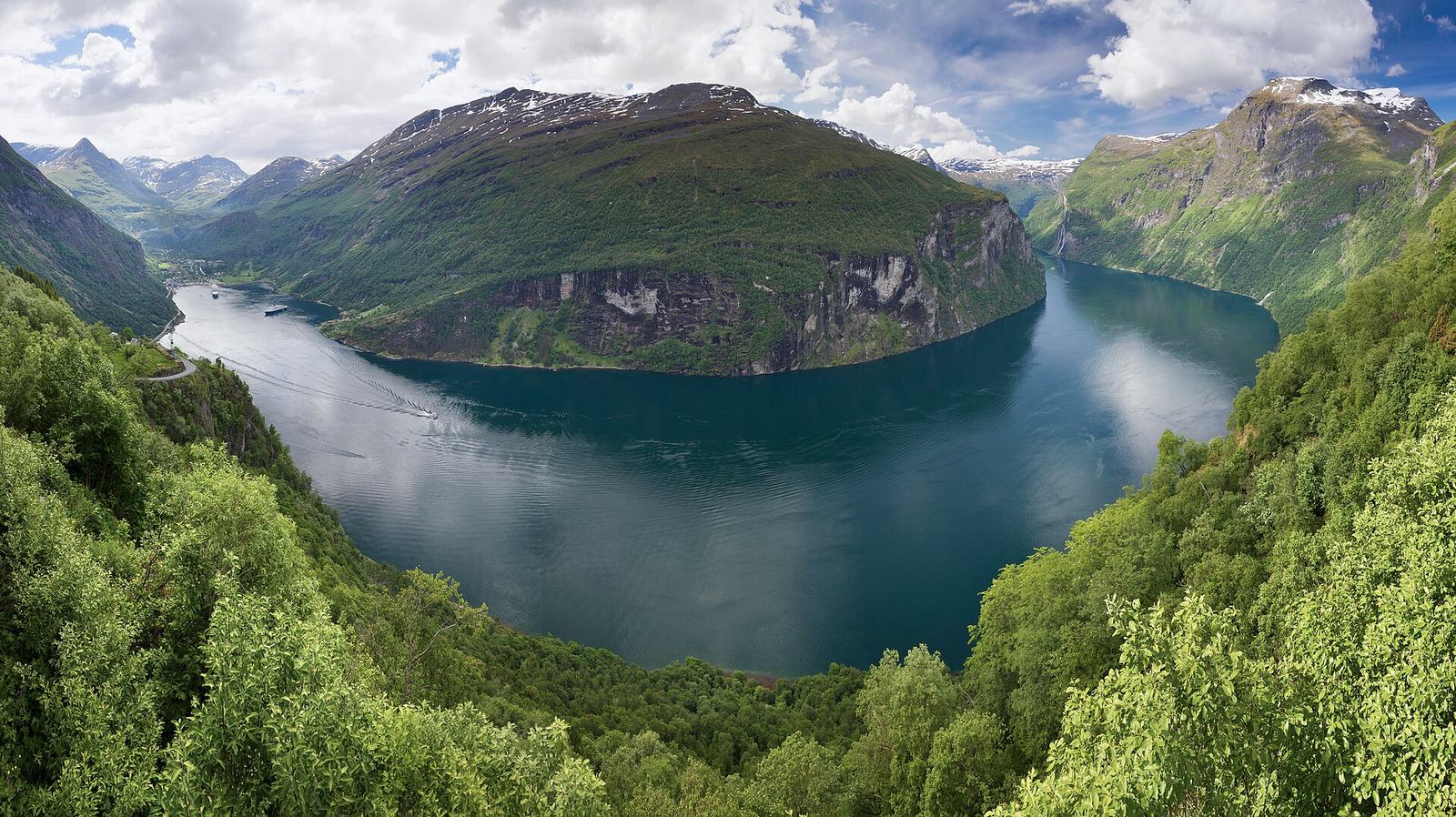
Nothing prepares you for the scale of the fjords. Cliffs rise more than a kilometre from the water, villages are reached only by boat, and the light changes every hour. You can cruise past waterfalls, hike to viewpoints, walk to a glacier tongue and sleep in a historic wooden hotel. It is the region most first time visitors dream of, and it lives up to it.
The Sognefjord and the Nærøyfjord
The **Sognefjord** reaches far inland from the coast north of Bergen. Its narrow arm, the **Nærøyfjord**, is one of the most dramatic stretches of water in the country. **Flåm** sits at the end of the Aurlandsfjord and is the base for the **Flåm Railway**, which climbs to Myrdal on the Bergen Railway, and for cruises to **Gudvangen**. Nearby, the **Stegastein** viewpoint hangs over the Aurlandsfjord. Along the fjord, **Balestrand**, **Fjærland** and **Solvorn** are quieter villages, and the **Urnes Stave Church**, a UNESCO site, is one of the oldest wooden churches in the world. The **Jostedalsbreen** glacier, the largest in mainland Europe, has visitor centres at Fjærland and in Jostedalen.
The Geirangerfjord
Further north, the **Geirangerfjord** is famous for the **Seven Sisters** and **Suitor** waterfalls facing each other across the water and for abandoned cliff farms such as Skageflå. The village of **Geiranger** fills with cruise passengers in summer, so stay overnight to enjoy it in the quiet hours. The road up to **Dalsnibba** gives a view from high above, and the **Eagle Road** climbs the other side. Ferries link Geiranger and **Hellesylt** along the fjord.
Trollstigen and Romsdalen
The **Trollstigen** road climbs a wall of hairpin bends to a viewing platform beside a waterfall. It opens only in the warmer months, usually late spring to autumn, and can close for rockfall and repairs, so check the Norwegian Public Roads Administration site. Nearby **Åndalsnes** is a hiking base with the **Romsdalseggen** ridge and the **Romsdalen Gondola** to Nesaksla.
Ålesund
After a fire in 1904 destroyed the town, **Ålesund** was rebuilt in Art Nouveau style, with turrets, carved facades and pastel colours on islands by the sea. Climb the steps to the **Aksla** viewpoint for the classic view, visit the **Jugendstilsenteret** Art Nouveau centre and the **Atlanterhavsparken** aquarium. Ålesund is a convenient base for Geiranger and the Hjørundfjord, and it has an airport with flights to Oslo.
Getting around the fjords
You can see the fjords without driving. **Express boats** run from Bergen to the Sognefjord, **buses** connect villages, and **car ferries** cross fjords as part of the road network. Sightseeing cruises run on the Nærøyfjord and Geirangerfjord, many on quiet electric or hybrid boats. The **Hurtigruten** and **Havila** coastal ships also call at Ålesund, and in summer some sail into the Geirangerfjord. Check timetables on Entur and operators' sites, as many routes reduce or stop in winter.
When to go
May and June bring full waterfalls and snow on the peaks, July and August are warmest and busiest, and September is calm with autumn colours. In winter, many mountain roads close, some cruises stop and Geiranger is very quiet. Expect rain at any time.
Where to stay
Pick two bases rather than moving every night. **Flåm**, **Aurland** or **Balestrand** suit the Sognefjord, **Geiranger** or **Hellesylt** the Geirangerfjord, and **Ålesund** the north. Historic wooden hotels, fjord side cabins and farm stays are part of the experience. Book well ahead for summer.
Questions about the western fjords
Which fjord is the most beautiful?
The Nærøyfjord and the Geirangerfjord are the two UNESCO listed fjords and the most dramatic. The Nærøyfjord is easier from Bergen and Oslo, while the Geirangerfjord pairs well with Ålesund.
Can I see the fjords without a car?
Yes. Trains, express boats, buses and sightseeing cruises reach the main fjords, though timetables need planning and some routes are seasonal.
When is Trollstigen open?
Usually from late spring to autumn only, and it can close for rockfall or works. Check the Norwegian Public Roads Administration before you plan around it.
Are the fjords worth visiting in winter?
They are quiet and beautiful under snow, but many roads, cruises and hotels close. Short winter cruises still run on the Nærøyfjord, so pick that region for a winter visit.
Facts checked . Fees, schedules and entry rules change, so always confirm the latest with the official source.