At a glance
- Best for
- Giraffes on foot, photography and families
- Distance
- About 60 kilometres east of Niamey
- Time needed
- Half a day to a full day
- Best season
- November to May
- Getting there
- Road from Niamey with a local guide
- Travel advice
- Check your government's advice for this area
Why Kouré is special
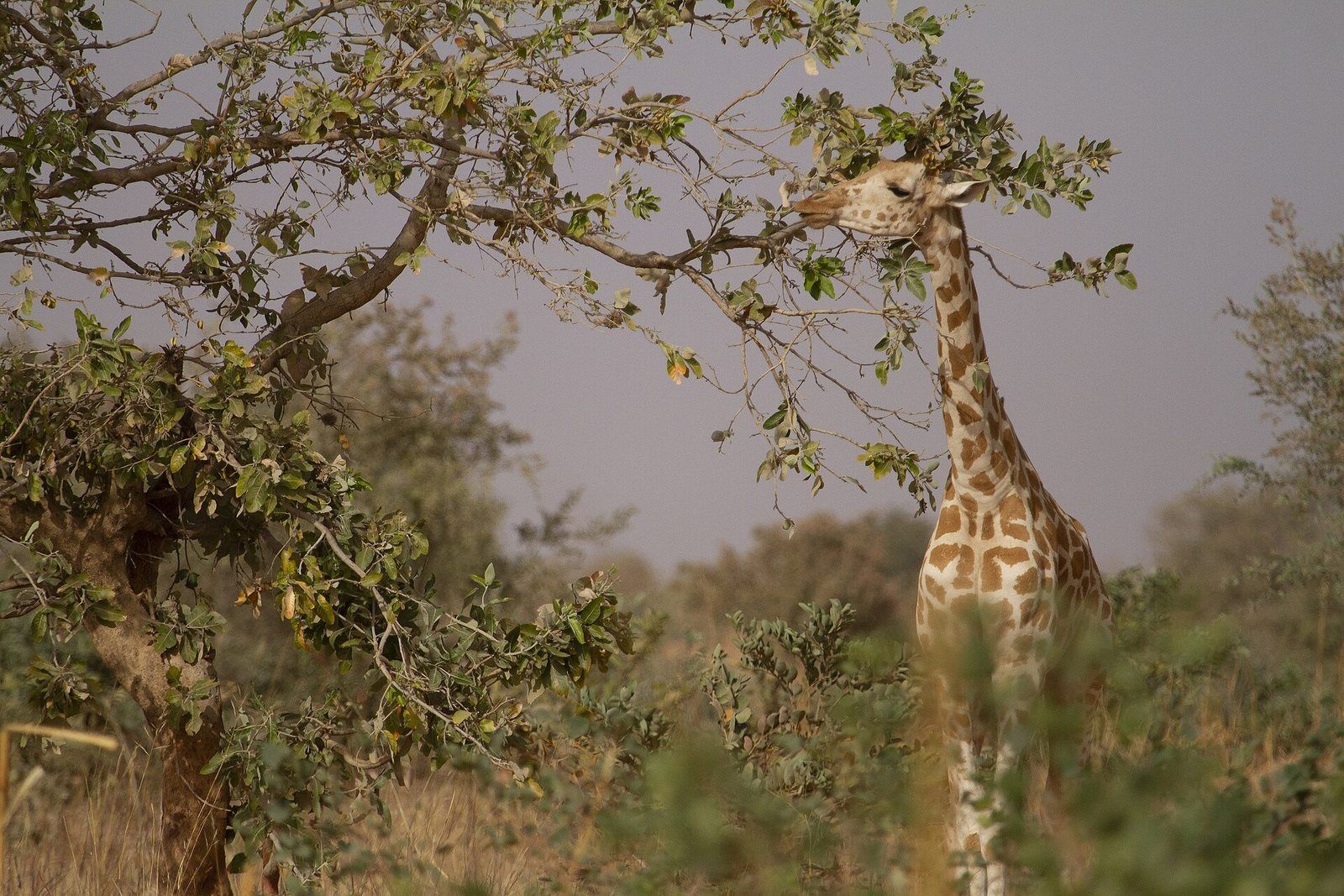
West African giraffes once roamed from Senegal to Lake Chad. Hunting, drought and habitat loss pushed them back until only a small group survived in Niger. Unusually, they do not live in a fenced park. They share the land with Zarma and Fulani farmers and herders, browsing on acacia and combretum trees and wandering between villages. Seeing a giraffe stride past a millet field or a village well is a striking reminder of how people and wildlife can live together.
How a visit works
Visits are usually made with a local guide from the Kouré area, who tracks the herd through the morning. Because the giraffes move freely, there are no fixed viewing points: you drive along sandy tracks until the guides find them, then walk the last stretch on foot. The giraffes are calm and often let visitors approach to a respectful distance, which makes for wonderful photographs. Follow your guide, keep quiet and never try to touch or feed them.
Conservation
The herd's recovery owes much to local communities, the Nigerien government and organisations such as the Giraffe Conservation Foundation and the Association to Safeguard the Giraffes of Niger. Projects have included tree planting, community income schemes and, in 2018, moving a small group to the Gadabedji reserve to start a second population. Visitor fees and local guiding help show that the giraffes are worth more alive.
When to go
The dry season, from November to May, is easiest, when tracks are firm and the bush is open. Go early: by late morning the heat is intense and the giraffes rest in the shade. In the rainy season, roughly June to September, the bush is green and beautiful, but tracks can be muddy and the animals harder to find.
What to bring
Bring water, a hat, sunscreen, closed shoes and a camera with a zoom lens. Light, modest clothing in neutral colours works best. Snacks are useful, as there is little to buy near the herd.
The honest picture today
Kouré is close to Niamey and was long the one easy excursion from the capital, but the wider Tillabéri region is covered by strong government travel warnings, and in 2020 an attack near Kouré killed French aid workers and their Nigerien guide and driver. Some governments now advise against all travel here. Check current advice carefully and speak to trusted local contacts before going.
Photography tips
The soft early light is best for photographs, and the giraffes often stand against open sky or among scattered trees. A zoom lens lets you frame close-ups without crowding the animals. Ask before photographing people in nearby villages, and offer to share the pictures. Keep your camera ready but put it down sometimes to simply watch: the giraffes' slow, graceful movement is the real reward.
Combining with other sights
On the way back to Niamey, you can stop at roadside markets for fruit and groundnuts. Some visitors combine the trip with a morning at the National Museum, where the pavilions explain the region's wildlife and cultures.
Planning
A half-day trip from Niamey is enough to find the herd. Leave at dawn, return by early afternoon, and use our free trip planner to fit it in.
Questions about the Kouré giraffe zone
How far is Kouré from Niamey?
About 60 kilometres east, roughly an hour by road, depending on traffic and where the herd is.
Can you walk with the giraffes?
Yes, local guides lead visitors on foot for the final approach. Keep a respectful distance and follow every instruction.
How many giraffes are there?
The population has grown from about fifty in the 1990s to several hundred today. Confirm the latest count with conservation groups.
Is it safe to visit Kouré?
The wider region has strong government travel warnings, and there was a deadly attack near Kouré in 2020. Read your government's current advice before going.
Facts checked . Fees, schedules and entry rules change, so always confirm the latest with the official source.