At a glance
- Best for
- Earthen architecture, Tuareg culture and silver craft
- Gateway
- Mano Dayak International Airport (AJY)
- Time needed
- Two to three nights
- Best season
- November to February
- UNESCO
- Historic Centre of Agadez, listed 2013
- Travel advice
- Most governments advise against all travel
A city of the caravans
Agadez rose to importance in the fifteenth and sixteenth centuries as the capital of the Sultanate of Aïr, controlling the routes that carried salt, gold, cloth and slaves across the Sahara. The sultan still lives here, and his palace sits beside the Grand Mosque in the heart of the old town. The city's street plan, laid out in irregular quarters that followed the camps of different groups, has survived largely intact.
The Grand Mosque
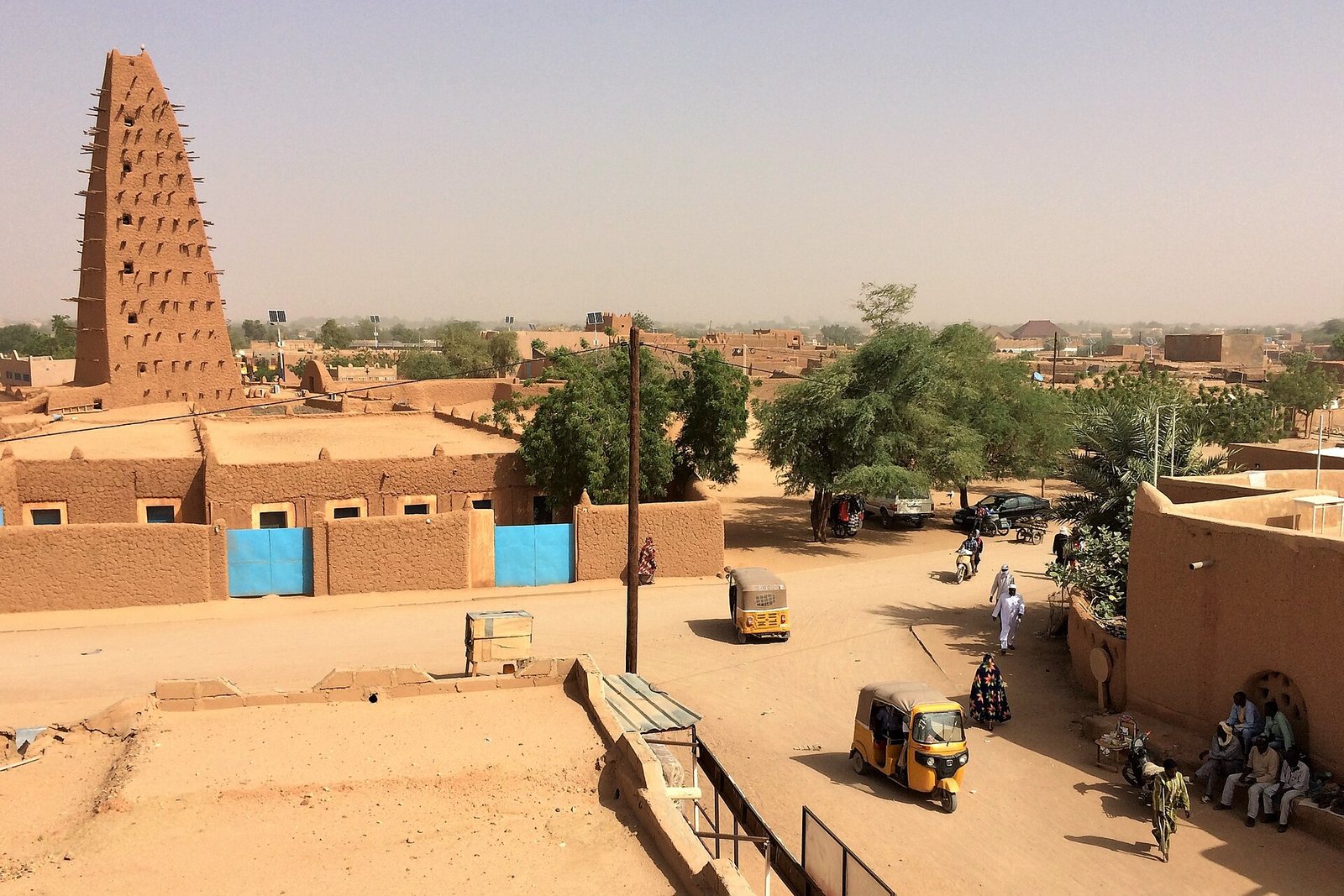
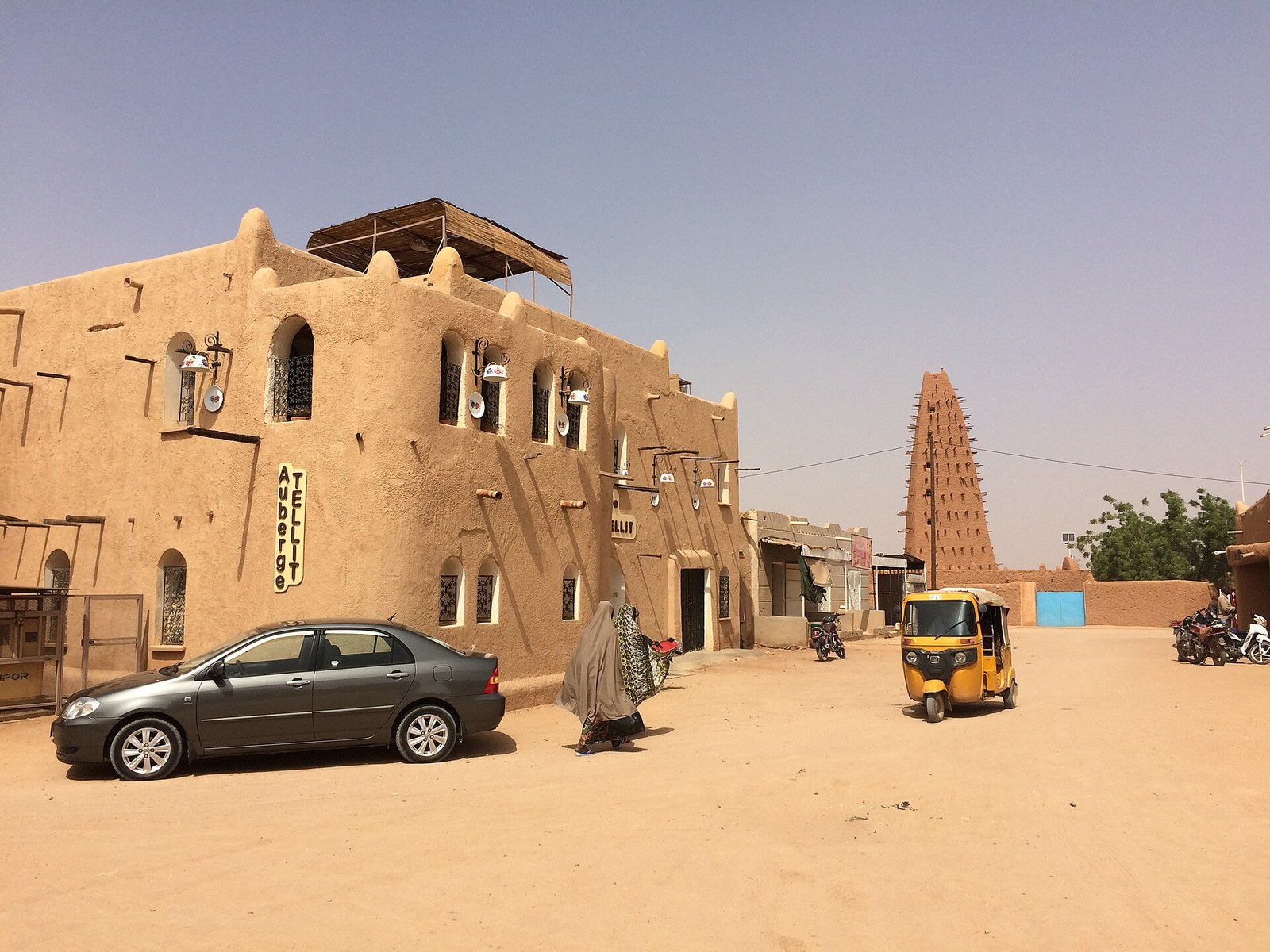
The minaret of the Grand Mosque, built of mud brick around a palm wood frame, rises about 27 metres above the city and is the tallest structure of its kind in the world. The wooden beams that bristle from its sides are both scaffolding for the yearly replastering and part of its distinctive look. Non-Muslims have at times been allowed to climb it with a guide, but rules change: ask respectfully and accept the answer.
The old town
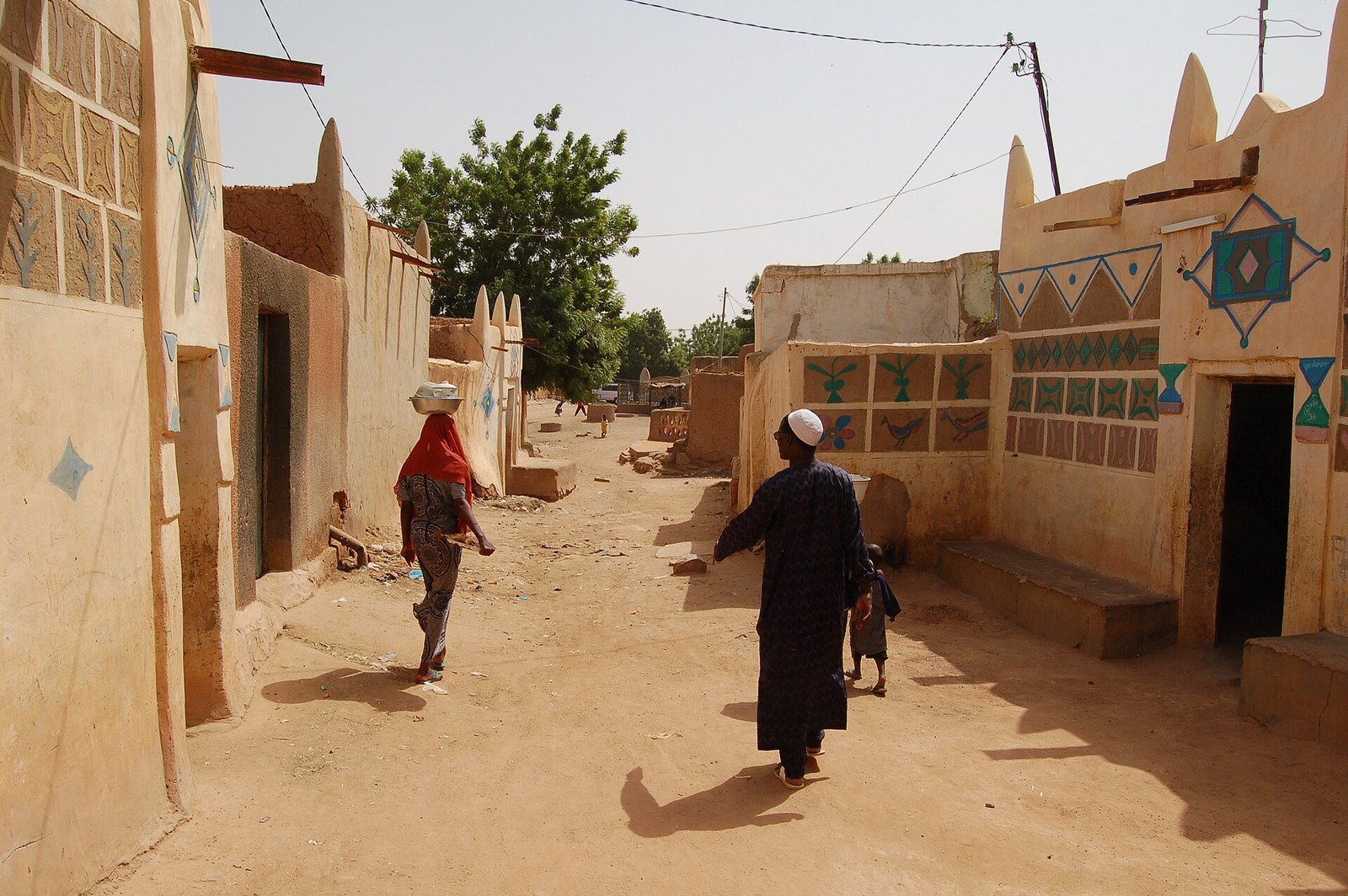
UNESCO listed the Historic Centre of Agadez as a World Heritage Site in 2013. Its lanes are lined with earthen houses, many decorated with carved and painted facades, and with small workshops. The Maison du Boulanger, a traditional house restored as a bakery and guesthouse, became a well-known stop for visitors in calmer years. The sultan's palace, the old houses around it and the quiet early morning streets are the main pleasures.
Silver and leather
Agadez is the home of the famous Tuareg silver cross, the croix d'Agadez, and of skilled leatherworkers. Silversmith families, the Inaden, work in small compounds around the town, often still using the lost wax method. Buying directly from them is one of the best ways to support local livelihoods in a city hit hard by the loss of tourism.
Festivals
The Bianou festival, held around the Islamic new year, fills the streets with drumming, dancing and processions of turbaned men. In September, the Cure Salée gathering at In-Gall, west of Agadez, brings together Tuareg and Wodaabe herders at the end of the rains, with camel races and the Wodaabe Gerewol. Both are extraordinary, and both are in areas under strong travel warnings.
The honest picture today
Agadez lives with serious security problems. Foreigners have been kidnapped in the city in recent years, and the UK, US, France and others advise against all travel to the region. Tourism, which once brought charter flights from Europe, has largely stopped. If you have family or essential reasons to be here, travel only with trusted local contacts, follow their guidance on movement and keep your plans private.
Daily life in Agadez
Despite its troubles, Agadez remains a lively town. Its market sells dates, spices, livestock and goods brought across the desert, and evenings bring the smell of grilled meat and the sound of Tuareg guitar music. The town is also a centre of the trans-Saharan migration route, which has shaped its economy and its politics in recent years. Respect local customs: dress modestly, ask before taking photographs and greet people before starting a conversation.
What to wear
The desert climate means hot days and cool nights from November to February. Bring layers, a scarf against dust and sturdy shoes for the sandy lanes.
Getting there
Roads from Niamey and Zinder are long and exposed to banditry, and convoy rules have changed often. Domestic flights have run irregularly to Mano Dayak airport. Check current options carefully, and read the advice for the Aïr and Ténéré region beyond the city before considering anything further.
Questions about Agadez
Can tourists visit Agadez now?
Most Western governments advise against all travel to Agadez. Tourism has largely stopped, and those who travel are mostly visiting family or working. Check your government's current advice first.
What is Agadez famous for?
The mud-brick minaret of the Grand Mosque, the UNESCO-listed old town, the Agadez silver cross and its role as the gateway to the Sahara.
When is the Bianou festival?
Bianou follows the Islamic calendar, so its date moves each year. Confirm it locally before planning around it.
What should I buy in Agadez?
Tuareg silver jewellery, especially the Agadez cross, and leatherwork such as bags, cushions and sandals, bought directly from artisans.
Facts checked . Fees, schedules and entry rules change, so always confirm the latest with the official source.