Nauru · Local picks
100+ Places to Visit in Nauru
Nauru is small enough to see in a few days, but its best spots are easy to miss without a list. These are the beaches, wartime relics, viewpoints, food stops, events and stays worth knowing, spread around the ring road and up on Topside.
Places to Visit in Yaren
Arts and Culture
- Parliament House of Nauru (Yaren district)
The modest seat of one of the world's smallest parliaments sits right on the ring road opposite the airport. - Australian rules football match (Island-wide)
Aussie rules is the national sport, and a district game is a fun way to join the community. - Weightlifting training (Island-wide)
Nauru has produced Commonwealth Games weightlifters, and the sport is a source of national pride. - Nauruan language greetings (Island-wide)
A simple "Ekamawir omo" for good morning wins warm smiles everywhere on the island.
Things to Do
- Nauru International Airport runway (Yaren district)
The ring road runs beside the runway, so you can watch the few weekly flights land almost from the roadside. - Walk or cycle the ring road (Ring road)
About nineteen kilometres of road circle the whole country, a half day on foot or a couple of hours by bike. - Fishing from the shore at Yaren (Yaren district)
Local anglers cast from the reef edge in the evening, and a friendly chat is the easiest introduction to island life. - Meneng district walk (Meneng district)
A quiet stretch of homes, churches and sea views between the airport and Anibare Bay. - Meneng Stadium (Meneng district)
Weekend sport, especially Australian rules football, draws loud and good-humoured crowds.
Nature and Outdoors
- Moqua Well (Yaren district)
An underground freshwater lake inside a limestone cave that once kept islanders alive through droughts. - Moqua Caves (Yaren district)
A small network of coral limestone caves beneath the island, best visited with someone who knows the way. - Yaren reef flat at low tide (Yaren district)
At low tide the wide coral flat fills with rock pools, small fish and children looking for crabs. - Sunset walk on the Yaren foreshore (Yaren district)
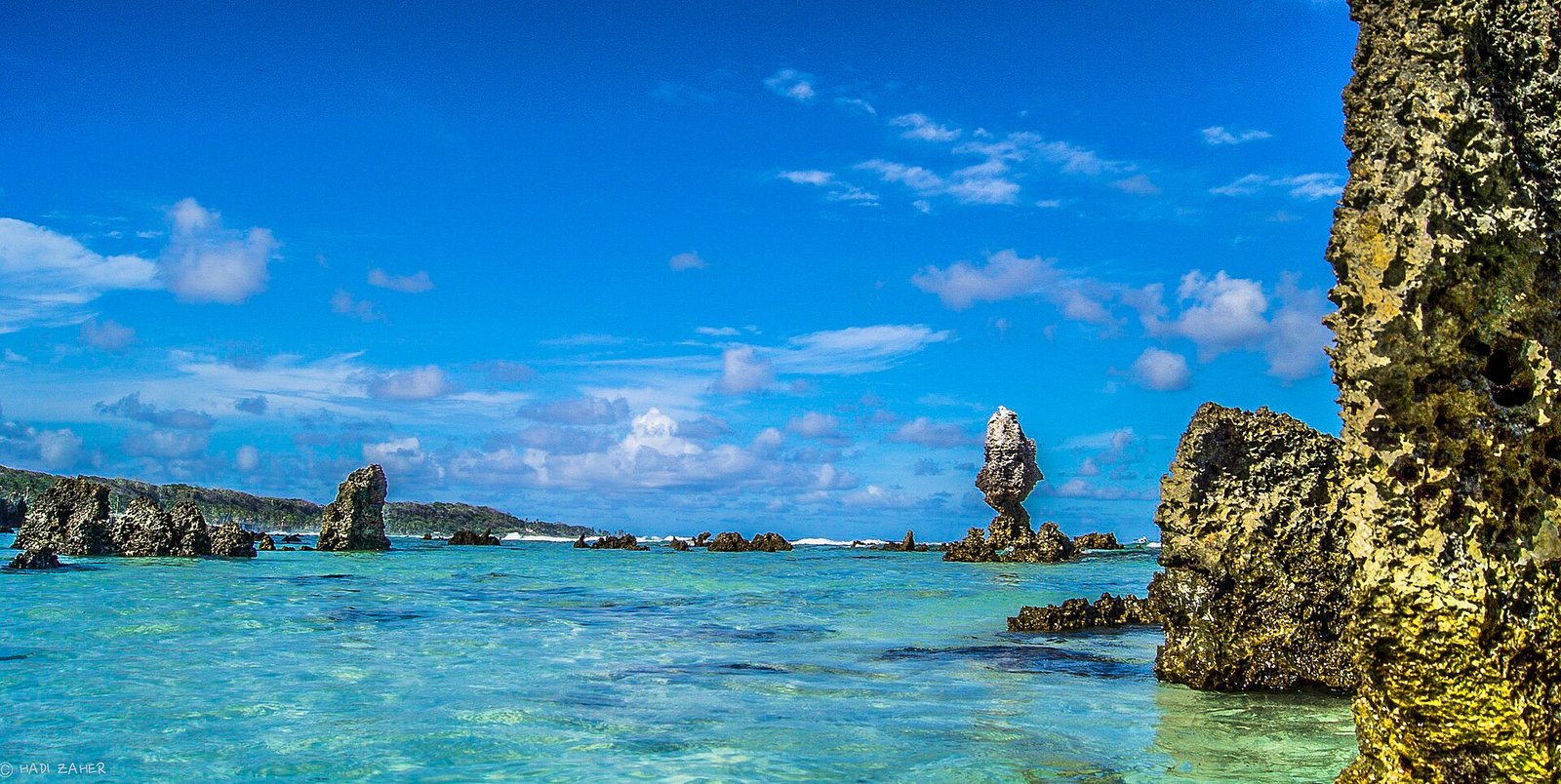
The western sky turns gold over the reef while families gather by the sea in the evening. - Boe and Yaren coastal pinnacles (Boe district)
Weathered coral pinnacles poke out of the shallows along the south west coast, striking at low tide. - Meneng shoreline (Meneng district)
A rocky, uncrowded coast for a slow walk, with waves breaking hard on the reef edge. - Boe district beach (Boe district)
A small beach and reef flat in a quiet residential district, good for a dip at the right tide.
Events
- Independence Day celebrations (Yaren district)
Every 31 January the island marks independence from 1968 with ceremonies, sport and family gatherings. - Angam Day (Yaren district)
On 26 October Nauruans celebrate the recovery of their population with songs, dances and community events. - Constitution Day sports (Yaren district)
Constitution Day in May brings district sports contests that the whole island turns out to watch. - RONPhos Handover Day (Yaren district)
The 1 July holiday remembers Nauruans taking control of their phosphate industry, with community gatherings. - Christmas and New Year church services (Yaren district)
Choirs and packed services make the festive season the most joyful time to be on the island.
Shopping and Markets
- Yaren roadside stores (Yaren district)
Small family and Chinese-run stores along the road sell snacks, cold drinks and basic supplies. - Nauru stamps (Island-wide)
Nauru's colourful postage stamps are a light, unusual souvenir from a country few people visit.
Restaurants
- Ring road takeaway shops (Yaren district)
Simple takeaways serve rice, noodles, fried chicken and fish, the everyday food of the island. - Fresh tuna sashimi at home with friends (Island-wide)
Sliced raw tuna and coconut fish are the dishes Nauruans are proudest of, best shared at a family meal.
Places to Visit in Anibare Bay
Stays
- Menen Hotel (Meneng district)
The island's larger hotel sits on the ocean near Anibare Bay with sea views and a restaurant.
Restaurants
- Menen Hotel restaurant (Meneng district)
Dinner by the ocean with the sound of the reef is the closest Nauru gets to a classic night out.
Bars and Nightlife
- Menen Hotel bar (Meneng district)
A relaxed spot for a cold drink while the sun sets and the sky turns pink over the Pacific.
Nature and Outdoors
- Anibare Bay beach (Anibare district)
The island's best beach, a curve of white sand backed by palms and coral pinnacles. - Anibare boat harbour (Anibare district)
The sheltered harbour basin is where locals swim, launch boats and gather on weekend afternoons. - Anibare coral pinnacles (Anibare district)
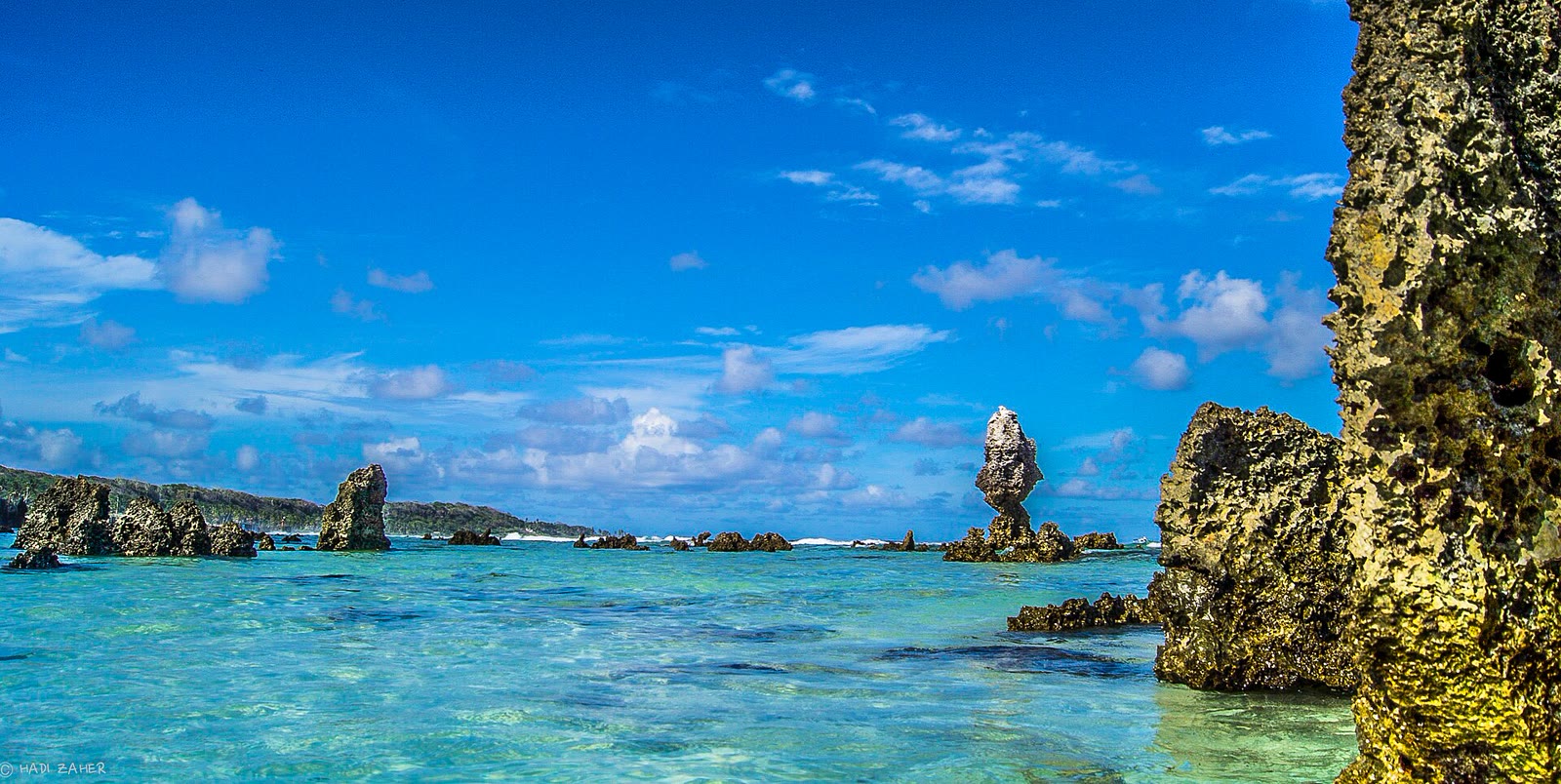
Tall grey limestone pinnacles rise along the shore, a dramatic backdrop for photos at sunrise. - Sunrise at Anibare Bay (Anibare district)
The east facing bay catches the first light over the Pacific, a peaceful start to the day. - Ijuw coastline (Ijuw district)
A quiet north east shore of rocky coves and pinnacles that sees almost no visitors. - Anibare tide pools (Anibare district)
Rock pools among the pinnacles hold small fish, sea cucumbers and crabs to spot at low water. - Stargazing from Anibare Bay (Anibare district)
With little light pollution, the sky over the bay fills with stars on clear nights.
Things to Do
- Swimming inside Anibare harbour (Anibare district)
The protected water in the harbour is far safer than the open reef, where currents are strong. - Evening reef walk at Anibare (Anibare district)
At low tide the reef flat glows in the late light and makes a quiet stroll for two. - Picnic under the palms at Anibare (Anibare district)
Families spread mats under the trees on Sundays, a gentle way to share in island life. - Photography along the east coast (Anibare district)
Pinnacles, surf and palms make the east coast the most photogenic stretch of the ring road.
Shopping and Markets
- Meneng roadside stores (Meneng district)
Small stores near the hotel stock water, snacks and basics so you do not have to go far.
Places to Visit in Anabar
Nature and Outdoors
- Anabar beach (Anabar district)
A quiet north coast stretch of sand and reef, lovely for a slow walk away from the busier south. - Ijuw beach (Ijuw district)
A small, often empty beach on the north east coast for paddling at high tide. - Ewa coastal reef (Ewa district)
A broad reef flat in the north where children fish and play in the shallows at low tide. - North coast sunset (Anetan district)
The north west corner of the island has some of the best views as the sun drops into the sea. - Baitsi reef flat (Baitsi district)
A wide reef flat that is lovely to explore in reef shoes when the tide is out. - Uaboe coastal pinnacles (Uaboe district)
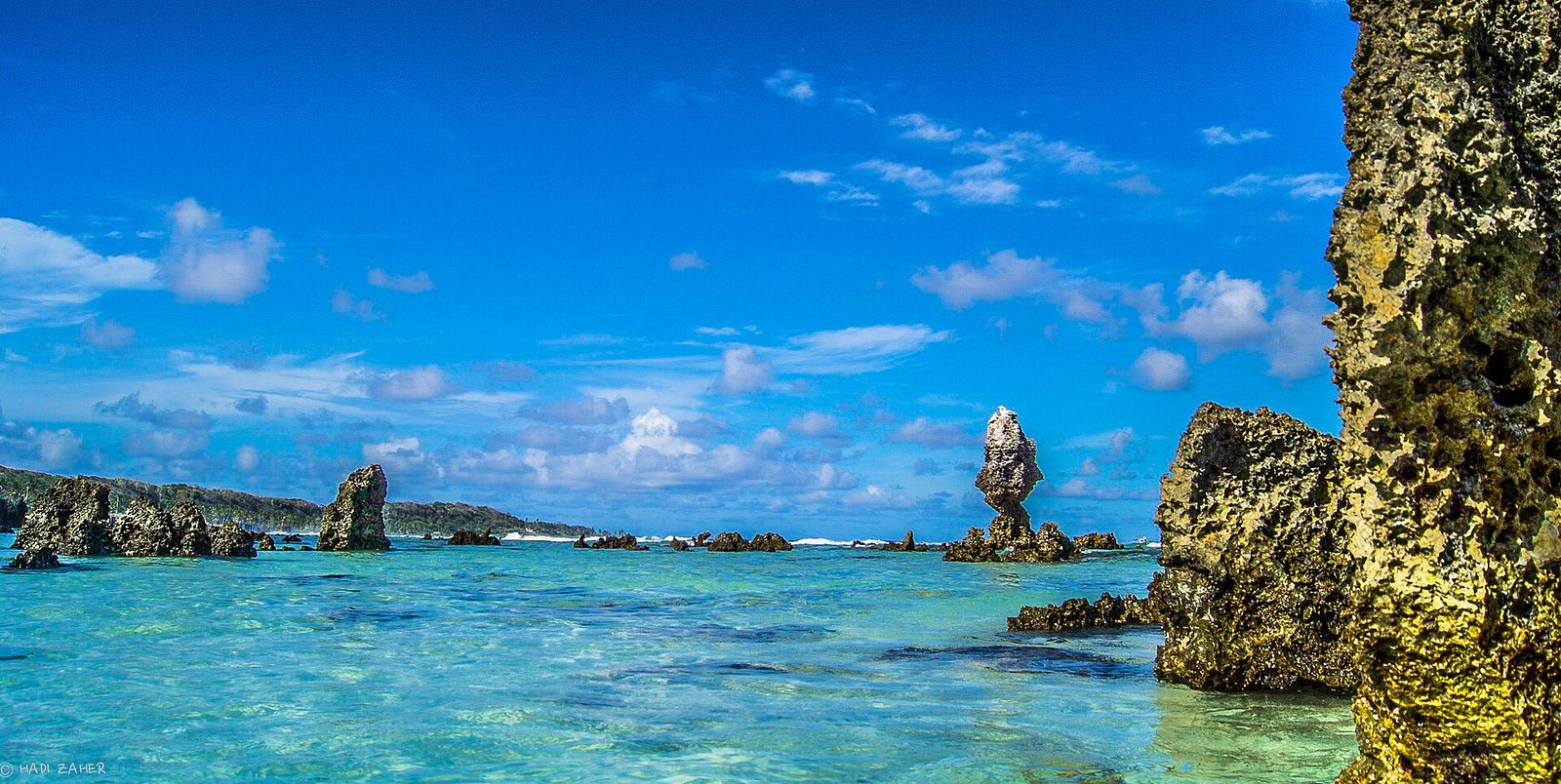
Pinnacles and pools along the shore are worth a stop for photos on a ring road loop.
Things to Do
- Anetan district walk (Anetan district)
The northern tip of the island has village homes, churches and wide ocean views. - Ewa district (Ewa district)
A residential district on the north coast with friendly people and quiet sea views. - Baitsi district (Baitsi district)
A small north west district where the ring road hugs the sea past homes and churches. - Uaboe district walk (Uaboe district)
The smallest district by population, a quiet slice of everyday life on the west coast.
Shopping and Markets
- Northern district stores (Anetan district)
Small stores are useful for cold water and snacks on a walk or cycle round the north.
Places to Visit in Buada Lagoon
Nature and Outdoors
- Buada Lagoon (Buada district)
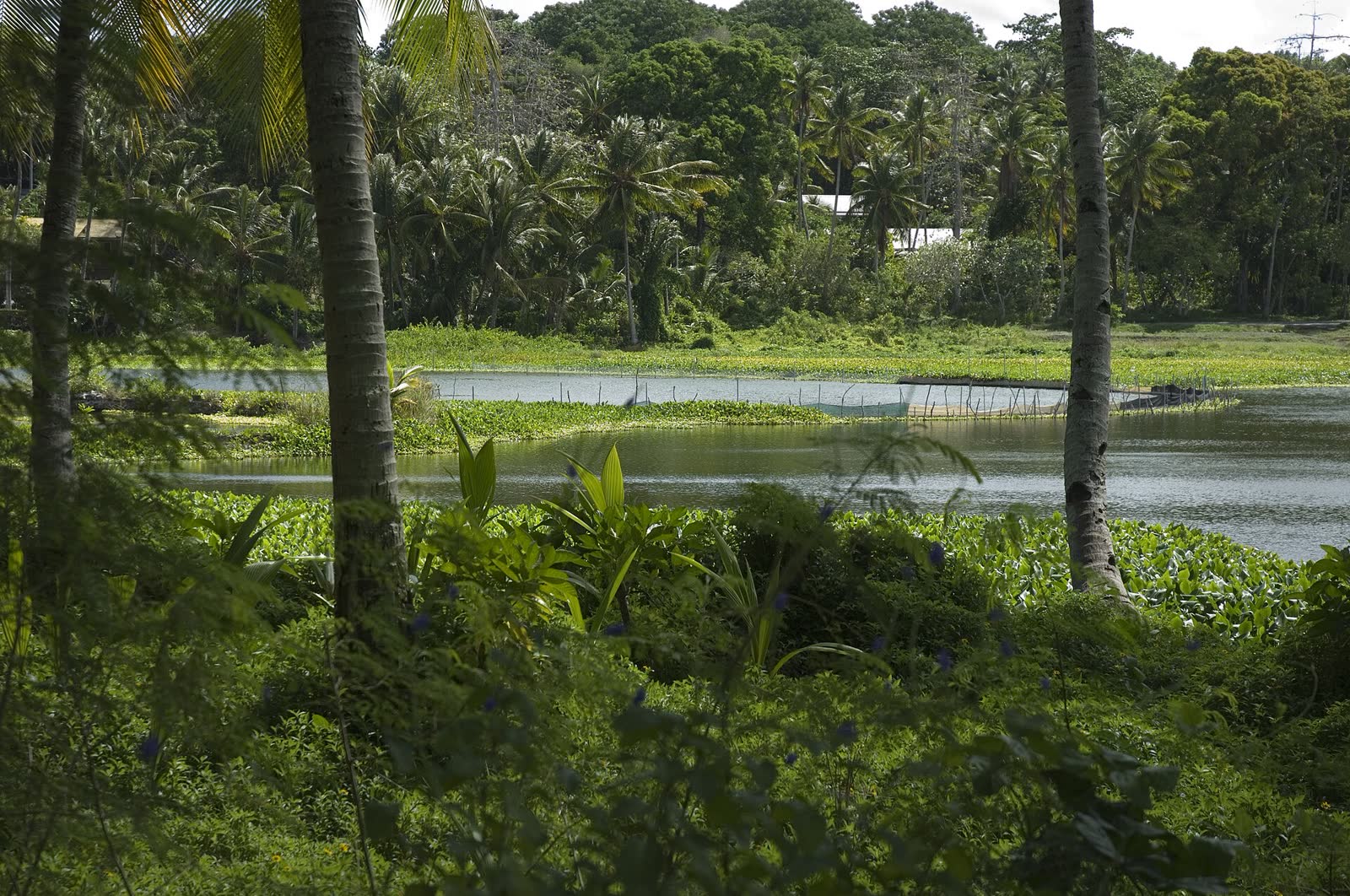
A freshwater lagoon ringed by palms and gardens, the greenest and most peaceful spot on the island. - Command Ridge viewpoint (Command Ridge)
From the highest point you see the whole country at once, from Topside to the ocean on every side. - Topside pinnacle fields (Topside)
Mining left a field of grey limestone pinnacles, an eerie landscape unlike anywhere else on earth. - Buada Lagoon picnic (Buada district)
Pack food and water and sit by the lagoon, the one place where the island feels fully green. - Buada gardens (Buada district)
Bananas, breadfruit and pandanus grow around the lagoon, the closest thing to farmland on Nauru. - Sunset from the plateau edge (Topside)
From the edge of Topside the sun sets over the reef and coastal belt below. - Nibok reef flat (Nibok district)
Low tide uncovers a wide flat of pools and coral, a peaceful spot away from the main traffic.
Arts and Culture
- Command Ridge Japanese guns (Command Ridge)
Two Japanese naval guns and a communications bunker sit on the island's highest point. - Japanese communications bunker (Command Ridge)
The wartime bunker on the ridge is a powerful reminder of the occupation and the hardship it brought. - Nauru reed warbler (Topside)
The island's only endemic songbird can be heard in the scrub if you are patient and quiet. - Nibok district (Nibok district)
A north west district on the ring road below Topside, quiet and residential.
Things to Do
- Buada district walk (Buada district)
The only district without a coastline, reached by road up from the coastal belt. - Photography among the pinnacles (Topside)
Early morning light on the pinnacles makes for striking, otherworldly photos. - Walk up from Aiwo to Topside (Aiwo district)
Roads climb from the coastal belt to the plateau, a short but hot walk that shows the island's two worlds.
Places to Visit in Aiwo
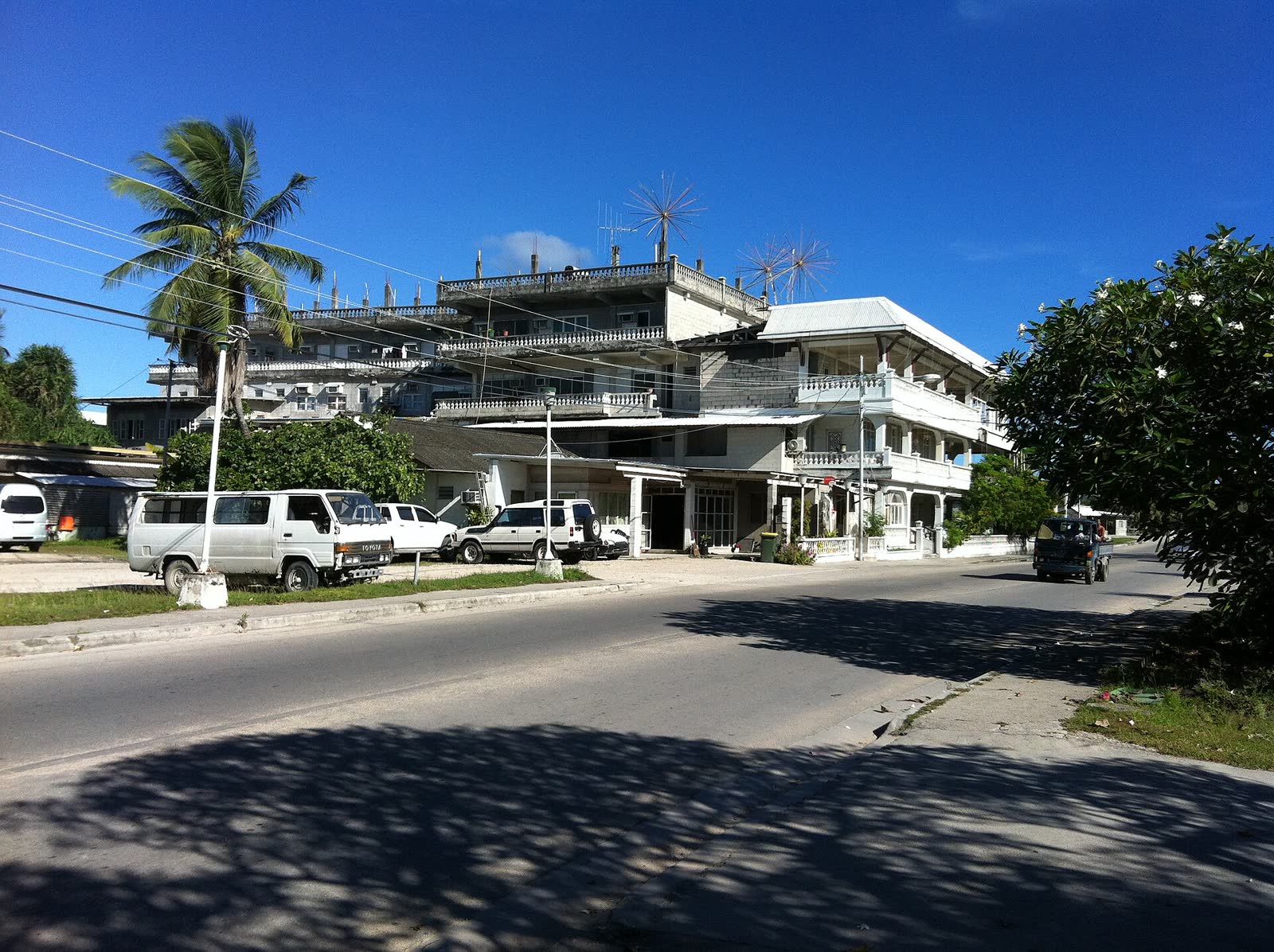
Stays
- Od-N-Aiwo Hotel (Aiwo district)
A simple hotel on the west coast near the Civic Centre and the old phosphate port.
Restaurants
- Od-N-Aiwo Hotel restaurant (Aiwo district)
Straightforward meals and a sociable atmosphere at one of the few places to eat out. - Chinese restaurants in Aiwo (Aiwo district)
Chinese-run restaurants and takeaways are the backbone of eating out on Nauru. - Coconut fish at a family meal (Island-wide)
Raw fish in coconut milk is a Nauruan favourite, best tasted when invited into a home.
Arts and Culture
- Phosphate cantilevers (Aiwo district)
Giant steel arms that once loaded phosphate onto ships reach out over the reef, the symbol of Nauru's history. - RONPhos phosphate works (Aiwo district)
The processing plant and storage bins show the industry that made Nauru briefly one of the richest nations. - Location settlement (Denigomodu district)
The former mine workers' housing area is a window into the island's working history. - Remains of the old Aiwo port works (Aiwo district)
Old buildings and rails around the port show the scale of the colonial mining operation. - Kayser College (Ewa district)
One of the island's best known schools, linked to the Catholic mission that dates back over a century. - Nauruan dance performances (Island-wide)
Traditional dances appear at national celebrations, especially on Angam Day and Independence Day. - Australian rules football season (Linkbelt Oval)
The national competition brings districts together for loud, friendly weekend matches. - Nauru history from Fearn to independence (Island-wide)
Learning how Captain John Fearn named it Pleasant Island in 1798 adds depth to every stop.
Shopping and Markets
- Civic Centre (Aiwo district)
The island's main shopping hub with a supermarket, the post office and other services. - Capelle and Partner (Aiwo district)
The best known supermarket on the island stocks imported groceries, drinks and household goods. - Aiwo roadside stores (Aiwo district)
Small stores sell snacks, cold drinks and local goods along the busy western road.
Things to Do
- Linkbelt Oval (Aiwo district)
The main Australian rules football ground, where weekend games are the island's biggest social event. - Denigomodu district walk (Denigomodu district)
A busy western district with schools, shops and the hospital, full of everyday island life. - Talk with locals about the phosphate era (Aiwo district)
Older Nauruans remember the boom years and are often happy to share the island's story. - Volleyball on the coastal belt (Island-wide)
Evening games in community spaces are easy to watch and sometimes to join. - Aiwo district (Aiwo district)
The industrial heart of the island, where Nauru's phosphate story is told by the landscape itself. - Cycle the full island loop (Ring road)
A bike makes the ring road an easy, rewarding circuit with stops at every beach.
Nature and Outdoors
- Aiwo boat harbour (Aiwo district)
A small harbour where children swim and fishermen land their catch near the cantilevers. - Sunset behind the cantilevers (Aiwo district)
The silhouettes of the cantilevers against a red sky make the island's most iconic sunset. - Aiwo reef flat (Aiwo district)
Wide flats beside the harbour fill with fishermen and families when the tide goes out. - West coast reef walk (Aiwo district)
The reef flat between Aiwo and Denigomodu is easy to explore in reef shoes at low tide.
Events
- Sports carnivals at Linkbelt Oval (Linkbelt Oval)
National days often include sport at the oval, with food and music for the whole family.
More to Explore
We are still checking these with fresh sources, so confirm opening times before you go.
- Japanese wartime pillbox by the airport (Yaren district, Yaren)
Small concrete bunkers along the coast are reminders of the Japanese occupation from 1942 to 1945. - Old Japanese jail (Yaren district, Yaren)
The ruined wartime jail is one of the less known traces of the occupation on the coastal belt. - Nauru Congregational Church (Yaren district, Yaren)
Sunday services with rich harmonies show how central faith and song are to Nauruan life. - Watch the noddy bird catching tradition (Island-wide, Yaren)
Catching black noddy birds at dusk is an old Nauruan custom, still practised by some families. - Republic of Nauru Hospital area walk (Denigomodu district, Yaren)
The road past the hospital leads into a residential area most visitors never see. - Deep sea fishing trip (Anibare district, Anibare Bay)
Deep water lies just off the reef, so tuna, marlin and wahoo are close by when boats go out. - Snorkelling on calm days at Anibare (Anibare district, Anibare Bay)
On rare calm days the reef edge shows hard corals and reef fish, but only go with local advice. - Nauru Fisheries and Marine Resources Authority (Anibare district, Anibare Bay)
The fisheries authority works from the Anibare harbour area and knows about local fishing and the sea. - Fresh fish from the harbour (Anibare district, Anibare Bay)
When boats come in, fresh tuna is sometimes sold straight off the boat to locals. - Meneng church (Meneng district, Anibare Bay)
A district church where visitors are welcome to listen to Sunday hymns sung in Nauruan. - Sunset drinks on the hotel terrace (Meneng district, Anibare Bay)
The simple terrace is a social hub where visitors and locals meet at the end of the day. - Anabar pond (Anabar district, Anabar)
A small brackish pond near the coast, one of the island's few patches of inland water. - Northern Japanese gun emplacements (Ewa district, Anabar)
Rusting wartime guns and concrete positions sit in the scrub along the northern coast. - Catholic church in the north (Ewa district, Anabar)
A Sunday visit to one of the island's Catholic churches is a welcoming cultural experience. - Topside walk with a local guide (Topside, Buada Lagoon)
A guided walk explains how phosphate mining reshaped the island and what rehabilitation is planned. - Abandoned mining equipment on Topside (Topside, Buada Lagoon)
Rusting machinery and old haul roads tell the story of a century of phosphate digging. - Topside birdlife (Topside, Buada Lagoon)
Regrowing scrub on Topside shelters noddies and the endemic Nauru reed warbler. - Former President's lagoon view (Buada district, Buada Lagoon)
The road around the lagoon gives quiet views across the water toward palms and homes. - Topside rehabilitation projects (Topside, Buada Lagoon)
Projects to restore mined land show how Nauru hopes to bring Topside back to use. - Japanese gun on Topside (Topside, Buada Lagoon)
Scattered wartime emplacements across the plateau reward a careful explorer. - Buada Lagoon birdwatching (Buada district, Buada Lagoon)
Waterbirds sometimes visit the lagoon, a rare freshwater habitat in the region. - Eigigu Holdings supermarket (Aiwo district, Aiwo)
A government-owned store that sells groceries and everyday supplies at local prices. - Nauru Post Office (Aiwo district, Aiwo)
Send a postcard home with Nauruan stamps, a souvenir few travellers can match. - Denig Stadium (Denigomodu district, Aiwo)
Sport and community events take place here, and visitors are welcome to watch. - Nauru Museum (Aiwo district, Aiwo)
A small collection about Nauruan culture and history; ask locally about current opening times. - Jules Restaurant (Aiwo district, Aiwo)
A long-running local restaurant known for big plates of Asian-style dishes. - Coffee at the Civic Centre (Aiwo district, Aiwo)
Grab a coffee or cold drink while running errands at the island's main hub. - Nauru Secondary School sports days (Denigomodu district, Aiwo)
School sports days are lively community events if your visit coincides with one. - Woven handicrafts (Island-wide, Aiwo)
Pandanus weaving and shell work are made in homes; ask around to find a maker. - Guesthouse stays (Island-wide, Aiwo)
A few small guesthouses and private rooms operate; book only through clear written confirmation. - Island social clubs (Island-wide, Aiwo)
Nightlife is low key, with a few clubs and hotel bars where locals gather at weekends. - Fresh produce from Buada growers (Island-wide, Aiwo)
Look out for bananas, breadfruit and pandanus fruit sold informally by families.