At a glance
- Best for
- Temples, sunrises, history and cycling
- Airport
- Nyaung U Airport (NYU)
- Time needed
- Two to three days
- Best season
- November to February
- Language
- Burmese, with some English in tourism
- Getting around
- E-bike, bicycle, horse cart or taxi
Why go
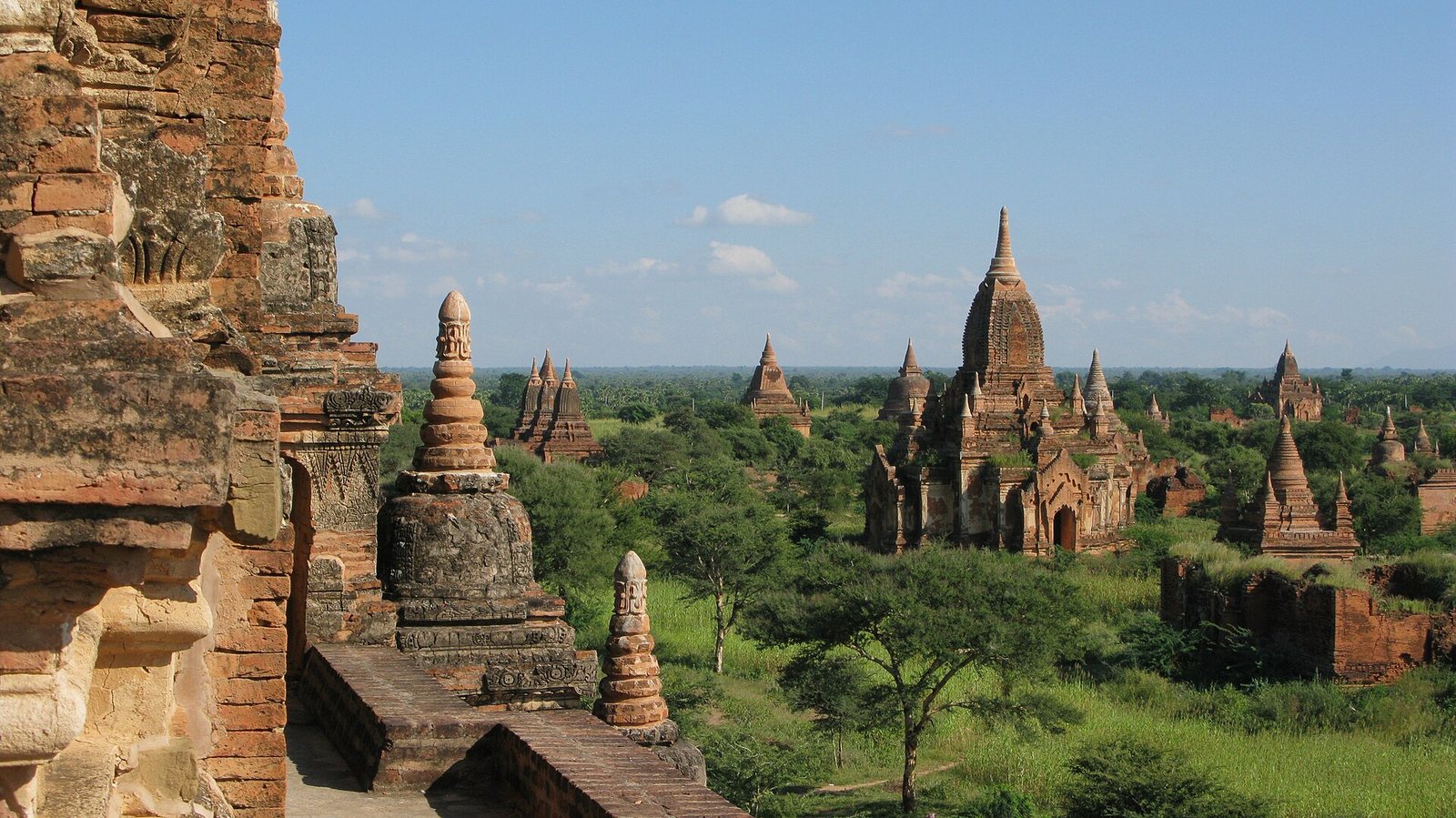
Nowhere else has so many ancient temples in one landscape. Some are vast and still busy with pilgrims, others are small and quiet, with faded murals inside and goats grazing outside. Dawn and dusk, when the plain turns gold and mist hangs between the spires, are unforgettable. It is also a gentle, rural place, with farming villages, lacquerware workshops and a slow pace.
The great temples
Ananda Temple is the most loved, a white temple with four huge standing Buddhas facing the four directions. Shwezigon Pagoda in Nyaung U is a gilded bell shaped stupa that set the pattern for later pagodas. Dhammayangyi is the largest temple, its inner corridors bricked up for reasons still debated. Thatbyinnyu is the tallest. Sulamani and Htilominlo have fine brickwork and murals. In Myinkaba village, Manuha Temple and the small Gubyaukgyi hold some of the oldest art in Bagan.
Sunrise and sunset
Climbing temples is no longer allowed, to protect them and visitors. Instead, use the official viewing mounds, the riverbank or a viewpoint your hotel recommends. Hot air balloon flights have run in the cool season in the past, but check whether any operator is flying when you visit. A sunset boat on the Ayeyarwady is a calm alternative.
Getting around
Most visitors rent an e-bike, an easy electric scooter, to ride the sandy tracks between temples. Bicycles work in the cool months, and horse carts are a slow, scenic option. Taxis can be hired for the day. Take water, sun protection and a torch for dark temple interiors.
Beyond the temples
The Bagan Archaeological Museum gives useful background. Lacquerware workshops in Myinkaba show a craft made of dozens of layers. Nyaung U Market is lively in the morning. Mount Popa, a volcanic plug crowned with a monastery and home of the nat spirits, is a half day trip, with a long climb of covered stairs and many monkeys.
Earthquake and conservation
Bagan sits in an earthquake zone. A strong earthquake in 2016 damaged many temples, and the March 2025 earthquake centred near Mandalay caused further damage in the region. Restoration continues, so some temples may be closed or under scaffolding. Respect barriers and signs.
Where to stay
Nyaung U has the most guesthouses, restaurants and transport links. New Bagan is a quieter planned town with mid-range hotels. Old Bagan, inside the archaeological zone, has a small number of hotels right among the temples. All visitors must buy the Bagan Archaeological Zone ticket; check the current fee on arrival.
Staying safe
Bagan has been calmer than many regions, but fighting has occurred in parts of the surrounding Magway and Mandalay regions. Most visitors fly into Nyaung U rather than drive. Check your government's advice before you go and keep up with local news.
A sample two day plan
On day one, watch sunrise from a viewing mound, then visit Shwezigon Pagoda and Nyaung U Market before the heat builds. Rest at midday, then ride to Ananda, Thatbyinnyu and the Bagan Archaeological Museum, ending with sunset by the river or on a boat. On day two, explore Dhammayangyi, Sulamani and the quiet temples of Minnanthu village, where murals are often finer than at the famous sites. Spend the afternoon in Myinkaba at Manuha Temple, Gubyaukgyi and a lacquerware workshop.
Temple etiquette
Every temple is a religious site. Remove shoes and socks before entering, cover shoulders and knees, and never touch or pose with Buddha images in a disrespectful way. Floors get very hot by midday, so plan temple visits for early morning and late afternoon. Some caretakers unlock smaller temples or show murals with a torch and appreciate a small tip. Drones are not allowed without permission.
Questions about Bagan
How many days do I need in Bagan?
Two full days covers the main temples, a sunrise and a sunset. Three days lets you add Mount Popa and quieter temples.
Can I climb the temples in Bagan?
No. Climbing is banned to protect the monuments and visitors. Use the official viewing mounds or the riverside for sunrise and sunset.
Do I need a ticket to visit Bagan?
Yes. All foreign visitors buy a Bagan Archaeological Zone ticket, checked at the airport, hotels and some temples. Confirm the current fee locally.
Do the balloon flights still run?
They have run in the cool season in past years, but operations have been irregular since 2020. Check with operators directly before you plan around one.
What is the best way to get around Bagan?
An e-bike is the most popular choice. Bicycles suit the cooler months, and horse carts or taxis are good for those who prefer not to ride.
Facts checked . Fees, schedules and entry rules change, so always confirm the latest with the official source.