At a glance
- Best for
- Museums, food, history and city life
- Gateway
- Benito Juárez International Airport (MEX)
- Time needed
- Three to five days
- Best season
- October to April, the drier months
- Altitude
- About 2,240 metres, so take the first day easy
- Getting around
- Metro, Metrobús and ride apps
Understanding the city
The city is enormous, but visitors spend most of their time in a handful of neighbourhoods called colonias. The **Centro Histórico** holds the Zócalo, the cathedral, the National Palace with Diego Rivera's murals and the Templo Mayor ruins. West of it, **Roma Norte** and **Condesa** are walkable, tree lined and full of cafés, bars and restaurants, which makes them the favourite bases for first-timers. **Polanco** is smarter and quieter, close to Chapultepec Park and the big museums. In the south, **Coyoacán** and **San Ángel** feel like colonial villages, with plazas, markets and the homes of Frida Kahlo and Diego Rivera.
The big sights
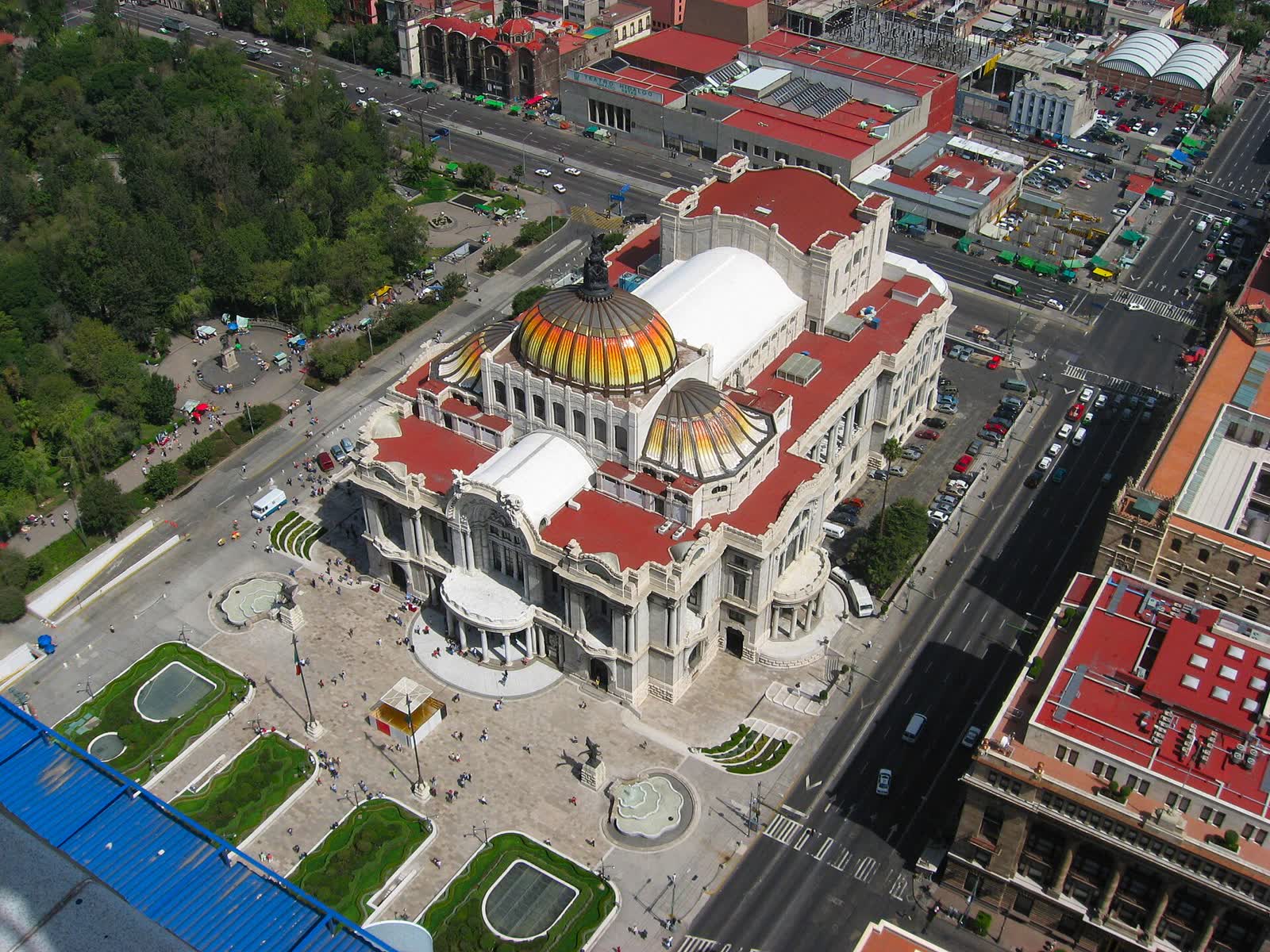
The **Museo Nacional de Antropología** in Chapultepec Park is the one essential: allow at least half a day for the Aztec Sun Stone, the Maya halls and the ethnography galleries upstairs. Nearby, Chapultepec Castle has views down the Paseo de la Reforma. In the centre, the **Palacio de Bellas Artes** is worth seeing for its murals and for the Ballet Folklórico, and the **Templo Mayor** shows the layers of the Aztec temple found under the streets. The **Museo Frida Kahlo**, the Blue House in Coyoacán, sells out days ahead, so book online.
An hour northeast, **Teotihuacán** is a city of pyramids that was already ancient when the Aztecs found it. Go early to walk the Avenue of the Dead before the heat and the crowds; early morning hot air balloon flights are a popular splurge. In the south, the canals of **Xochimilco** are a riot of painted boats, mariachis and floating food stalls, and are most fun with a group.
Eating in Mexico City
Food is the reason many people come. Start with tacos al pastor, carved from a spit of marinated pork with pineapple, and follow with tacos de canasta, quesadillas from a street comal, tlacoyos, tamales at breakfast and churros with hot chocolate. Markets like **Mercado de Coyoacán** and **Mercado de Medellín** are good places to graze. At the other end of the scale, the city's top restaurants book out weeks ahead. Long, late lunches are the local rhythm, so do as residents do and make lunch the main meal.
Getting around
The **Metro** is cheap and extensive but very crowded at rush hour; the **Metrobús** on dedicated lanes is easier for many visitor routes. Ride apps are widely used and are the simplest choice at night, and authorised taxis from the airport ranks are safe. Walking is the best way to see Roma, Condesa and the centre. Traffic is heavy, so allow plenty of time for airport runs.
Staying safe and well
The main visitor areas are busy and generally safe by day, but this is a big city: watch for pickpockets on the Metro and in crowds, keep your phone out of reach on the street, and use ride apps rather than hailing taxis at night. The altitude can bring headaches and tiredness on the first day, so drink plenty of water and go easy on alcohol. Air quality can be poor in the dry season. Drink bottled or filtered water.
How long to stay
Three full days covers the essentials: one for the centre, one for Chapultepec and Roma, and one for Coyoacán and Xochimilco or Teotihuacán. Five days lets you slow down, eat more and add a day trip to Puebla or the town of Taxco. Our places to visit list has museums, taquerías, bars and markets by neighbourhood, and the free trip planner helps you build the rest of the route.
Questions about Mexico City
Which neighbourhood should I stay in?
Roma Norte or Condesa for most first-timers: they are walkable, leafy and full of places to eat. Polanco suits a quieter, smarter stay, and the Centro Histórico is best for sightseeing by day.
Is Mexico City safe for tourists?
The main visitor neighbourhoods are generally safe with normal big city care. Watch for pickpockets on the Metro and in crowds, and use ride apps or authorised taxis at night.
How do I get from the airport to the city?
Use an authorised taxi from the official booths inside the terminal, where you pay a set fare by zone before you leave, or order a ride app car from the designated pickup points. The Metrobús also runs from the airport to the centre.
Can I visit Teotihuacán on my own?
Yes. Buses run from the Autobuses del Norte terminal, or you can take a ride app car. Go early, bring sun protection and water, and allow half a day.
Will the altitude affect me?
Some people feel tired or short of breath on the first day. Take it easy, drink water and limit alcohol at first; most feel fine within a day or two.
Facts checked . Fees, schedules and entry rules change, so always confirm the latest with the official source.