At a glance
- Best for
- Culture, markets, local food and a first or last night
- Airport
- Velana International Airport (MLE), across the Sinamalé Bridge
- Time needed
- Half a day to one day
- Best season
- December to April for drier weather
- Dress
- Modest: shoulders and knees covered
- Alcohol
- Not available in Malé or Hulhumalé
Why go
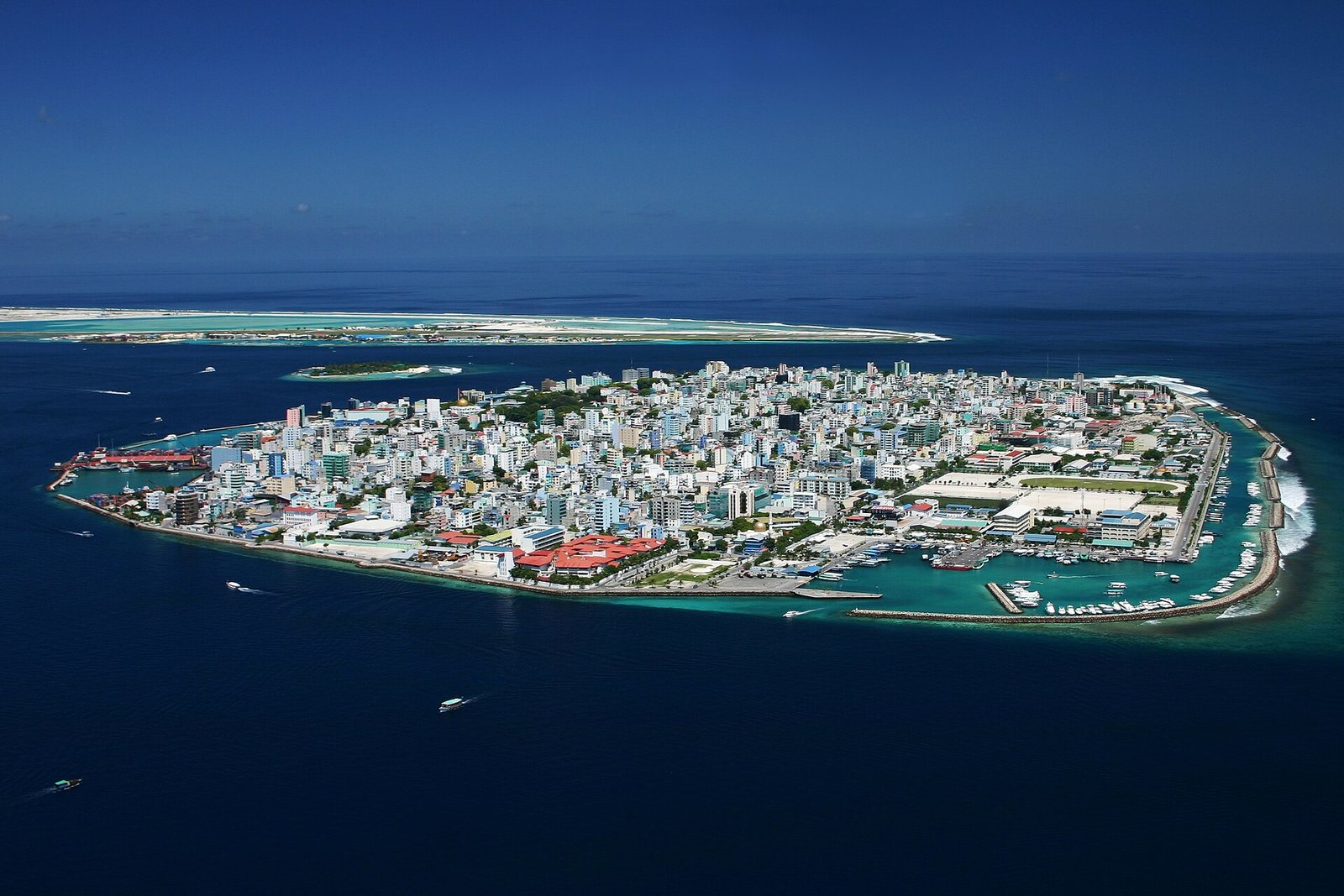
Most visitors land at Velana International Airport, a few minutes from Malé, and head straight to their island. A few hours in the capital is worth it. This is where you see the Maldives that Maldivians live in: harbours packed with dhonis, office workers on scooters, tea shops full of short eats, families on the city beach at sunset and the call to prayer drifting over the rooftops. It also has the country's most important historic buildings.
What to see
The **Malé Hukuru Miskiy**, or Old Friday Mosque, was built in the seventeenth century from blocks of coral stone, carved with Arabic script and intricate patterns. Its graveyard holds carved headstones, and the white minaret next to it is a city landmark. Visitors may be able to view the grounds respectfully; check locally whether the interior is open.
The gold domed **Grand Friday Mosque** at the Islamic Centre is the largest in the country and usually welcomes visitors outside prayer times if dressed modestly. Nearby, the **National Museum** in **Sultan Park** holds royal thrones, palanquins, old weapons and coral carvings from the Buddhist period before Islam arrived in the twelfth century.
Walk along the waterfront to **Jumhooree Maidhaan**, Republic Square, with its giant flag, and on to the **Malé Local Market** and **Fish Market** on the north harbour. In the afternoon, fishermen land skipjack and yellowfin tuna and cut them on tiled tables, and the market stalls sell smoked fish, coconuts, betel leaf, chillies and sweets. Other quick stops include the **Medhu Ziyaaraiy** shrine, the old palace **Mulee Aage** seen from outside, the **Tsunami Monument** and the **Artificial Beach**, where locals swim in the evening.
Hulhumalé and Villimalé
**Hulhumalé** is a planned new town on reclaimed land beside the airport, linked to Malé by the Sinamalé Bridge. It has a long white beach, wide streets, a central park and dozens of hotels and guesthouses, so it is the easiest place to sleep if you land late or fly early. **Villimalé**, a short ferry ride from Malé, is a quieter, greener island with a beach and a coastal path.
Food
Malé is the best place in the country for local food. Try **mas huni**, shredded smoked tuna with coconut, onion and chilli, eaten with **roshi** flatbread for breakfast. Tea shops, called hotaa, serve **hedhikaa** short eats such as fish filled **gulha** and **bis keemiya** pastries with sweet black tea. Fish curry, **garudhiya** fish broth with rice, lime and chilli, and grilled reef fish appear on most menus. Malé and Hulhumalé do not serve alcohol; that is only available on resorts and licensed boats.
Where to stay
Malé has city hotels and business hotels, useful for a night before an early ferry. Hulhumalé has a much wider range, from budget guesthouses to comfortable beachfront hotels, and is closer to the airport. Many travellers spend one night here at the start or end of a trip to avoid rushing a transfer.
Getting there and around
From the airport you can take the bus or a taxi over the bridge to Malé or Hulhumalé, or a short ferry across the harbour. Malé is small enough to walk end to end in half an hour, and taxis are cheap and plentiful. Public ferries and speedboats to local islands leave from jetties along the Malé waterfront. Check timetables the day before, because they change and do not run on every day.
Practical tips
Dress modestly: cover shoulders and knees, and women should bring a light scarf for mosques. Most shops close briefly for each prayer time, and Friday mornings are very quiet. Malé can be hot and humid, so go early or late in the day. Read the current government travel advice before you go, since political demonstrations occasionally happen in the capital.
Questions about Malé
Is Malé worth visiting?
Yes, for half a day or a night. It is the best place to see everyday Maldivian life, the Old Friday Mosque, the National Museum and the fish market.
Can I drink alcohol in Malé?
No. Alcohol is not sold in Malé, Hulhumalé or other inhabited local islands. It is available on resort islands and licensed liveaboard boats.
Should I stay in Malé or Hulhumalé?
Hulhumalé is usually better for a transit night: it is closer to the airport, has a beach and quieter streets. Stay in Malé if you want to explore the city or catch an early ferry from its jetties.
What should I wear in Malé?
Light, loose clothes that cover shoulders and knees. Swimwear belongs on resorts and designated bikini beaches, not in the city.
Facts checked . Fees, schedules and entry rules change, so always confirm the latest with the official source.