At a glance
- Best for
- Scenic drives, engineering, mountain plants and hiking
- Nearest airport
- Moshoeshoe I International Airport, Maseru
- Time needed
- One to two nights
- Best season
- March to May and September to November
- Getting there
- About four to five hours by road from Maseru via Leribe
- Where to stay
- Katse Lodge and small guest houses
Why visit Katse
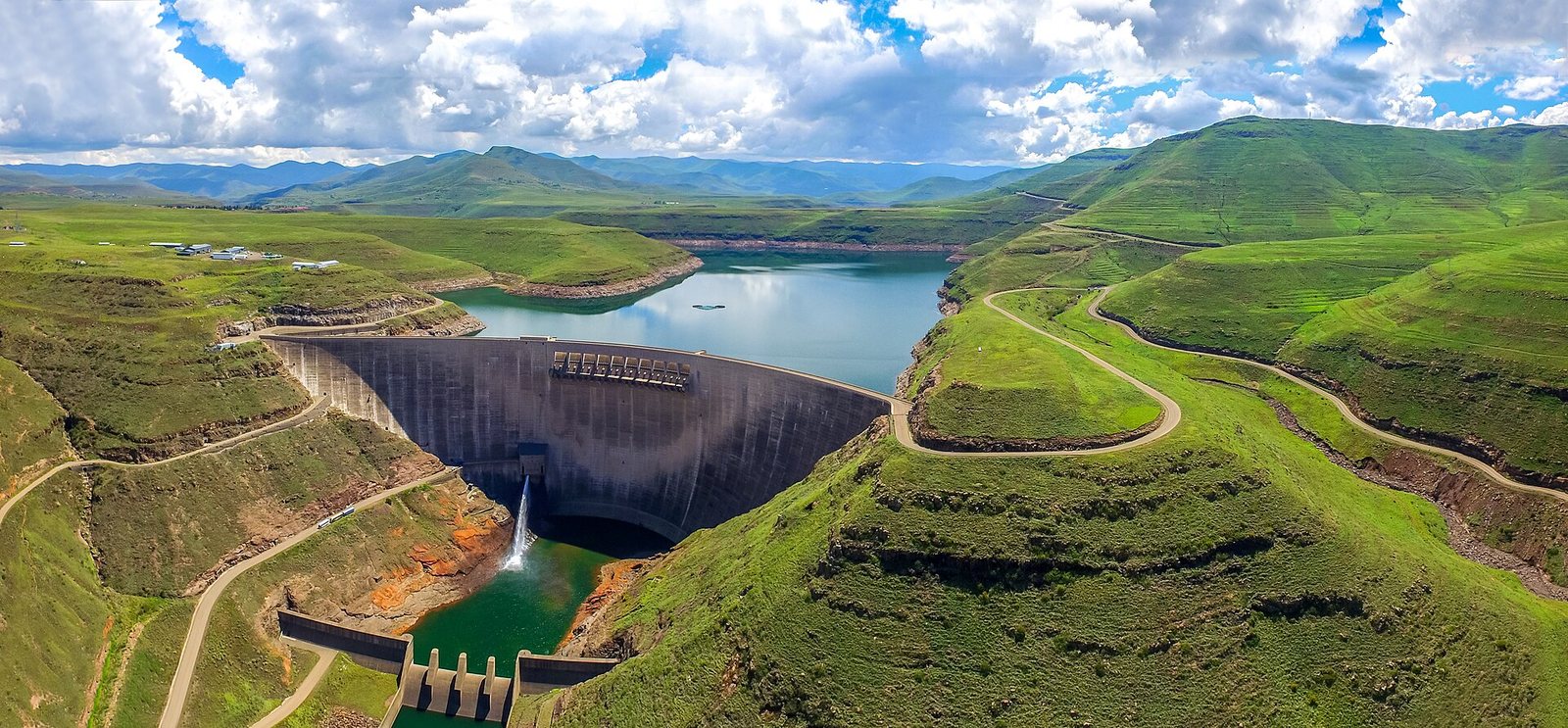
Few dams are worth a long journey, but Katse is set in such dramatic country that the trip itself becomes the point. The reservoir winds for many kilometres between steep slopes, villages cling to the hillsides, and the road in passes through a high-altitude nature reserve with a waterfall that freezes solid in winter.
Things to do
- **Dam tour and visitor centre**: guided tours explain how the Lesotho Highlands Water Project works and take you onto or inside the dam wall. Check tour times locally.
- **Katse Botanical Garden**: created to rescue plants from the flooded valleys, it protects rare highland species including the spiral aloe, Lesotho's national plant.
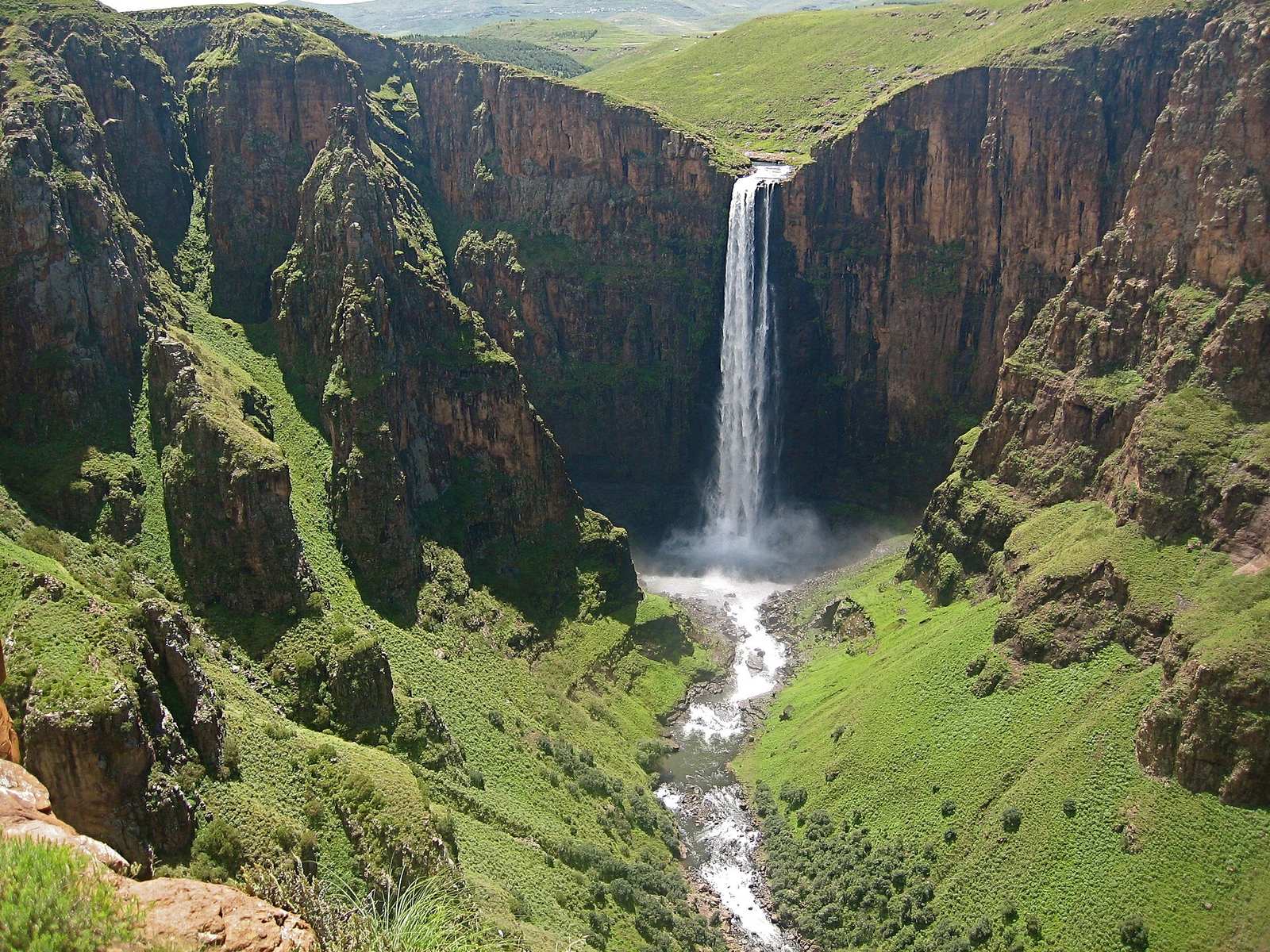
- **Bokong Nature Reserve**: at the top of Mafika Lisiu Pass, with a visitor centre, short trails and a walk to the Lepaqoa waterfall above a deep gorge.
- **Mafika Lisiu Pass**: stop at the viewpoints for huge views across the Maluti.
- **Village life**: drive the roads around the reservoir to see herders, round stone huts and fields on impossibly steep slopes.
- **Fishing**: trout live in the cold rivers and reservoirs; ask locally about permits.
Getting there
The usual route runs north from Maseru to Leribe (Hlotse), then east via Pitseng and over Mafika Lisiu to Katse. The road is tarred but steep, with sharp bends, livestock and rockfalls, and snow can close it in winter. Allow four to five hours and drive only in daylight. You can also link Katse with Mohale Dam and Thaba Tseka on longer mountain routes, some of them gravel. Buses and minibus taxis run from Maseru and Leribe, but they are slow and infrequent.
Where to stay
Katse Lodge, above the reservoir, is the main hotel, with rooms, a restaurant and views across the water. Small guest houses in Katse village offer simpler options. Book ahead, as rooms are limited and conference groups sometimes fill them.
Combining Katse with other places
Many travellers drive a loop: Maseru to Katse, then on via Thaba Tseka toward Mohale Dam and back to Maseru, or north to Ts'ehlanyane National Park and Afriski. Each leg is a full day, so do not try to cover too much at once.
Practical tips
Fill up with fuel in Maseru or Leribe, as pumps in the highlands are few and may run dry. Carry cash, water, snacks and warm clothes. Mobile signal is patchy in the mountains. Altitude makes the sun strong even when the air is cold, so use sunscreen.
A sample two-day visit
Start early from Maseru and break the drive at Leribe for fuel and a meal. Stop at the Bokong visitor centre at the top of Mafika Lisiu and walk to the Lepaqoa waterfall before dropping down to Katse in the afternoon. Visit the botanical garden before it closes and watch the light change over the reservoir from the lodge. The next morning, join a dam tour, then either return to Maseru or continue on a longer highland loop. In winter, check road reports every morning, as conditions on the passes can change overnight and snow can close them for a day or more.
Questions about Katse Dam
Can I tour inside Katse Dam?
Guided tours are offered from the visitor centre, but times and access change. Check locally or with the Lesotho Highlands Development Authority before you go.
How long does it take to drive from Maseru to Katse?
Allow four to five hours via Leribe and Mafika Lisiu Pass, longer with stops or bad weather.
Is the road to Katse safe in winter?
It is generally fine in clear weather, but snow and ice can close the passes. Check conditions before setting out and avoid driving after dark.
Is a 4x4 needed to reach Katse?
Not on the tarred route via Leribe in normal conditions. Some alternative gravel routes through the highlands are best with high clearance.
What is the Lesotho Highlands Water Project?
A long-running programme of dams and tunnels that sends highland water to South Africa's Gauteng province and generates hydroelectric power for Lesotho. Katse and Mohale are its two largest dams.
Facts checked . Fees, schedules and entry rules change, so always confirm the latest with the official source.