At a glance
- Best for
- Hiking, river trips, village life and slowing down
- Nearest airport
- Luang Prabang International Airport (LPQ)
- Time needed
- Three to five days
- Best season
- November to April
- Language
- Lao and Khmu, with basic English
- Getting around
- On foot, boat and minivan
Why go
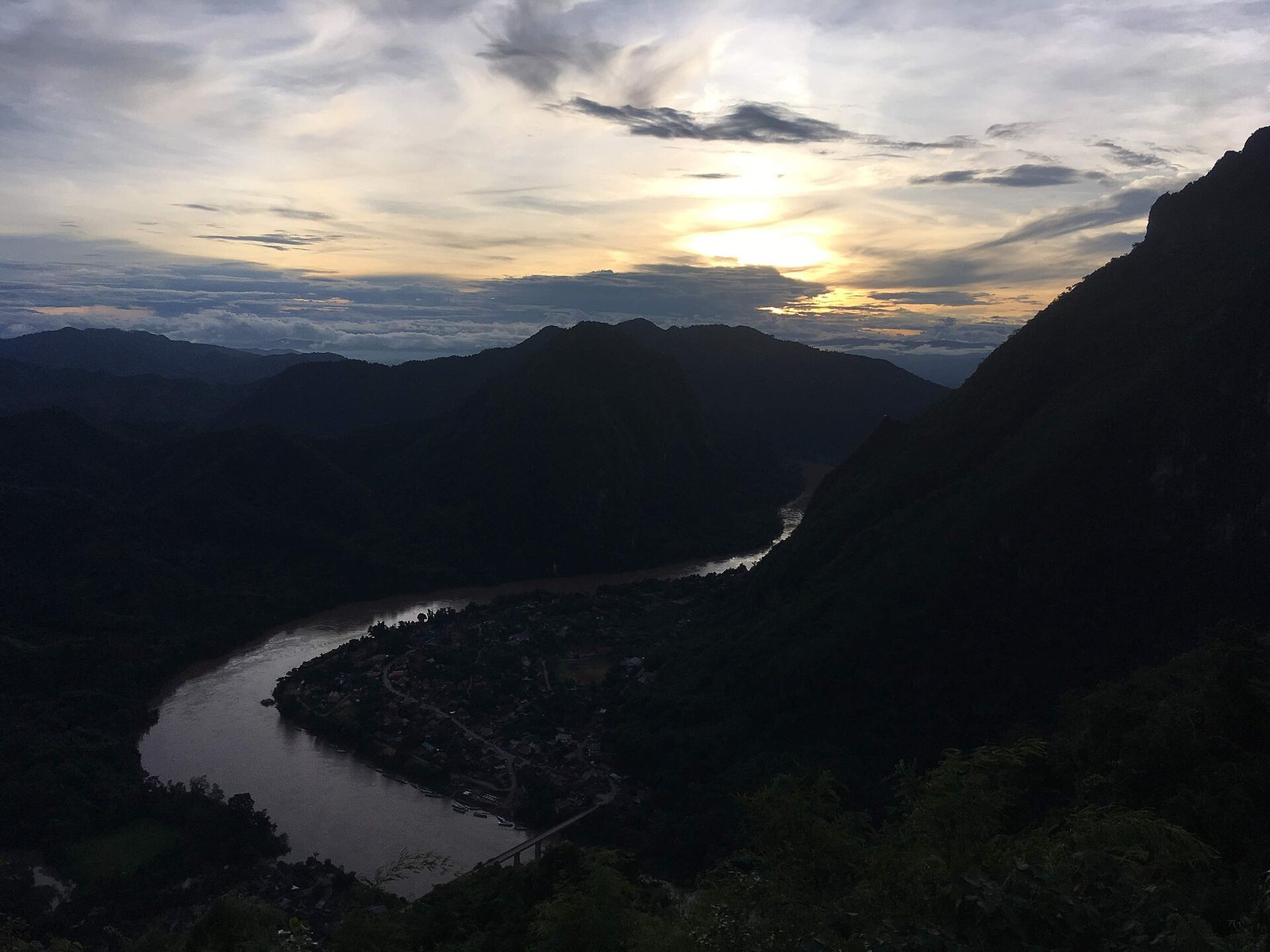
If Luang Prabang is the classic, Nong Khiaw is the reward for going a little further. The town is just a bridge, a few streets and a row of guesthouses, but the setting is one of the most beautiful in Southeast Asia: steep green karst walls rising from a broad river, often wrapped in morning mist. Days here are about walking, boating, reading on a balcony and eating with a view.
The viewpoint hikes
Two hikes above town are the main draw. The Nong Khiaw viewpoint trail climbs steeply through forest to a lookout over the bridge and the river bend. Pha Daeng peak, a little further out, is the sunrise hike, where you watch the mist drain out of the valley below you. Both take a couple of hours return, are steep and slippery after rain, and charge a small entry fee to support upkeep. Go with good shoes, a torch for dawn starts and plenty of water.
Caves and history
The Tham Pha Tok caves just outside town sheltered villagers and a district office during the bombing of the Indochina war. A short walk and a scramble lead into the cave system, a reminder of how recent that history is. Stick to the marked paths in the countryside; unexploded ordnance remains in parts of northern Laos.
Muang Ngoi Neua
A boat ride of around an hour up the Nam Ou brings you to Muang Ngoi Neua. There are no cars, just a dusty main street of guesthouses, a temple, and paths into the rice fields. From here you can walk to the villages of Ban Na and Huay Bo, visit caves and swim in the river. Several nights here is the best way to see it. Dams on the Nam Ou have changed river traffic, so check boat times locally the day before.
Treks and river trips
Local operators run guided day treks, overnight village homestays, kayaking and the 100 Waterfalls trek, a day of wading up a stream of small cascades. A guide is worthwhile, both for the paths and for introductions in Khmu and Hmong villages. Homestays are simple, with a mattress, mosquito net and a shared family meal.
Food and where to stay
Food is simple and good: sticky rice, laap, river fish and noodle soups, plus a few cafés with Western breakfasts. Accommodation runs from basic bungalows to riverside resorts with pools facing the cliffs. Balconies over the river are worth paying a little more for. ATMs are limited and can run dry, so bring enough kip in cash from Luang Prabang.
Getting there and around
Minivans and local buses run from Luang Prabang's northern bus station, taking around three to four hours on a winding road. Some travellers combine the trip with a stop on the way. The nearest airport is Luang Prabang International. In town everything is walkable; boats leave from the landing below the bridge.
Plan your days
Plan three nights at least: a day for the viewpoint, a day for caves and a trek, and one to sit by the river. Add two or more nights in Muang Ngoi. See all Laos destinations and use the free trip planner to fit the north into your route.
Questions about Nong Khiaw and Muang Ngoi
How do I get to Nong Khiaw?
By minivan or bus from Luang Prabang, around three to four hours. Book through your guesthouse or the bus station.
Are the Nong Khiaw hikes hard?
They are short but steep, with rough steps and roots. Reasonable fitness and good shoes are enough; avoid them in heavy rain.
Are there ATMs in Nong Khiaw?
There are a few, but they can be empty or out of order. Bring enough kip in cash, especially for Muang Ngoi, where there is no ATM.
Is Muang Ngoi worth the trip?
Yes, if you want quiet. It is a car free village with walks to rice fields and other villages, best for two or more nights.
Facts checked . Fees, schedules and entry rules change, so always confirm the latest with the official source.