At a glance
- Best for
- Landmarks, museums, souqs and food
- Airport
- Kuwait International Airport (KWI)
- Time needed
- Two days
- Best season
- November to March
- Getting around
- Taxis, ride hailing apps and buses
- Dress
- Modest in the souq and mosques, covered shoulders and knees everywhere
Why visit Kuwait City
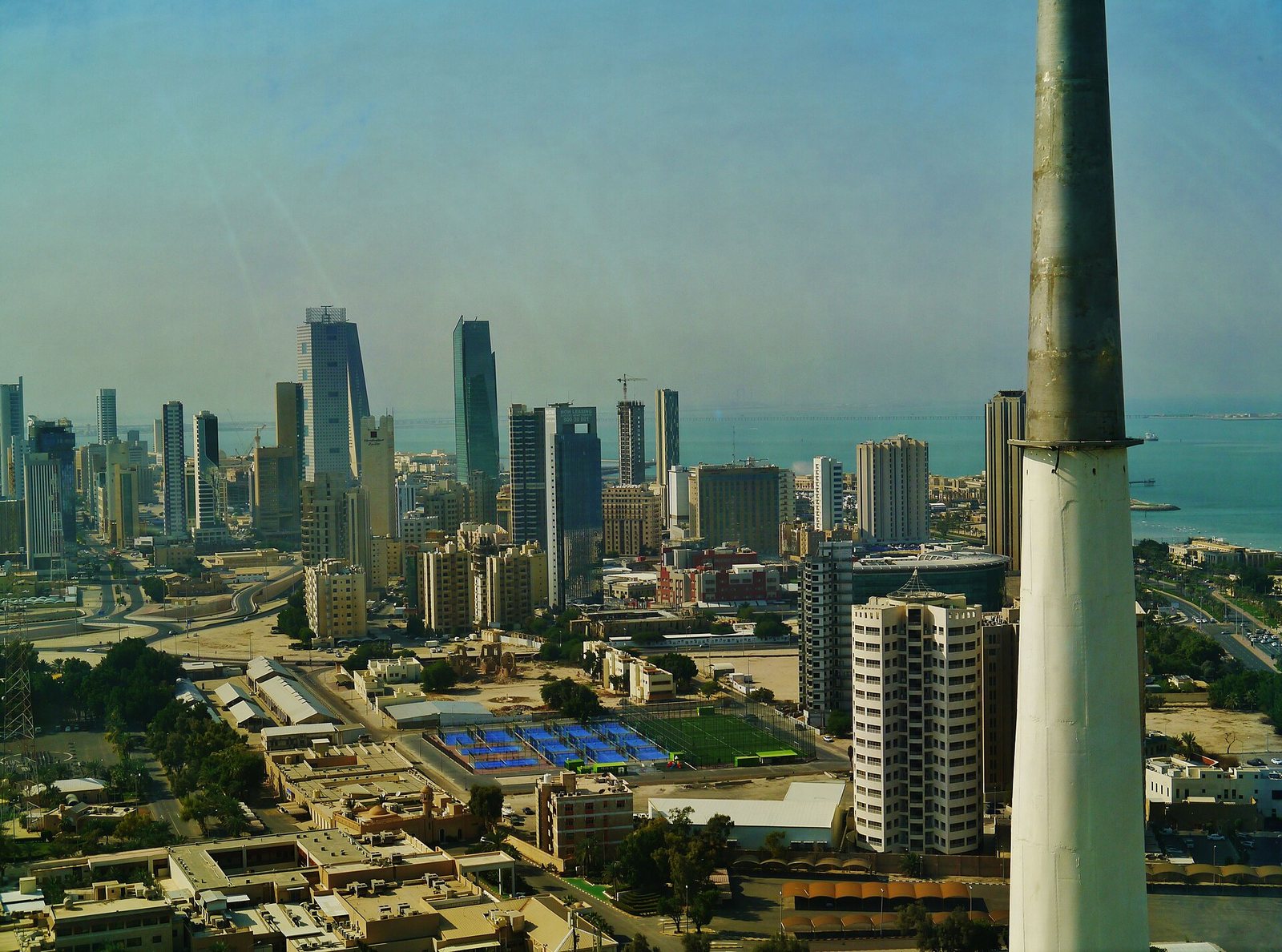
The city grew from a walled pearling and trading town on the southern shore of Kuwait Bay. Oil money transformed it from the 1950s onwards, and the invasion of 1990 left deep scars that have since been rebuilt. Today it is a place of wide roads, glass towers and generous public spaces, but the older Kuwait is never far away: in the souq, in the dhows moored at Sharq and in the diwaniya gatherings where Kuwaitis still meet in the evenings. It is far less touristy than Dubai or Doha, which is part of its charm. You will often be one of very few visitors in a museum or a souq lane.
Kuwait Towers and the corniche
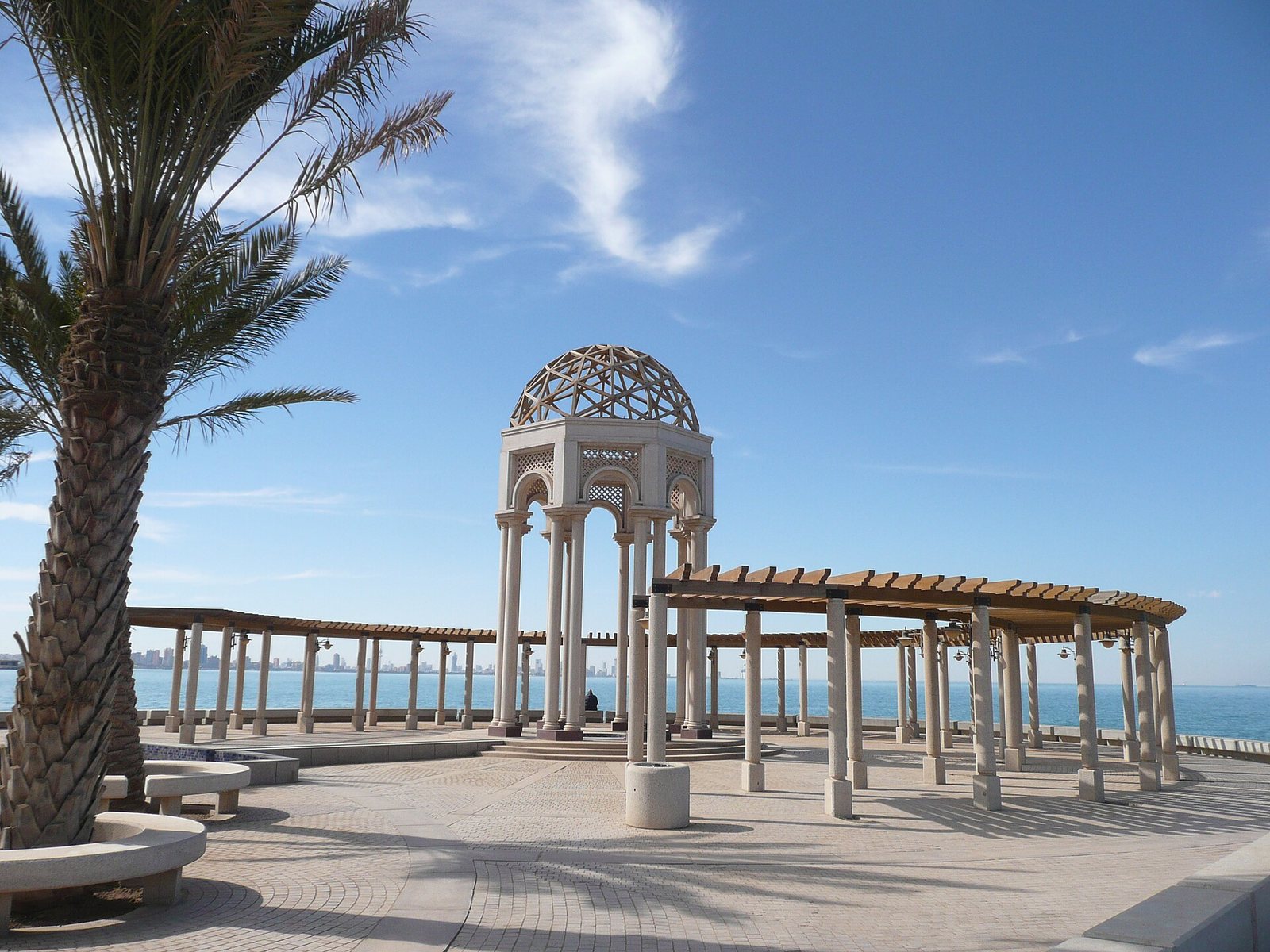
The three towers on Arabian Gulf Street, completed in the 1970s and covered in blue, green and silver discs, are the symbol of the country. The largest holds a viewing sphere with a slowly rotating floor and wide views over the bay and the skyline. Come around sunset, then walk the corniche paths that run for kilometres along the shore. Green Island, an artificial park linked by a bridge, is a short stroll away, and the evening crowds of families, joggers and anglers are a lovely way to see daily life.
The Grand Mosque
The Grand Mosque in the centre of the city is the largest in Kuwait, with a vast prayer hall under a dome decorated with the names of God. Free guided tours run outside prayer times for non-Muslim visitors, explaining Islamic practice and the building's design. Women are given an abaya and headscarf at the entrance, and everyone removes their shoes. Check tour times before you go, as they change in Ramadan and on Fridays.
Souq Al Mubarakiya
A short walk from the mosque, Souq Al Mubarakiya is the most atmospheric place in the city. Covered lanes sell dates of every kind, honey, spices, oud and perfume, dishdashas, carpets and gold. In the open courtyards, simple restaurants grill kebabs and serve fresh bread at outdoor tables, and old tea houses pour sweet tea. Come in the late afternoon and stay into the evening, when the souq is busiest and the air is cooler. Nearby, Seif Palace with its blue tiled clock tower is worth seeing from outside, though it is not open to visitors.
Museums and cultural centres
Kuwait has invested heavily in culture. The Sheikh Abdullah Al Salem Cultural Centre in Shuwaikh is one of the largest museum complexes in the world, with galleries on natural history, space, science, Arabian Islamic science and transport, and it is free to enter. Next to it, the Sheikh Jaber Al Ahmad Cultural Centre is the national opera house, worth checking for concerts and shows during your stay. Al Shaheed Park, a long green park in the middle of the city, has a remembrance museum and a habitat museum. For Islamic art, see Dar Al Athar Al Islamiyyah at the Amricani Cultural Centre by the sea and the private Tareq Rajab Museum in Jabriya. Sadu House on Arabian Gulf Street shows the Bedouin weaving tradition, and Bait Al Othman in Hawalli covers Kuwaiti heritage in a sprawling old house.
Food
Try machboos, spiced rice with chicken, lamb or fish, the national dish. Mutabbaq samak, fish over rice, often uses zubaidi, the silver pomfret Kuwaitis love. Breakfast might be balaleet, sweet vermicelli with an omelette, with karak tea. Long running restaurants like Mais Alghanim on the seafront serve Lebanese grills, and Kuwait's homegrown burger and specialty coffee scene is excellent. Remember that alcohol is completely banned: social life revolves around cafés, desserts and long dinners.
Where to stay
Stay in the city centre or Sharq for the souq, the mosque and the business district, or along Arabian Gulf Street for the sea. Large international hotels cover most of the range, from luxury towers to dependable business hotels. Many visitors prefer Salmiya for its seafront and wider choice of mid-range options.
Getting around
The city is spread out and very hot for much of the year, so walking between areas is rarely practical. Taxis and ride hailing apps are the easiest way to move about. Buses run widely and are cheap but slow. Traffic is heavy at rush hours, so plan your days by area.
Our places to visit list maps the best stops, and the free trip planner helps you plan around opening times and the heat.
Questions about Kuwait City
How many days do I need in Kuwait City?
Two days covers the Grand Mosque, the souq, the cultural centres and Kuwait Towers. Add a day if you want more museums or a trip to Failaka.
Can visitors enter the Grand Mosque?
Yes. Free guided tours run for non-Muslim visitors outside prayer times. Dress modestly; women are lent an abaya and headscarf.
Is Kuwait City walkable?
Only in parts, such as the souq area and the corniche. The city is spread out and hot, so use taxis or ride hailing apps between areas.
When is Souq Al Mubarakiya busiest?
In the late afternoon and evening, especially on Thursdays and Fridays. Mornings are quieter, and some shops close in the early afternoon.
Facts checked . Fees, schedules and entry rules change, so always confirm the latest with the official source.