At a glance
- Best for
- Ancient history, hiking and photography
- Nearest town
- Wadi Musa
- Time needed
- Two days, three for keen walkers
- Best season
- March to May and October to November
- From Amman
- About three hours by road
- Tickets
- Sold at the visitor centre or covered by the Jordan Pass
Why visit Petra
The Nabataeans grew rich controlling incense and spice routes and built their capital in a hidden valley. After centuries of decline it was known mostly to local Bedouin until a Swiss traveller reached it in 1812. Today it is a UNESCO World Heritage Site and the most visited place in Jordan, yet early in the morning or on the higher trails it still feels wild and quiet.
The main trail
From the visitor centre in Wadi Musa, a path leads past the Djinn Blocks and the Obelisk Tomb to the Siq, a winding gorge about a kilometre long. At its end stands the Treasury, Al Khazneh. Beyond it the valley opens out past the Street of Facades, the Theatre and the Royal Tombs to the Colonnaded Street and the Great Temple. This walk alone takes half a day with stops.
The Monastery and other climbs
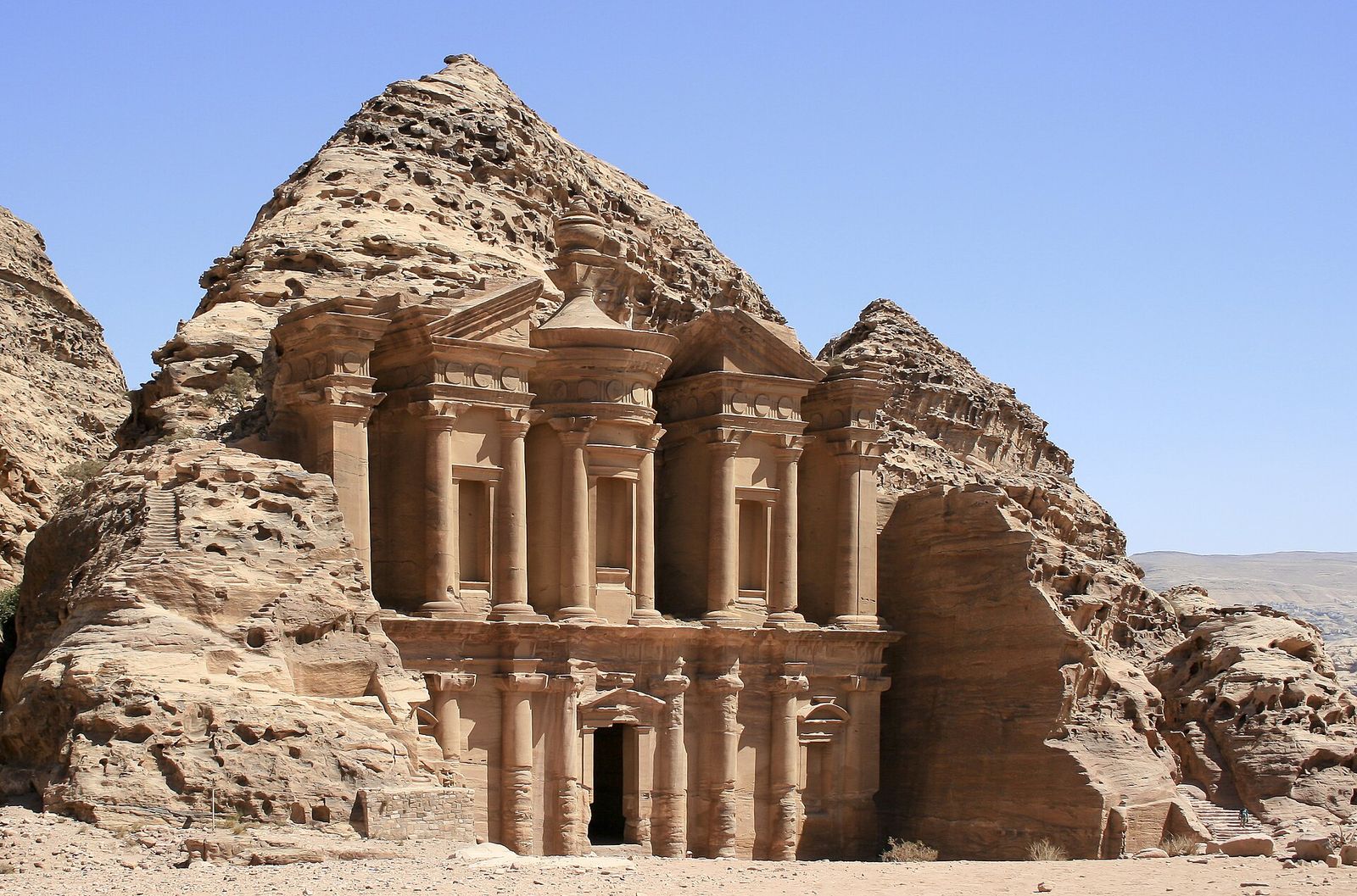
From the far end of the main trail, around eight hundred rock cut steps climb to the Monastery, Ad Deir, bigger than the Treasury and often quieter. Allow at least two hours there and back. The High Place of Sacrifice trail climbs from near the Theatre to an ancient altar and returns past the Lion Fountain and the Garden Tomb. The Al Khubtha trail leads above the Royal Tombs to a view down onto the Treasury. Local guides lead the longer back route from Little Petra to the Monastery.
Petra by Night
On set evenings each week, the Siq and the Treasury are lit by candles for a short programme of music and stories. It needs a separate ticket that the Jordan Pass does not cover. Check current nights at the visitor centre.
Animals and guides
You will be offered horses, donkeys, mules and camels. Animal welfare has been a long running concern, so think carefully before riding, especially up steps. A licensed guide from the visitor centre adds a great deal to the main trail; agree the route and length before you start.
Little Petra
Ten minutes north of Wadi Musa, Siq al-Barid, often called Little Petra, is a small carved valley with a rare painted ceiling, free to enter and usually peaceful. The Neolithic village of Beidha is close by.
Where to stay
Stay in Wadi Musa, the town that wraps around the entrance, so you can start at opening time and avoid the midday heat and tour groups. Hotels near the gate, such as the Mövenpick and the Petra Guest House, are the most convenient, while hilltop hotels have views and Bedouin style camps near Little Petra suit stargazers.
Practical tips
Go early: the first two hours after opening are the coolest and quietest. Carry water, sun protection and snacks, wear grippy shoes and dress for walking while covering shoulders out of respect for local families who work there. Tickets are sold for one, two or three days, and the Jordan Pass includes Petra entry. Petra Kitchen runs an evening cooking class in town. Plan your days with our free trip planner and find stays on our places to visit list.
Questions about Petra
How many days do I need in Petra?
Two days is ideal: the main trail and the Monastery on the first day, then the High Place of Sacrifice or Al Khubtha and Little Petra on the second. One day is possible but tiring.
How hard is the walk in Petra?
The main trail is long but gently downhill on the way in, so the return is uphill. The Monastery and High Place climbs involve hundreds of steps. Most fit walkers manage them with rest stops.
Can I visit Petra without the Jordan Pass?
Yes, tickets are sold at the visitor centre. The Jordan Pass usually works out better value for visitors who also need a visa, so compare both on the official sites.
Is it worth staying near Petra?
Yes. Sleeping in Wadi Musa lets you enter at opening time, beat the heat and the day trip crowds, and see Petra by Night.
Facts checked . Fees, schedules and entry rules change, so always confirm the latest with the official source.