At a glance
- Best for
- Spirituality, river life, music and photography
- Airport
- Lal Bahadur Shastri International Airport (VNS)
- Time needed
- Two to three days
- Best season
- October to March
- Language
- Hindi, with some English in the old town
- Getting around
- On foot along the ghats, boats and cycle or e-rickshaws
Why go
Life and death play out in public along nearly one hundred **ghats**, the stone steps leading down to the river. At dawn, pilgrims bathe and pray, priests chant, and wrestlers and yoga groups exercise. By night, lamps float on the water and bells ring for the evening ceremony. No other place shows the depth of Hindu faith so openly.
On the river
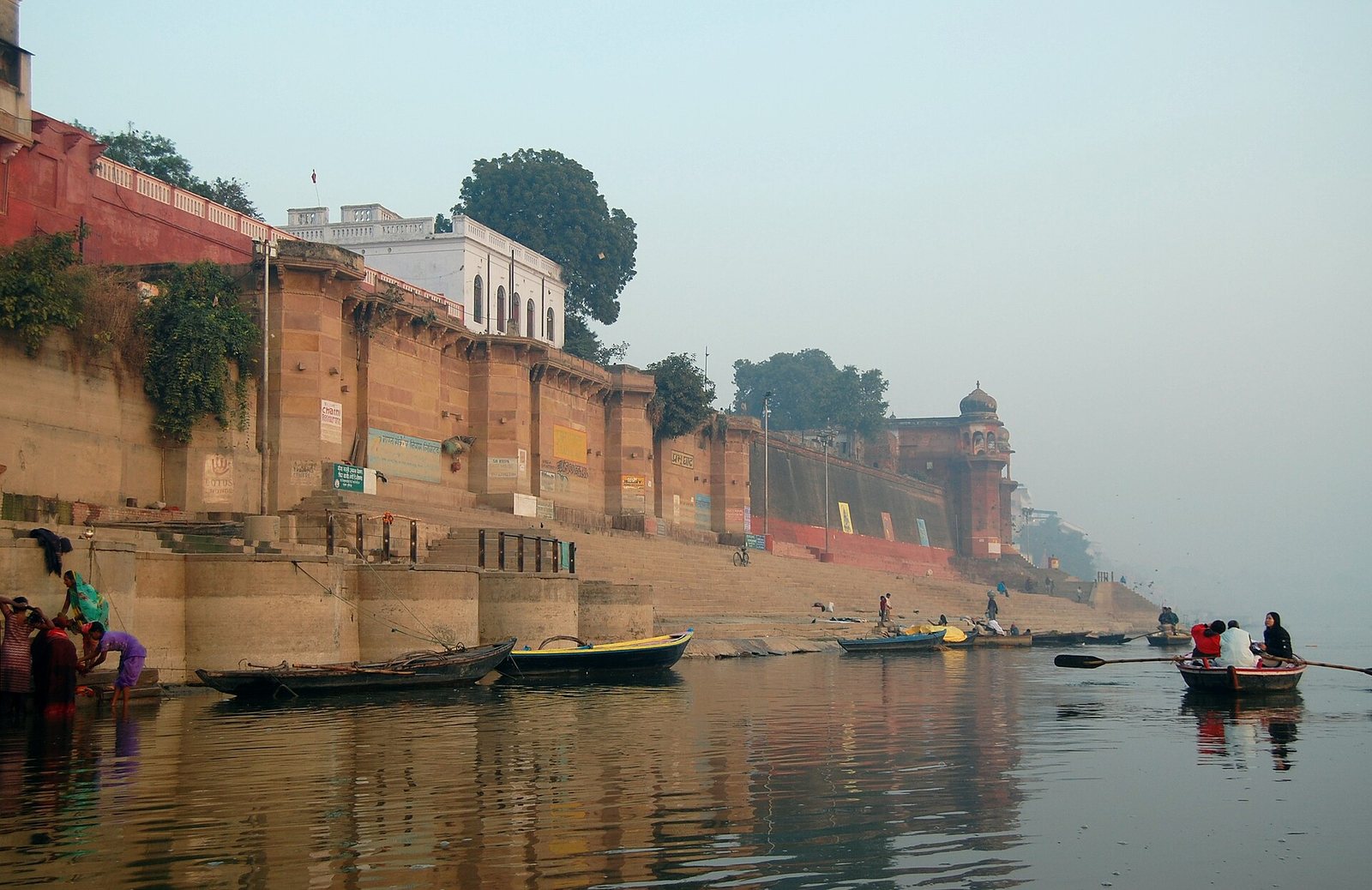
A **sunrise boat ride** is the essential experience. Hire a rowing boat from Dashashwamedh, Assi or another ghat and drift past temples, palaces and bathers as the sun rises over the far bank. Agree the time and route before you set off. Evening boat trips let you watch the aarti from the water.
The ghats
Walk the ghats from **Assi** in the south to **Dashashwamedh**, the busiest, and on to **Manikarnika**, the main cremation ghat where pyres burn around the clock. Watching respectfully from a distance is acceptable, but photographs of cremations are not; ignore anyone who offers to take you closer for a donation. Harishchandra is the other cremation ghat. Quieter stretches such as Kedar, Darbhanga and Panchganga are lovely to explore slowly.
Evening aarti
Every evening at **Dashashwamedh Ghat**, young priests perform the **Ganga Aarti**, a choreographed ceremony of fire, incense, bells and chanting. Arrive early for a spot on the steps or watch from a boat. A smaller, more intimate aarti takes place at **Assi Ghat**, which also holds a morning ceremony.
The old city
Behind the ghats, a maze of narrow lanes hides shrines, sweet shops and silk weavers. The **Kashi Vishwanath Temple**, dedicated to Shiva, is now reached by a wide new corridor from the river; security is strict and phones are usually not allowed inside, and some areas may be restricted to Hindus. **Banaras Hindu University** has a peaceful campus and the Bharat Kala Bhavan museum.
Sarnath
Just outside the city, **Sarnath** is where the Buddha gave his first sermon. The Dhamek Stupa, temple ruins, monasteries built by Buddhist countries and an excellent archaeological museum, home of the lion capital that is India's national emblem, make a calm half day trip.
Food and music
Varanasi is famous for **kachori sabzi** and jalebi at breakfast, malaiyo (a winter milk froth), **Banarasi paan**, lassi in clay cups and tamatar chaat. The city is a centre of Hindustani classical music, and small concerts are held in guest houses and music schools. **Banarasi silk** saris are woven here; buy from established shops.
Where to stay
Stay near the ghats for atmosphere, around Assi, Dashashwamedh or the quieter middle ghats, many in heritage guest houses with river views. Cars cannot reach most ghat side hotels, so expect a short walk with your bags.
Practical tips
The lanes are slippery and crowded, so wear good shoes. Dress modestly, remove shoes where asked and do not touch people or offerings without permission. Many travellers prefer not to bathe in the river for health reasons. The monsoon floods the lower ghats, so the aarti sometimes moves upward. Big festivals such as **Dev Deepawali**, when the ghats glow with lamps in November, are magical but very crowded. Fly in from Delhi or take a train such as the Vande Bharat. Our trip planner helps you fit Varanasi between Delhi and the rest of your route.
Questions about Varanasi
How many days do I need in Varanasi?
Two full days lets you take a sunrise boat, walk the ghats, see the evening aarti and visit Sarnath. A third day allows a slower pace.
Can tourists watch cremations in Varanasi?
You may watch quietly from a respectful distance, but do not take photographs, and decline anyone asking for donations to take you closer.
What time is the Ganga Aarti?
It starts around sunset, so earlier in winter than summer. Arrive at least half an hour before to find a good spot.
Is Varanasi safe for tourists?
Generally yes, but the lanes are crowded and touts are common. Watch your belongings, agree boat prices first and walk with others late at night.
Facts checked . Fees, schedules and entry rules change, so always confirm the latest with the official source.