At a glance
- Best for
- Beaches, food, heritage and relaxing
- Airports
- Goa Dabolim (GOI) and Mopa Manohar International (GOX)
- Time needed
- Four to seven days
- Best season
- November to March
- Language
- Konkani, with English, Hindi and Marathi widely spoken
- Getting around
- Taxis, the official Goa taxi app and rented scooters for experienced riders
Why go
Goa mixes Indian and Portuguese culture in its food, music, architecture and festivals. You can explore baroque churches in the morning, eat a seafood thali at lunch and watch the sunset from a beach shack. It is easy to travel, relaxed and welcoming, which makes it a favourite for families and first-timers.
North Goa
The north is lively. **Calangute** and **Baga** are crowded and built up, while **Anjuna** is known for its Wednesday flea market and nightlife, and **Vagator** for its clifftop views and the ruins of **Chapora Fort**. Further north, **Morjim**, **Ashwem** and **Mandrem** are calmer, with good food and yoga, and **Arambol** has a bohemian feel. The Saturday night markets near Arpora are a fun evening out.
South Goa
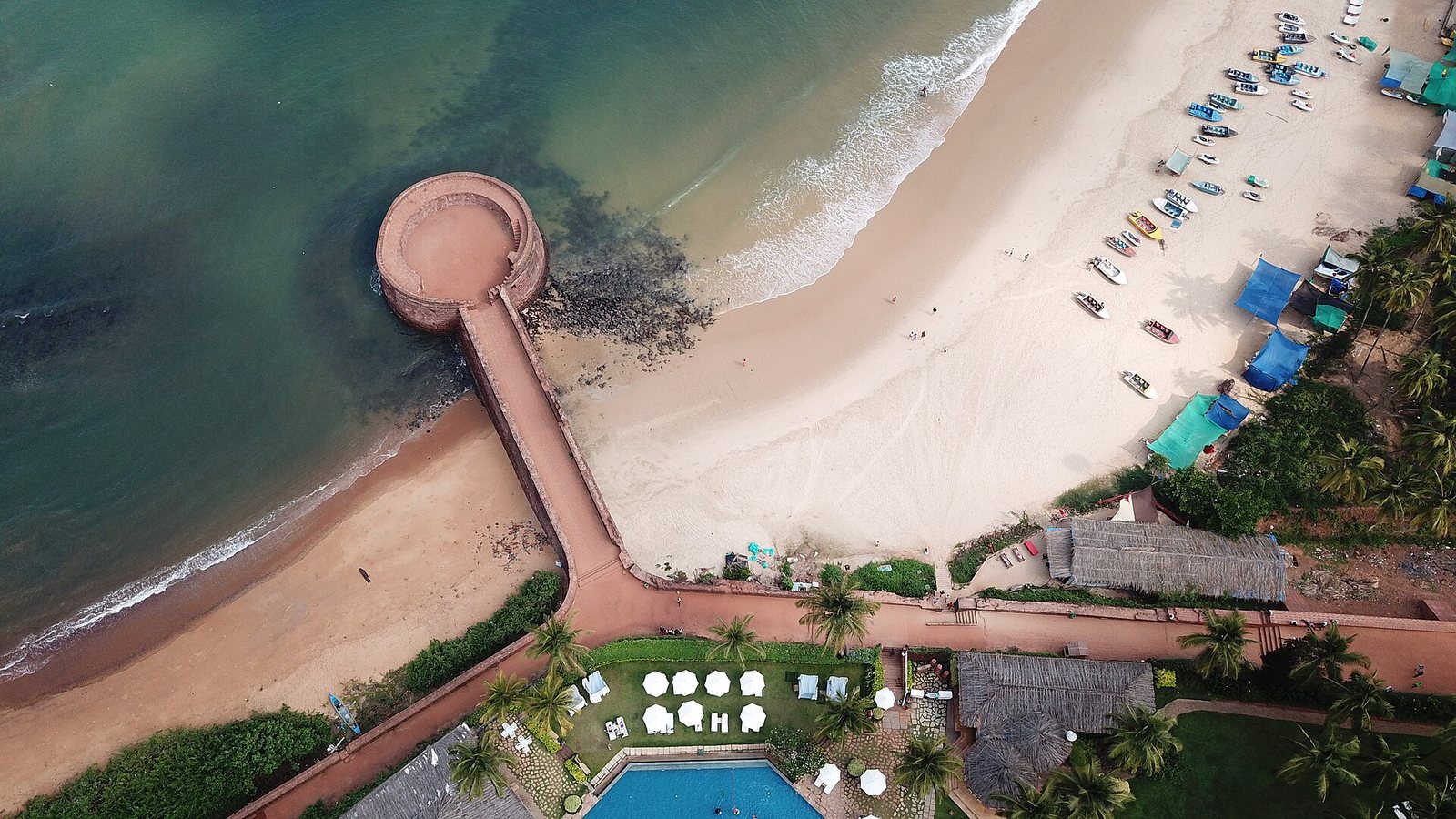
The south is quieter and greener. **Palolem** is a crescent bay of palms and huts, and nearby **Agonda**, **Patnem** and **Butterfly Beach** are peaceful. **Colva**, **Benaulim** and **Varca** have long sands and family resorts. **Cabo de Rama** fort has dramatic sea views, and **Cotigao Wildlife Sanctuary** offers forest walks.
Panaji and Old Goa
The state capital **Panaji**, also called Panjim, is a small, walkable riverside city. Its Latin quarter **Fontainhas** is a delight of colourful Portuguese era houses, balconies and tiled name plates, best explored on foot in the morning. The **Church of Our Lady of the Immaculate Conception** overlooks the centre. Ten kilometres east, **Old Goa** was once a great colonial capital. Its UNESCO listed churches include the **Basilica of Bom Jesus**, which holds the remains of St Francis Xavier, and the vast **Se Cathedral**.
Inland Goa
Go inland for **spice plantation** tours around Ponda, Hindu temples such as **Mangueshi** and **Shantadurga**, and the **Dudhsagar Falls**, a tall waterfall in the forest on the border with Karnataka that is at its best just after the monsoon. Villages such as **Chandor** and **Loutolim** have grand Portuguese era mansions, some open to visitors.
Food and drink
Goan food is a highlight: **fish curry rice**, **xacuti**, **vindaloo** (the original, made with vinegar and garlic), prawn balchão, cafreal chicken and the layered dessert **bebinca**. Sip feni, a local spirit distilled from cashew or coconut. Beach shacks serve the catch of the day, and Panaji has excellent Goan restaurants.
Festivals
**Carnival**, before Lent, fills the streets with floats and music. Christmas and New Year are hugely popular and busy. **Shigmo** is the spring Hindu festival, and **Sao Joao** in June sees young men jump into wells and ponds.
Safety
Swim only at beaches with lifeguards and between the flags: currents are strong, especially in the monsoon, when swimming is often banned. Drink driving and riding scooters without experience cause many accidents; wear a helmet and carry a valid licence if you ride. Drugs are illegal and penalties are serious. Use the official Goa taxi app or prepaid taxis, and agree fares upfront.
When to go
November to March is dry and sunny. Late December is the busiest and most expensive period. The monsoon from June to September brings heavy rain, and many beach shacks close. Our trip planner helps you add Goa after Kerala or Rajasthan.
Questions about Goa
Is North or South Goa better?
North Goa suits nightlife, markets and a lively scene. South Goa is quieter, with calmer beaches that suit couples and families.
Which airport should I fly into for Goa?
Goa has two airports: Dabolim (GOI) is closer to South Goa and Panaji, while Mopa (GOX) is in the far north. Choose the one nearest your stay.
Is it safe to swim in Goa?
Swim only at beaches with lifeguards, between the flags. Avoid the sea in the monsoon and after drinking.
When is the best time to visit Goa?
November to March is dry and sunny. Christmas and New Year are the busiest weeks, so book well ahead.
Do I need a scooter in Goa?
No. Taxis and the official taxi app cover most trips. Only ride a scooter if you are experienced, licensed and wear a helmet.
Facts checked . Fees, schedules and entry rules change, so always confirm the latest with the official source.