At a glance
- Best for
- Arrivals, museums, food and city life
- Gateway
- La Aurora International Airport (GUA)
- Time needed
- One night to two days
- Best season
- November to April, the drier months
- Getting around
- Uber, hotel taxis and walking in safer zones by day
- Language
- Spanish
Understanding the zones
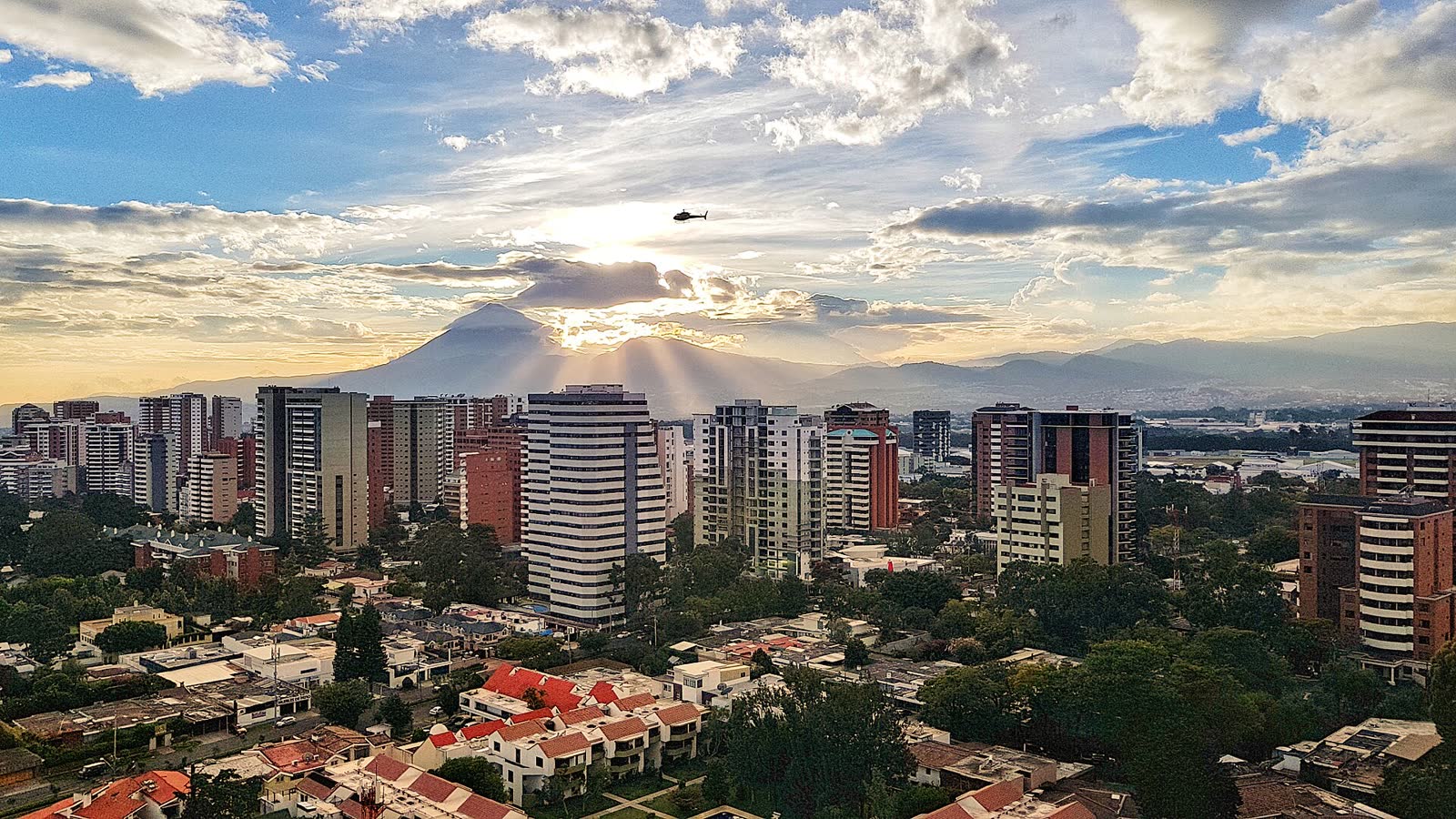
The city is divided into numbered zonas, and knowing a few of them makes everything easier. Addresses are written by zone, avenue and street, so a taxi driver will always ask which zona you need.
- **Zona 1** is the historic centre, with the Plaza de la Constitución, the National Palace, the Metropolitan Cathedral and the pedestrian Sexta Avenida. It is busy and interesting by day and best left before dark.
- **Zona 4** is a former industrial area reborn as Cuatro Grados Norte and the streets around it, with design shops, cafés, bars and street art.
- **Zona 10**, the Zona Viva, holds many of the business hotels, restaurants, nightlife and two of the best museums.
- **Zona 13** is next to the airport and home to the national museums of archaeology and natural history, plus the La Aurora Zoo.
- **Zona 14 and Zona 15** are quieter residential districts with good hotels and restaurants.
What to see
Start at the **Plaza de la Constitución**, where the green National Palace faces the cathedral and families gather on weekends. Walk down **Sexta Avenida**, where old cinemas and shopfronts have been restored, and stop at the **Central Market** behind the cathedral for textiles, baskets and cheap lunches.
The **Museo Ixchel del Traje Indígena** and the **Museo Popol Vuh**, both on the campus of Universidad Francisco Marroquín, are the best introduction to Maya weaving and archaeology in the country. The **Museo Nacional de Arqueología y Etnología** in Zona 13 holds major carved stelae and jade from Tikal and other sites. For a quirky view of the whole country, the **Mapa en Relieve**, a huge outdoor relief map built in 1905, sits in Zona 2.
Food and drink
The capital is a good place to try Guatemalan food beyond tourist menus: pepián and kak'ik stews, chuchitos and tamales, chicken from the national favourite Pollo Campero and plates of churrasco on weekends. Zona 10 and Cayalá, a planned shopping and dining district in Zona 16, have polished restaurants, while Zona 4 is the spot for coffee roasters, craft beer and casual bars.
Staying safe
Guatemala City has real crime problems, and some zones are best avoided altogether. Visitors who stick to Zonas 4, 9, 10, 13, 14 and 15, use Uber or a taxi booked by their hotel, and avoid walking at night usually have no trouble. Do not use the red city buses, which have a history of robberies and extortion. Keep your phone out of sight on the street, and read your government's current advice before you go.
Getting there and away
La Aurora International Airport sits inside the city, in Zona 13, so most hotels are a short ride away. Tourist shuttles run several times a day to Antigua, and on to Lake Atitlán and other hubs. Domestic flights to Flores for Tikal leave from the same airport. First-class buses to Xela, Cobán and the borders depart from company terminals around the city.
Is it worth staying?
If your flight lands late or leaves early, a night near the airport or in Zona 10 makes sense. If you love museums, design or food, give it a full day. Most visitors then base themselves in Antigua and make day trips in. Our places to visit list has the best cafés, markets and restaurants by zone.
Questions about Guatemala City
Is Guatemala City worth visiting?
For a day or two, yes, especially for the Popol Vuh and Ixchel museums, the Zona 1 historic centre and the food scene in Zonas 4 and 10. Most visitors then move on to Antigua and the highlands.
Is Guatemala City safe for tourists?
Visitors who stay in Zonas 4, 10, 13, 14 and 15, use Uber or hotel taxis and avoid walking at night usually have no problems. Avoid the red city buses and follow your government's current travel advice.
How do I get from Guatemala City to Antigua?
Shared tourist shuttles and private transfers run throughout the day, and Uber also works. The drive is short in theory, but traffic out of the city can easily double the time, so leave plenty of margin.
Where should I stay in Guatemala City?
Zona 10 and Zona 14 are the usual choices for comfort and safety, while hotels in Zona 13 are handy for early flights. Zona 4 suits travellers who want a creative, walkable base by day.
Facts checked . Fees, schedules and entry rules change, so always confirm the latest with the official source.