At a glance
- Best for
- First-timers, history, food, Spanish school and volcano hikes
- Gateway
- La Aurora International Airport (GUA), by road
- Time needed
- Three to five days
- Best season
- November to April, and Lent for Semana Santa
- Getting around
- Walking, tuk-tuks and tourist shuttles
- Language
- Spanish, with plenty of English in tourist businesses
Why Antigua works for first-timers
Antigua is compact, walkable and set up for visitors without feeling fake. Within a few blocks you have hotels in every style, Spanish schools, tour agencies, cafés and some of the best restaurants in Central America. Tourist police patrol the centre, and shuttles connect it to the airport, the lake and the rest of the country.
What to see in town
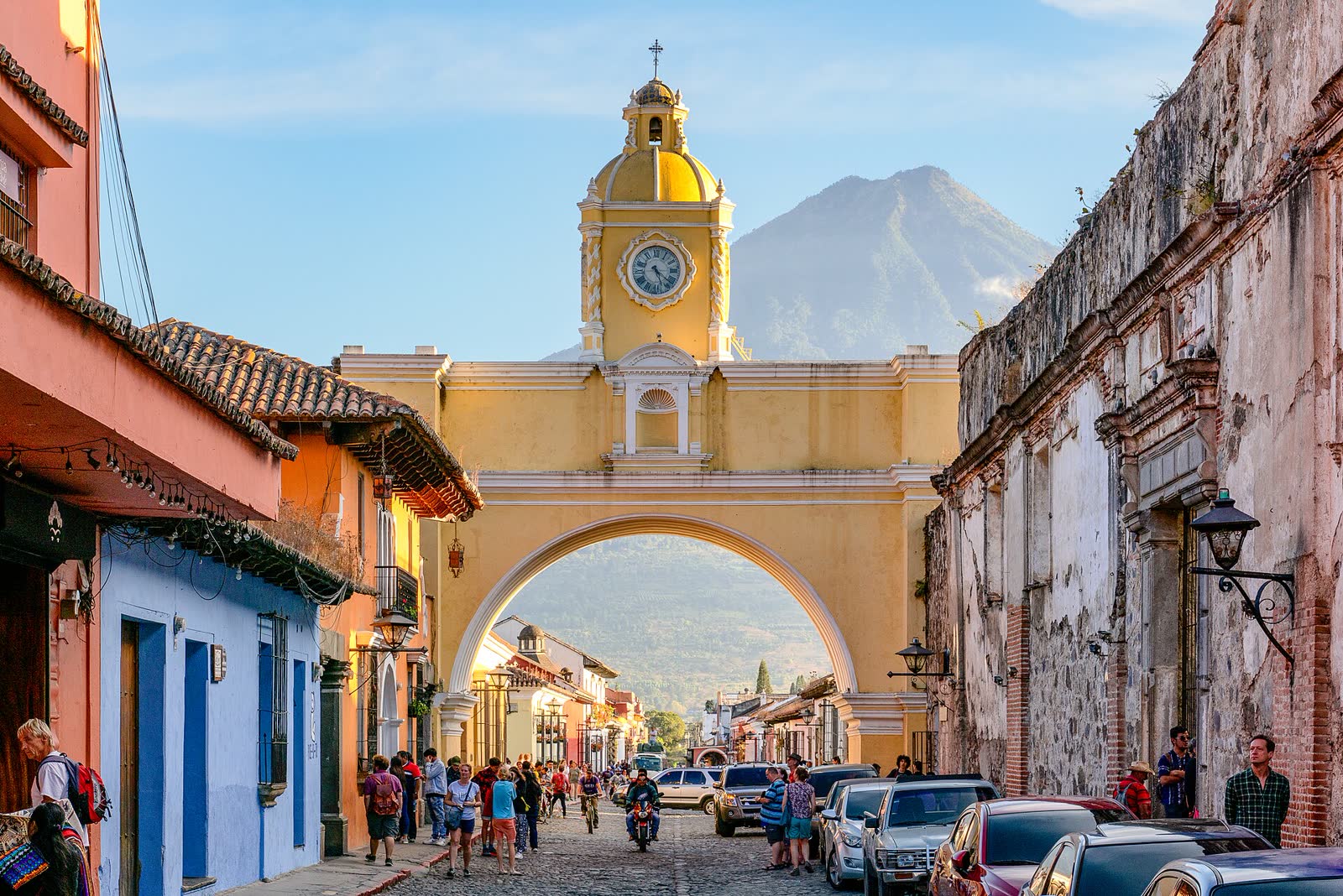
The **Parque Central** is the town's living room, with the Cathedral of San José on one side and the Palace of the Captains General on another. A short walk away, the yellow **Santa Catalina Arch** frames Volcán de Agua in the most photographed view in the country. Explore the ruined convents and churches: **Las Capuchinas**, **San Francisco El Grande** with the shrine of Santo Hermano Pedro, **La Recolección** and **Santo Domingo**, now part of a hotel and museum complex.
For views, climb to **Cerro de la Cruz** in the morning, ideally with the tourist police escort that walks visitors up. The big **municipal market** on the west side of town is chaotic, cheap and real, while the **Nim Po't** shop near the arch gathers textiles from across the highlands.
Volcanoes
Antigua's signature adventure is the overnight hike up **Acatenango** to camp facing **Volcán de Fuego**, one of the most active volcanoes in the world, which often throws lava into the night sky. It is a hard climb at altitude, so go with a reputable guiding company, bring warm layers and be ready for cold. **Pacaya**, a shorter hike from near the capital, is easier and suits families.
Coffee, chocolate and villages
The slopes around Antigua grow some of the world's best coffee. Tour a farm such as **Finca Filadelfia** or a smaller cooperative in **San Miguel Escobar**, and visit a chocolate workshop in town. Nearby villages, including **San Antonio Aguas Calientes** for weaving and **Ciudad Vieja**, make easy half-day trips by tuk-tuk.
Semana Santa
During Lent and especially Holy Week, Antigua hosts some of the largest Easter processions in the world. Huge carved floats are carried through streets covered in alfombras, carpets of dyed sawdust, flowers and fruit. It is moving and unforgettable, but hotels fill months ahead and prices rise, so plan early.
Eating and drinking
Try pepián, jocón and kak'ik, the classic Guatemalan stews, plus rellenitos and fresh tortillas from the market. Antigua also has excellent cafés, rooftop bars with volcano views and a busy weekend scene of young Guatemalans from the capital.
Practical tips
Antigua is generally calm, but keep valuables out of sight, use tuk-tuks or taxis late at night and book hikes through established companies. The cobbles are hard on ankles, so bring good shoes. Our places to visit list covers the best cafés, ruins and stays, and the trip planner helps you link Antigua with Lake Atitlán.
Questions about Antigua
How many days do I need in Antigua?
Three days covers the town, a coffee farm and a village trip. Add a day and a half for the Acatenango overnight hike, or a week or more if you are studying Spanish.
Is Antigua safe?
Antigua is one of the safest feeling places in Guatemala, with tourist police in the centre. Petty theft does happen, so keep phones out of sight and take a tuk-tuk or taxi late at night.
Is the Acatenango hike hard?
Yes. It is a steep climb at high altitude, usually over two days with a night in a cold camp. Reasonable fitness, warm clothes and a reputable guide are essential.
When is Semana Santa in Antigua?
It follows the Christian calendar, with processions on Lenten Sundays and every day of Holy Week before Easter. Check the dates for your year and book a room well ahead.
Where should I stay in Antigua?
Stay within a few blocks of the Parque Central so you can walk everywhere, from boutique hotels in restored colonial houses to simple guesthouses and hostels. Streets near the Santa Catalina Arch are lively, while the south and east sides of the centre are quieter at night and often better value.
Can I do day trips from Antigua?
Yes. Pacaya volcano, coffee farms, weaving villages, Guatemala City museums and even Lake Atitlán are all possible, though the lake is far better with a few nights.
Facts checked . Fees, schedules and entry rules change, so always confirm the latest with the official source.