At a glance
- Best for
- Art, food, architecture and walking
- Airport
- Charles de Gaulle (CDG) and Orly (ORY), both linked to the centre by train or metro
- Time needed
- Four to five days
- Best season
- April to June and September to October
- Getting around
- Walking, metro, RER trains, buses and Vélib' bikes
- Good to know
- Book big museums ahead and guard your phone on the metro
Why go
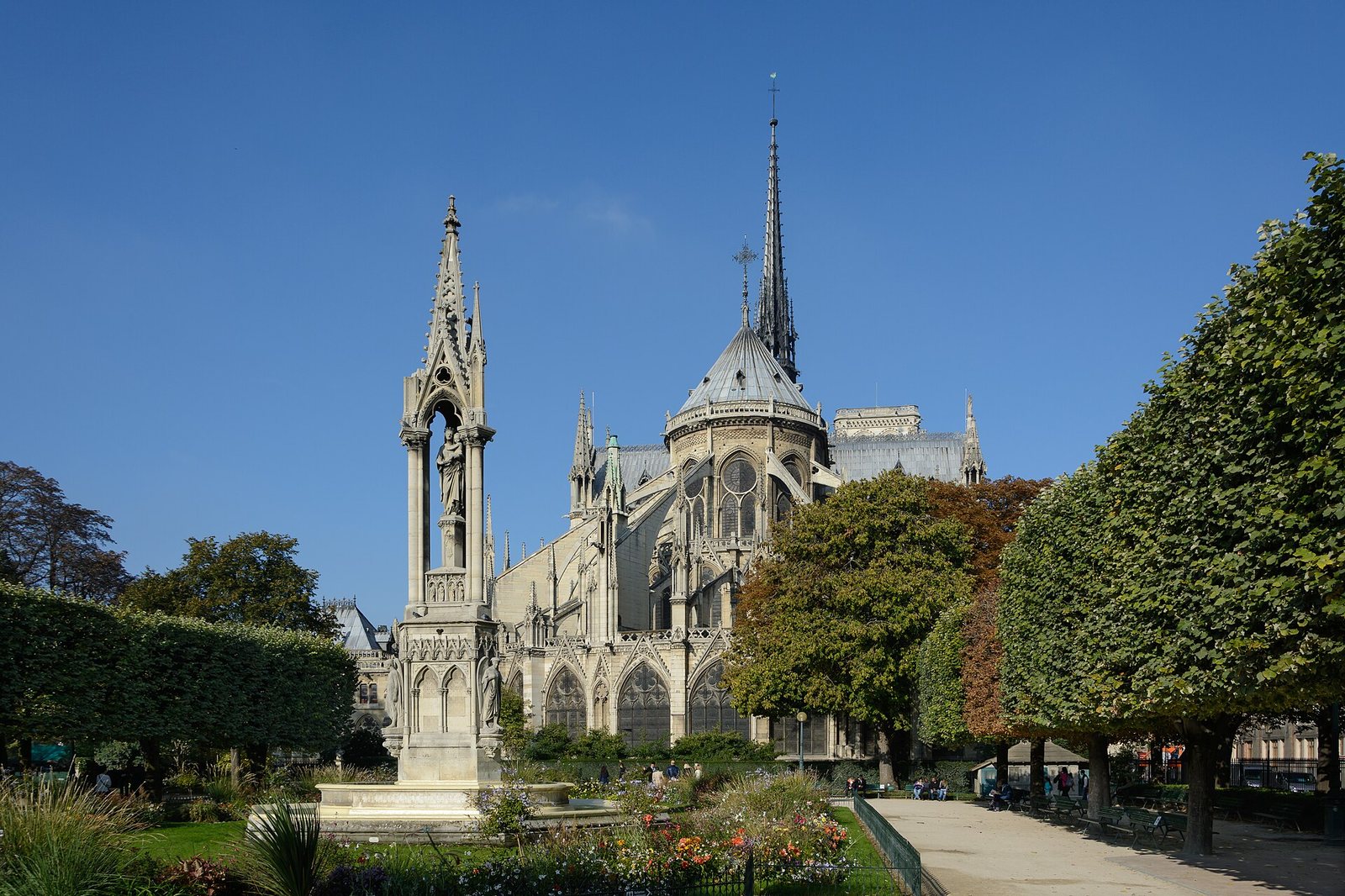
Paris holds an extraordinary concentration of art and history. The **Louvre** covers everything from ancient Egypt to the Mona Lisa, the **Musée d'Orsay** has the finest Impressionist collection in the world, and the **Orangerie** shows Monet's enormous Water Lilies. **Notre-Dame**, reopened after its restoration, and the stained glass of **Sainte-Chapelle** stand together on the Île de la Cité. Then there is the **Eiffel Tower**, which really does take your breath away when it sparkles on the hour after dark.
Neighbourhoods to know
Paris is split into twenty numbered arrondissements spiralling out from the centre. The **Marais** (3rd and 4th) mixes medieval mansions, the Place des Vosges, boutiques and the old Jewish quarter around Rue des Rosiers. **Saint-Germain** and the **Latin Quarter** (5th and 6th) are the classic Left Bank of cafés, bookshops and the Luxembourg Garden. **Montmartre** (18th) is a hilltop village of steep lanes, crowned by the white Sacré-Cœur basilica. **Canal Saint-Martin** and **Belleville** in the northeast are younger and more local, with street art, wine bars and cheaper restaurants. The **7th** around the Eiffel Tower is elegant and calm, and **Pigalle**, once seedy, is now full of cocktail bars.
What to see and do
Climb the Arc de Triomphe for a view down the Champs-Élysées, wander the Tuileries and Palais Royal gardens, and take a boat along the Seine. Go underground in the **Catacombs**, visit Chopin and Oscar Wilde at **Père Lachaise** cemetery, and walk the **Coulée verte**, an elevated garden on an old railway. Quieter museums reward time: the **Musée Rodin** and its garden, the **Musée Jacquemart-André**, and the **Musée de la Vie Romantique**. Department store rooftops at **Galeries Lafayette** and **Printemps** give free views.
Food and drink
Eating well in Paris does not have to be expensive. Bakeries sell baguettes, croissants and sandwiches, street markets like **Marché d'Aligre** are full of cheese and fruit, and bouillon restaurants such as **Bouillon Chartier** serve classic dishes at budget prices. Lunch set menus (the formule) are the best value for sit down meals. Try steak frites, onion soup, duck confit and a cheese plate, and leave room for a macaron or a Paris-Brest.
Day trips
The **Palace of Versailles** is about forty minutes away by RER C train. **Giverny**, Monet's garden, is open from spring to autumn. **Disneyland Paris** is a short RER ride east. Further afield, **Mont-Saint-Michel**, the **D-Day beaches** of Normandy and the **Champagne** houses of Reims are long but doable days, though they are better with an overnight stay.
Getting around
The metro is fast and dense, and the RER trains link the airports and suburbs. Paris is very walkable, and the Vélib' bike share and many bike lanes make cycling easy. Buy tickets on the official RATP app or a Navigo Easy card rather than from anyone offering help at the machines. Taxis use a flat fare from the airports to the city; agree nothing with drivers who approach you inside the terminal.
Where to stay
First-timers do well in the **Marais**, **Saint-Germain** or the **Latin Quarter**, all central and walkable. The **9th** and **10th** arrondissements offer better value with good metro links. Hotel rooms in Paris are small, so check the room size, whether there is a lift and air conditioning if you visit in summer.
Staying safe
Paris is generally safe, but pickpocketing is common on metro line 1, around the Eiffel Tower, at Sacré-Cœur and in crowded stations. Ignore petition signers, ring finders and string bracelet sellers. Keep your phone in a zipped pocket, especially on café terraces. Read your government's travel advice before you go.
Use our places to visit list for addresses, and the trip planner to fit Paris into a longer route.
Questions about Paris
How many days do I need in Paris?
Four days covers the major museums, the Eiffel Tower, Montmartre and a few neighbourhoods. Add a day for Versailles.
Do I need to book the Louvre in advance?
Yes. The Louvre and the Eiffel Tower use timed tickets, and booking on their official sites is the best way to avoid long queues or being turned away.
Is the Paris metro safe?
Yes, it is busy and generally safe. Watch your bag and phone, especially near the doors, and avoid empty carriages very late at night.
What is the best area to stay in Paris for first-timers?
The Marais, Saint-Germain and the Latin Quarter are central, walkable and full of cafés. The 9th and 10th are good value with easy metro links.
Facts checked . Fees, schedules and entry rules change, so always confirm the latest with the official source.